
Commercial Roof Membrane Puncture Repair in Hillsboro, OR
Commercial membrane puncture repair in Hillsboro, OR. We inspect the cut, check wet insulation and nearby seams, then define a compatible repair.
Commercial Roof Membrane Puncture Repair
A cut in a roof sheet can be smaller than the wet area below it. I check the puncture, the material around its edge, and the path water could take beneath the membrane before pricing a patch. In Hillsboro, OR, rain can test that opening again before an interior stain appears. We photograph the defect, note its distance from seams and curbs, and identify the assembly through a commercial roof inspection.
Hillsboro's employment properties include advanced manufacturing and distribution uses, where roof access may pass near equipment or service paths. Along Tualatin Valley Highway, we confirm site-specific loading and roof-entry rules rather than assume the same route works at each building. The inspection also checks whether a nearby open seam or flashing detail connects with the puncture.
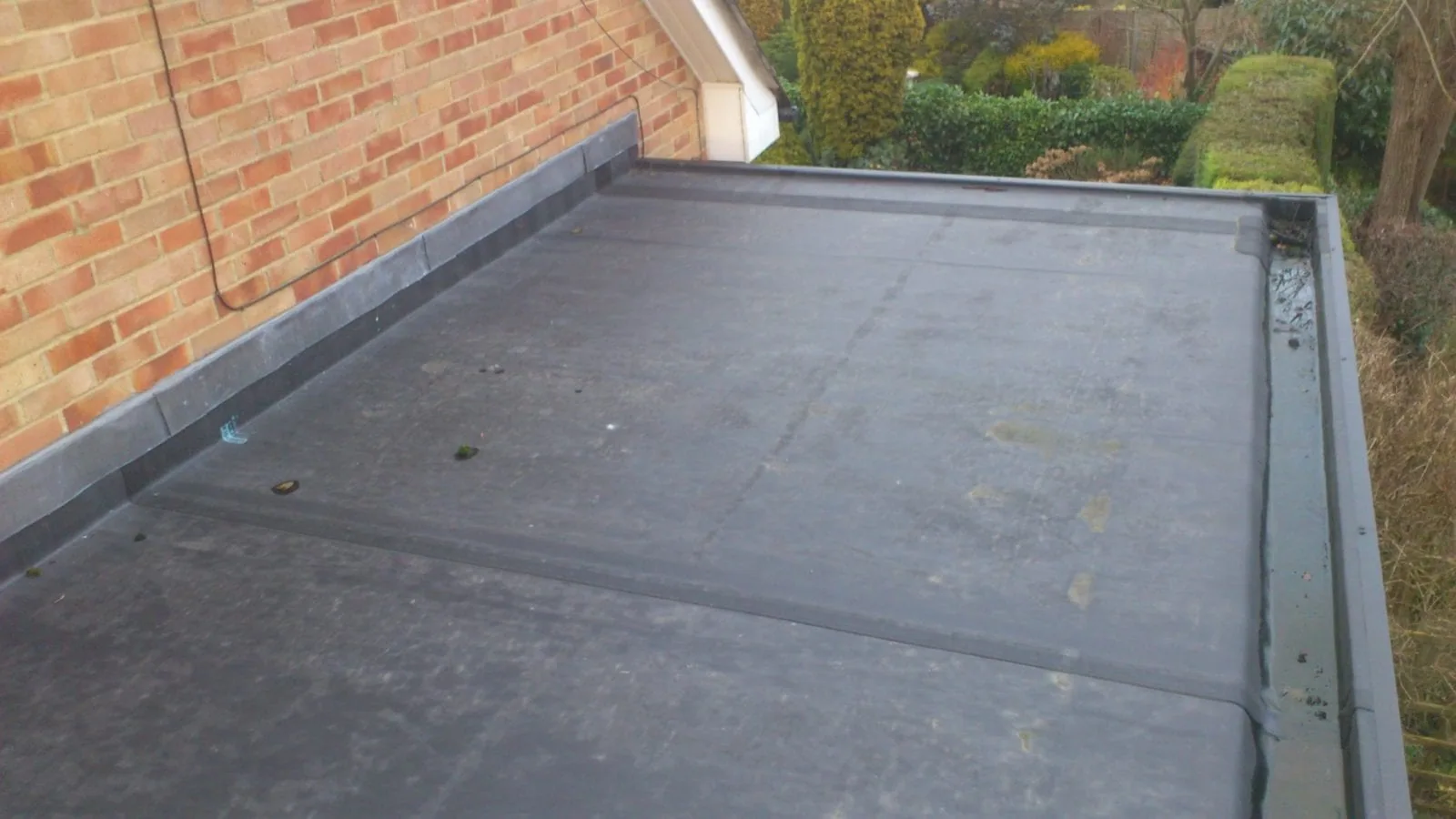
Related Roofing Pages
More pages on commercial roofing in Hillsboro:
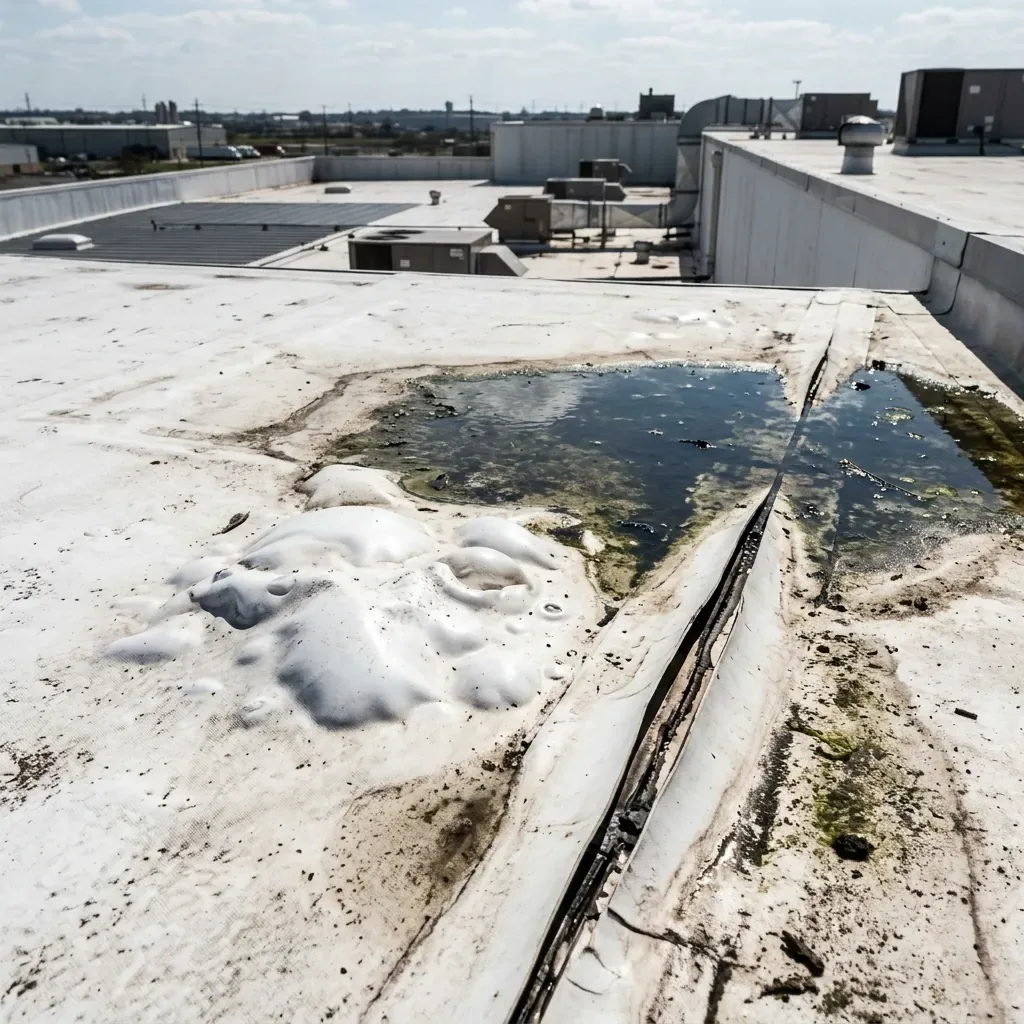
Measure the opening and inspect its surroundings
The surface cut is only the first finding. We look for a sharp impact mark, a scrape, a crushed area, displaced fastener, or damage that continues beneath ballast or a walkway. Then we check whether the membrane is firmly bonded around the opening and whether the substrate can accept a patch. A puncture beside a curb or sheet lap may need a larger detail repair to reconnect the surrounding assembly.
Water can move laterally through insulation or along deck flutes before it shows inside. We compare the reported leak location with the roof surface and note staining, soft cover board, blisters, or wet insulation. Infrared moisture mapping can help define an area for testing, while a small opening can confirm which layer is affected. The condition report keeps a visible hole separate from a suspected water path.
A puncture repair starts with a small, marked inspection zone. We check whether the object passed through the membrane, displaced insulation, or reached the deck, then map nearby rooftop equipment and the safest route for tools. The property contact confirms access and any restricted work area before the opening is prepared.
Identify the sheet before choosing a patch
A patch must be compatible with the roof membrane and extend to stable material. For a thermoplastic sheet, we prepare a clean area and weld a piece with rounded corners, then check the seam. An EPDM assembly uses a different surface preparation and splice approach. Coated foam or another liquid-applied system requires its own reinforcement and cure conditions. We do not treat a generic sealant bead as a substitute for identifying the system.
The repair also accounts for thickness, texture, coating, and any prior patches near the opening. If a footpath or equipment route caused repeated contact, we inspect its support and separation from the membrane. The owner may choose a protective walkway or clearance adjustment along with the patch, but those are separate items in the scope. The record shows the puncture, its repair, and any adjacent surface left for observation.
Advanced manufacturing and medicine-packaging activity in Hillsboro makes equipment access a practical inspection question. At properties near Beaverton as well as Hillsboro, we confirm owner instructions for access and protection before carrying tools or materials across the roof.
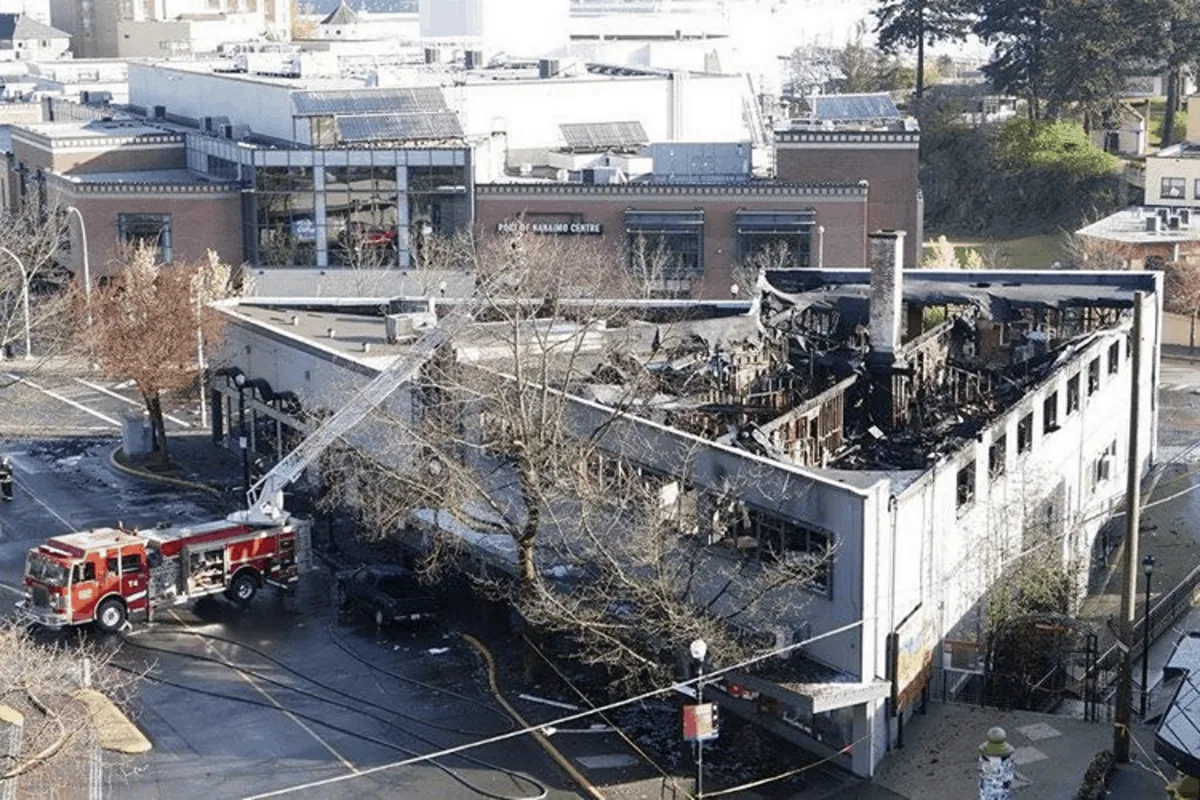
Account for rain reaching the layers below
Normal precipitation peaks from October through January in Hillsboro. Before preparing a puncture patch, we inspect the nearest outlet and plan temporary protection that directs runoff away from the exposed layers. A puncture left open during that stretch can admit water beyond the visible cut. Hillsboro experiences approximately 64 days annually with minimums at freezing or lower. At a puncture, we check whether the surrounding sheet is dry and flexible enough to receive the selected patch. We consider surface temperature and moisture when choosing an adhesive or scheduling a weld. The material must bond or fuse under suitable conditions, and the repaired edge should remain visible for inspection until closeout. If weather prevents the permanent step, temporary protection is documented as such.
Loose debris that punctures the membrane can also strike nearby edge metal or a seam. We inspect those details for displacement before treating the surface cut as the full repair scope. We inspect that route and, when the evidence points to a separate wind-related opening, price it separately. This keeps a patch for impact damage from absorbing work on an unrelated termination or drainage problem.
Extend the patch only to sound material
For a dry, stable assembly, we remove loose contamination, prepare the membrane, and install a compatible patch that reaches sound material on every side. We roll or weld the edges as the system requires and inspect the completed lap. A photo record shows the original damage and the finished boundary. If the material around the hole is brittle or the insulation is wet, the local patch may not be the right limit.
When several punctures appear along a service path, we map their locations and look for a shared cause such as repeated foot traffic or unsecured equipment. A walkway or support change may prevent another impact, while moisture below multiple openings can require a broader section repair. We separate the immediate water-entry repair from those improvements so the owner can see the purpose and price of each item.
Replacement or recover may be considered if the sheet is deteriorated across a larger area, attachment has failed, or moisture extends beyond a patchable boundary. We inspect the full assembly, verify added weight and drainage conditions, and show the affected area before pricing that work. A commercial roof repair scope names the materials, preparation, and access assumptions.
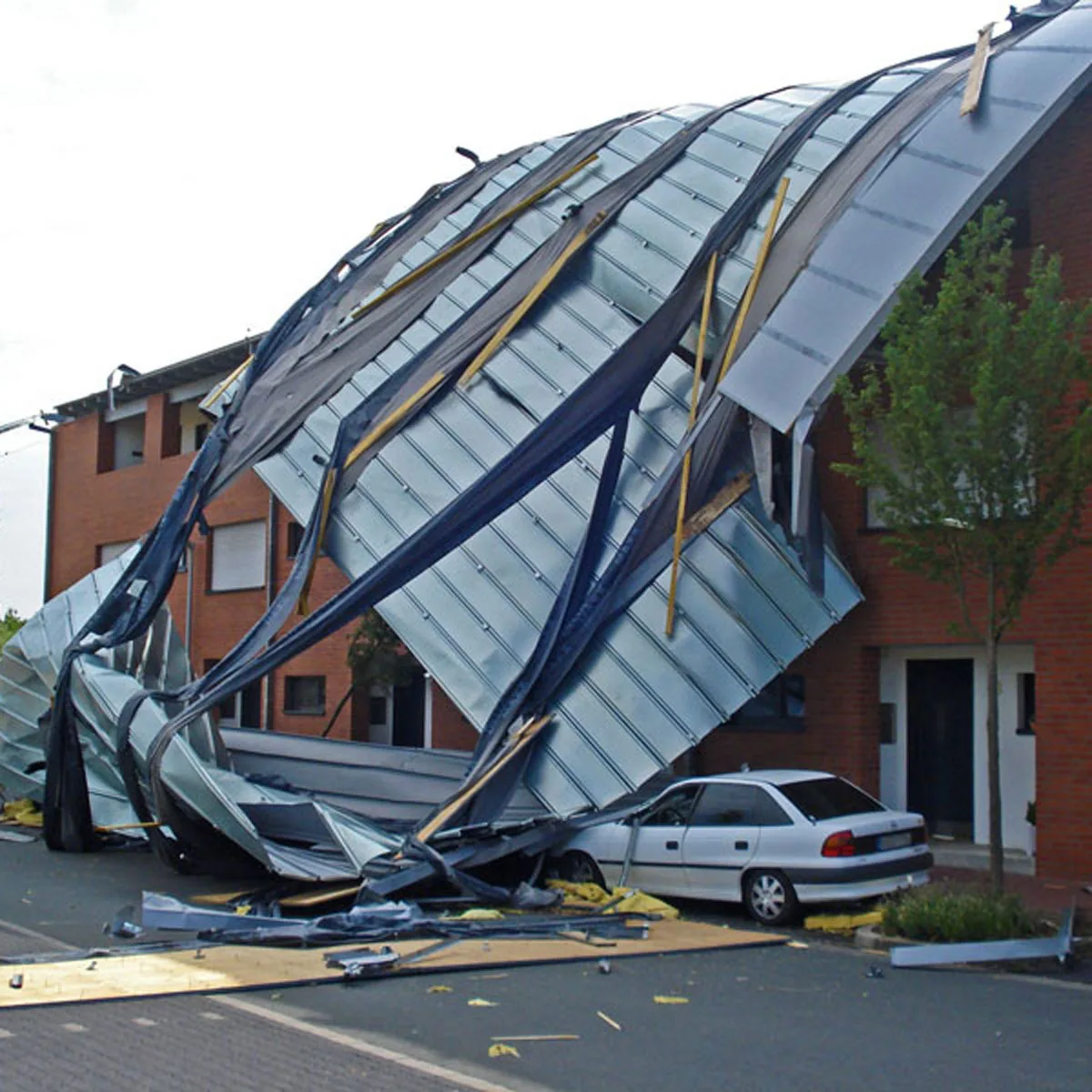
Protect the roof route while the patch is made
Before work, we confirm roof access, fall protection, staging, and any restriction near intakes or active equipment. If a puncture sits beside a marked service path, the work plan shows how people and materials move without creating a second defect. We protect the opening while preparation is underway and keep tools clear of drains and other vulnerable details.
We photograph and outline the repair limit, prepare the substrate, and install the specified patch. If the opening reaches wet insulation or an unexpected layer, we pause and document it before expanding the work. At shift end, exposed material is protected, and the owner receives an update on any area that remains open or needs follow-up.
Closeout includes the repair location, photographs, installed materials, and nearby conditions that were not part of the patch. That record gives the next roof walk a reference for checking movement, moisture, or another puncture on the same route. Arrange an inspection in Hillsboro and we will identify the damage, trace the water path, and price a repair tied to the confirmed assembly.
Questions About Commercial Roof Membrane Puncture Repair
How large should a patch be around a small puncture?
The patch needs sound, compatible material beyond the visible opening. We check for cuts, abrasion, loose coating, and moisture around the edge before setting its size. If the surrounding sheet is brittle or wet insulation extends farther, the report shows a larger repair boundary for pricing.
Can you repair damage caused by service foot traffic?
Yes. We inspect the puncture and the route that led to it, including equipment supports and walkway protection. The repair can include a compatible patch plus a separately priced walkway or clearance adjustment when that change addresses the cause of repeated contact.
Do you have to open the roof to check for wet insulation?
A moisture survey can help identify suspect areas, but a limited opening may be needed to confirm concealed layers. We explain what question the opening answers and mark the result separately from surface observations. That evidence helps set the repair boundary without assuming the whole area is wet.
Can a puncture repair be made during active operations?
We coordinate roof access, material staging, and protection near equipment with the property contact. The exact sequence depends on the membrane, surface conditions, and the area affected. The work plan identifies any route or work period that must stay clear while the patch is prepared.
What happens if the membrane type is uncertain?
We review records and inspect markings, seam construction, and surface characteristics. If those do not establish the system, we identify a test or small opening that can resolve it before selecting a patch. The proposal states what is confirmed and what still needs verification.
Schedule a Hillsboro puncture inspection
Tell us what contacted the roof and where water appeared. We will inspect the opening and surrounding layers, document the repair boundary, and price work compatible with the assembly.