
Commercial Roof Leak Repair in Hillsboro, OR
Find and repair commercial roof leaks in Hillsboro with a traced water path, marked repair boundary, and closeout photos for the next roof walk.
Commercial Roof Leak Repair
A ceiling mark under a roof curb gives us a place to start, not the source. Commercial leak repair in Hillsboro, OR, follows the water path from the interior symptom to seams, flashings, drains, and penetrations above. We note when the leak appears, inspect likely paths, and check the insulation at the suspected entry. The repair meets dry, sound material and closes the edge that failed. If moisture runs farther than the visible opening, we set a wider boundary and price that work separately. A hands-on roof inspection helps distinguish a local lap failure from a drainage or assembly problem.
Related Roofing Pages
More pages on commercial roofing in Hillsboro:
Compare the interior mark with roof details
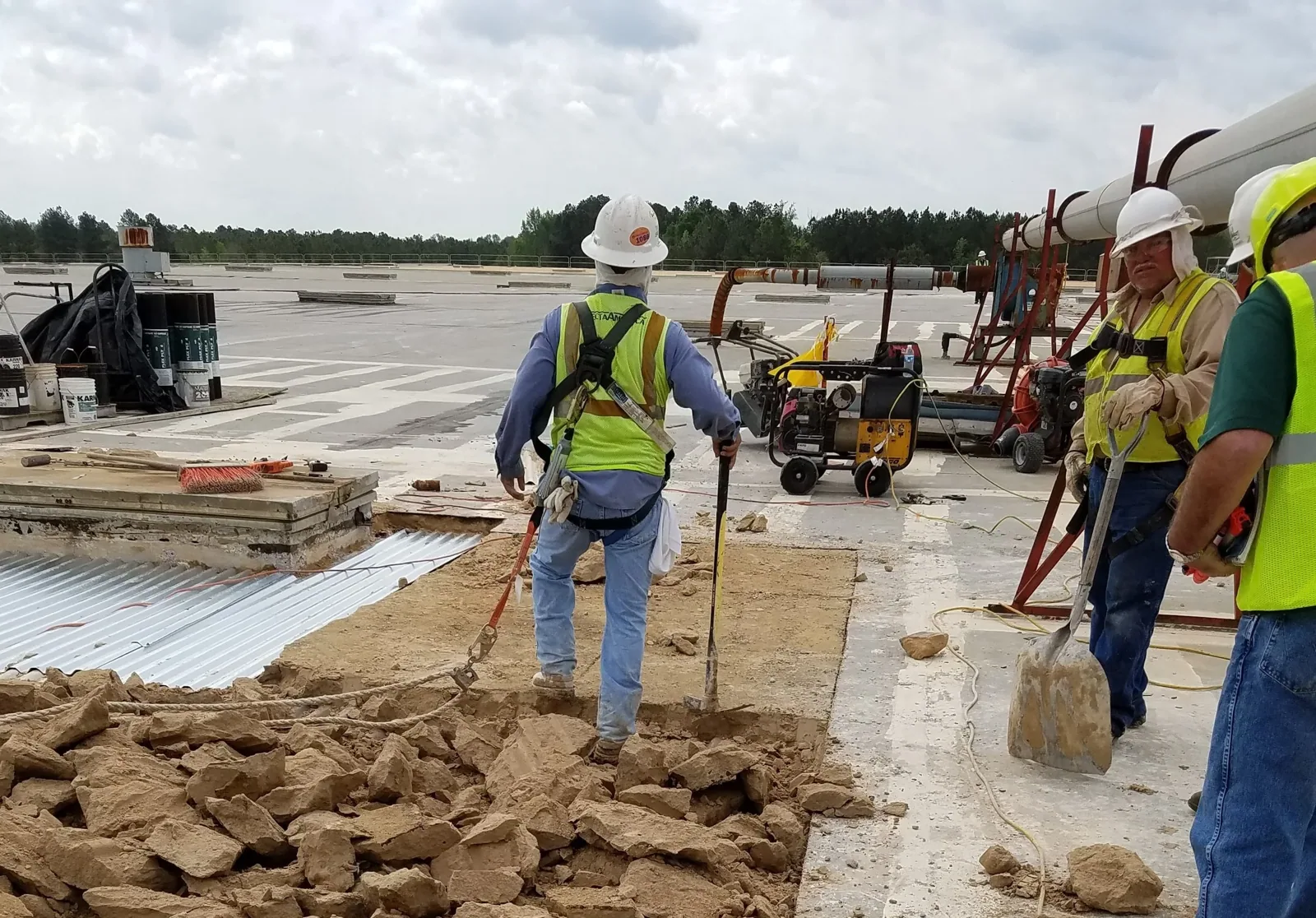
We begin with the building's leak history, ceiling locations, weather exposure, and any prior repairs. On the roof, we look uphill from the mark and inspect low points, drain bowls, scuppers, field seams, equipment curbs, skylights, and wall terminations. Water can travel along the deck or insulation before it reaches a room. That movement is why a quick seal at the closest penetration can miss the opening that needs repair.
Annual precipitation in Hillsboro is about 35.93 inches; October through January is the wettest stretch. For a leak call, that pattern makes open laps and slow drainage worth checking through the full path. We record a wet area and note whether it is visible from the surface or needs a survey or test cut. An area that holds water may need more than an entry-point patch.
Photos link the indoor sign to the roof detail we inspected. The report marks confirmed defects, likely routes, and areas we could not reach, giving the owner a clear distinction between evidence and the next test.
Choose a repair that closes the entry point
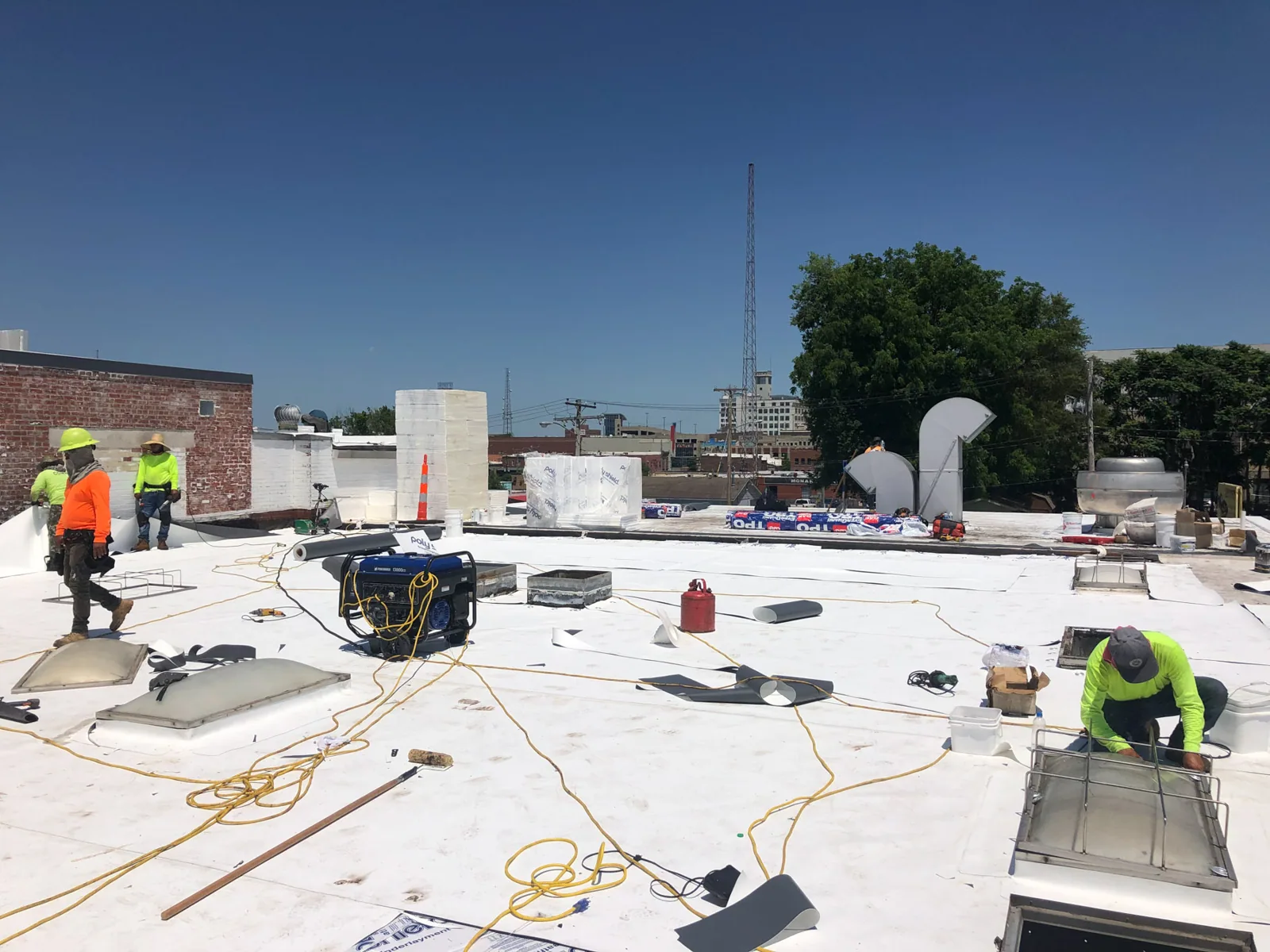
Once the membrane is identified, we select compatible preparation and repair materials. A thermoplastic seam may be cleaned and welded; another assembly can require primer, adhesive, a cover strip, or new flashing. We remove loose coating or failed sealant rather than placing a patch on top of it. The new material laps onto sound surface with enough room for a complete bond. A failed flashing detail needs the wall or curb termination repaired along with the membrane.
At a drain, we inspect the bowl, outlet, strainer, overflow, and surface around it. Debris can slow runoff, but a depressed section or wet insulation calls for a separate drainage review. A repair that seals the roof but leaves water trapped at the same place is not complete. We note whether clearing, local membrane work, or a broader correction belongs in the scope.
The owner sees the proposed repair boundary before it grows. If a test opening shows more wet material, we stop, photograph it, and get a decision on removal. Localized work may be enough; repeated failures or widespread moisture can support a separate replacement comparison.
Protect the opening through changing weather
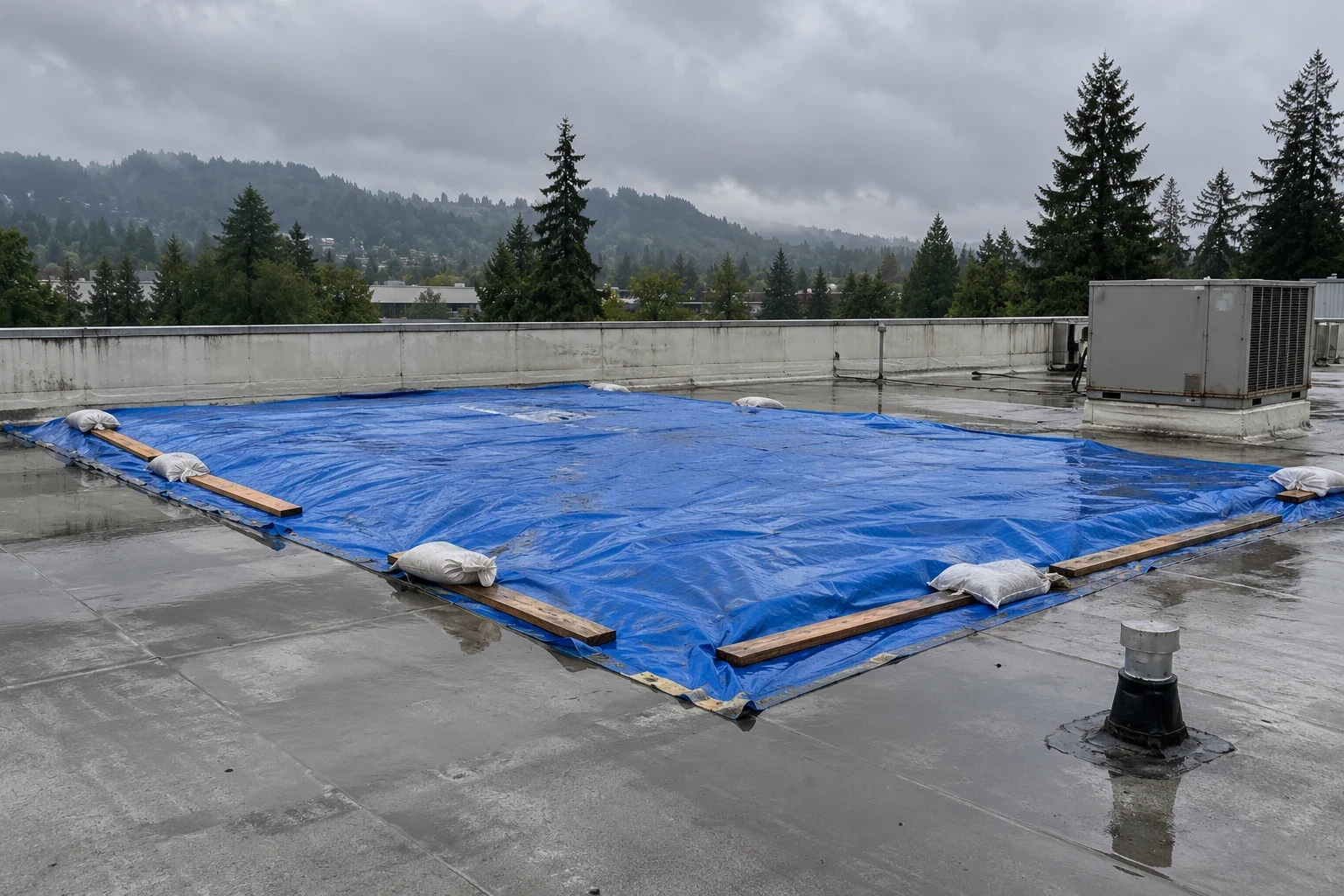
A leak can be urgent before the final repair can be made. We first control active water with a safe temporary measure, protect interior equipment where possible, and schedule permanent work for a surface and weather window suited to the selected system. Roughly 64 days a year in Hillsboro see minimum temperatures at or below freezing. We consider the surface temperature and moisture at the repair site before welding, adhering, or sealing material.
Near Orenco Station, shared access and occupied entrances can shape a leak visit. We confirm roof routes, lift or ladder access, loading, and sensitive interior areas with the property contact. An Orenco Station building still needs a roof map that marks its drains, curbs, and leak locations.
When weather interrupts a repair, we close and protect the temporary boundary before leaving. The work record notes what was stabilized, what remains open, and when the permanent tie-in can be completed. This prevents a temporary measure from being mistaken for a finished repair.
Coordinate an active leak visit
For a reported active leak, we collect the affected room, time noticed, equipment or inventory below, and any ceiling access restrictions. The roof walk follows the safest route to likely details. Where water is entering near electrical or process equipment, the property contact handles immediate building safety while we document the roof condition and repair needs. The crew protects the interior work area and keeps tools away from operating equipment.
Hillsboro includes semiconductor production and pharmaceutical manufacturing, packaging, and distribution. Those operations make timing and clean work boundaries consequential at affected properties. We plan around the actual site rules instead of assuming that a roof repair can proceed beside active process areas. The scope identifies roof access, staging, temporary protection, and any notification needed before an opening is made.
Oregon Highway 8 connects Hillsboro with Cornelius, Aloha, and Beaverton. We coordinate arrival and delivery with the customer, then confirm the building's gate and loading arrangement before materials arrive. After the repair, photos record the prepared surface, tie-in, and drain or curb details checked.
Keep the next leak call connected to this one
Closeout identifies the roof area, suspected entry point, repair material, preparation, and any limitation on the inspection. Marked photos help a later visit see if a seam moved again or a different detail is involved. If a moisture survey was used, the report states what it mapped and which areas still need confirmation. The record is useful for a maintenance walk that checks nearby laps and drainage before another interior report arrives.
A repaired lap should be watched with the surrounding assembly, not judged by one bead of sealant. We check whether the water path is closed, whether adjacent insulation is dry, and whether the patch edge remains attached. If a leak recurs, the prior repair boundary gives us a starting comparison and helps avoid repeating an ineffective patch.
For a property along Tualatin Valley Highway or near Downtown Hillsboro, route and access coordination can differ, but the technical closeout remains specific to the roof. We can provide marked findings and a repair price, then separate any larger replacement candidate into a future scope. That gives the owner an immediate next step without hiding a longer-term condition.
Questions About Commercial Roof Leak Repair
Why can water appear far from the roof leak?
Water can travel along a deck, insulation, or framing before it reaches the ceiling. We compare the room location with roof slope and nearby drains, seams, walls, and curbs. If the path remains uncertain, we mark a test or moisture survey rather than sealing the nearest visible detail by assumption.
Can you stop an active leak before permanent repairs?
We can assess a safe temporary dry-in or other short-term measure, then document what remains for permanent work. The temporary boundary is labeled in the closeout. A lasting repair follows when the membrane and surface condition allow the specified tie-in.
How do you confirm the right patch material?
We identify the roof assembly from records and visible details, then check compatibility of the membrane, primer, adhesive, and flashing. If the system remains uncertain, we verify it before specifying a repair.
What if the leak is near a drain but the drain is clear?
We check the bowl, overflow, slope, insulation, and seams around the low area. A clear strainer does not establish that the outlet or drainage plane is working. The report separates a local membrane defect from a drainage correction.
What should our property contact provide before the visit?
Share the room or equipment affected, when water was noticed, previous repair records, and roof access rules. Those details help us plan protection and trace the likely path. We confirm the actual staging point and any restricted work hours at the property.
Request a leak repair assessment
Tell us where water appeared and what the building was doing at the time. We will trace the likely roof path, document the repair boundary, and explain any further test the findings require.