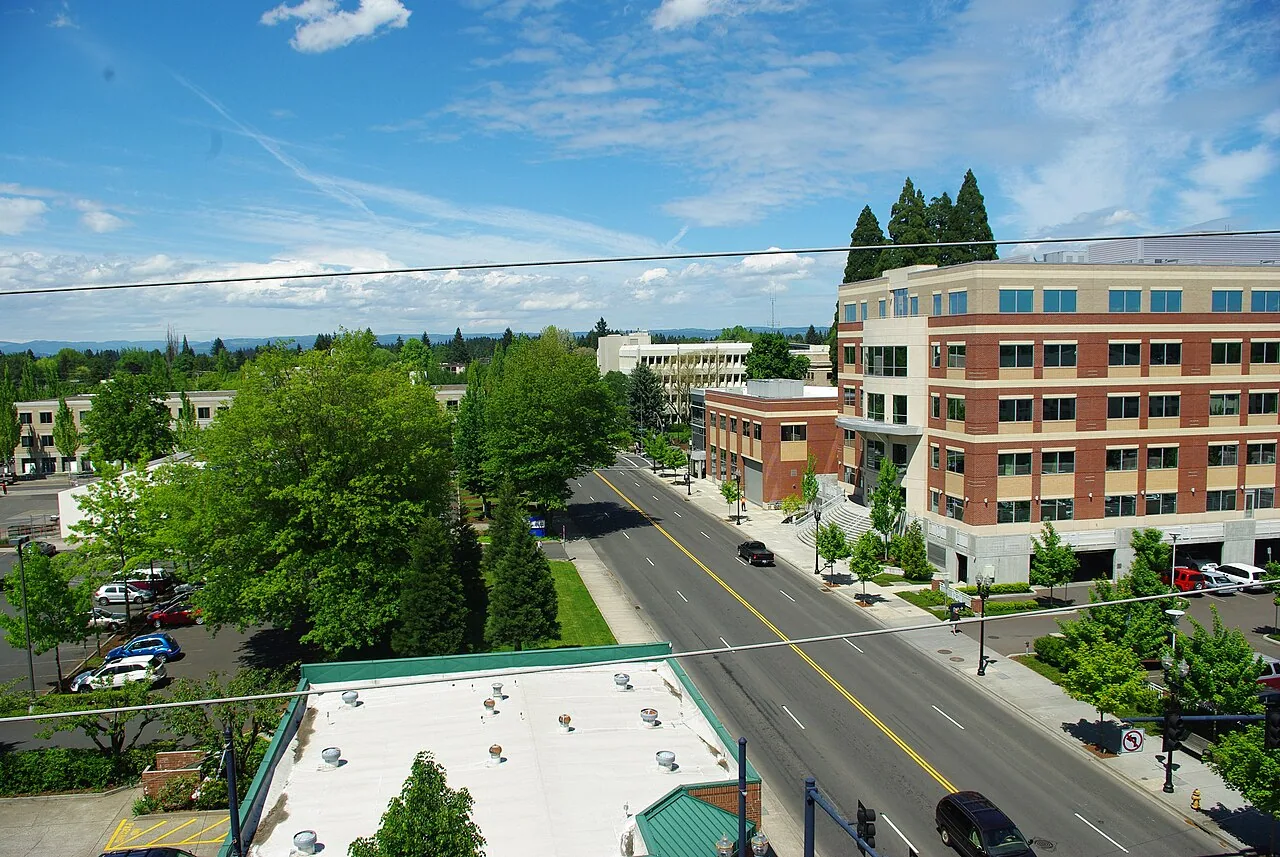
Roof Systems in Hillsboro, OR
Commercial roofing for Hillsboro and Washington County, Oregon
TPO Roofing
PVC Roofing
EPDM Roofing
KEE Roofing
Modified Bitumen Roofing
Built-Up Roofing
Standing Seam Metal Roofing
Metal Roof Retrofit
Spray Polyurethane Foam Roofing
Silicone Roof Coatings
Acrylic Roof Coatings
How We Approach Roof Systems
Roof Systems in Hillsboro, OR
Roof Systems in Hillsboro
A loose lap tells us where two sheets have stopped holding together, but the material below that seam decides whether a local repair will hold. In Hillsboro, we identify the existing assembly before recommending a tie-in, recover, coating, or tear-off. TPO, PVC, EPDM, KEE, modified bitumen, built-up roofing, standing seam metal, retrofit panels, and spray foam each move water through different details. The TPO membrane or EPDM assembly is selected by the roof in front of us, not by a generic preference.
Hillsboro's normal year brings a wet fall and winter, with occasional summer heat. Those shifts make the existing assembly and drainage details more useful than a material label alone. We identify the membrane or panel, inspect laps and terminations, and note whether moisture or prior repairs affect the available options. A commercial inspection creates a system-specific basis for comparing repair, restoration, and replacement.
Identify what is installed
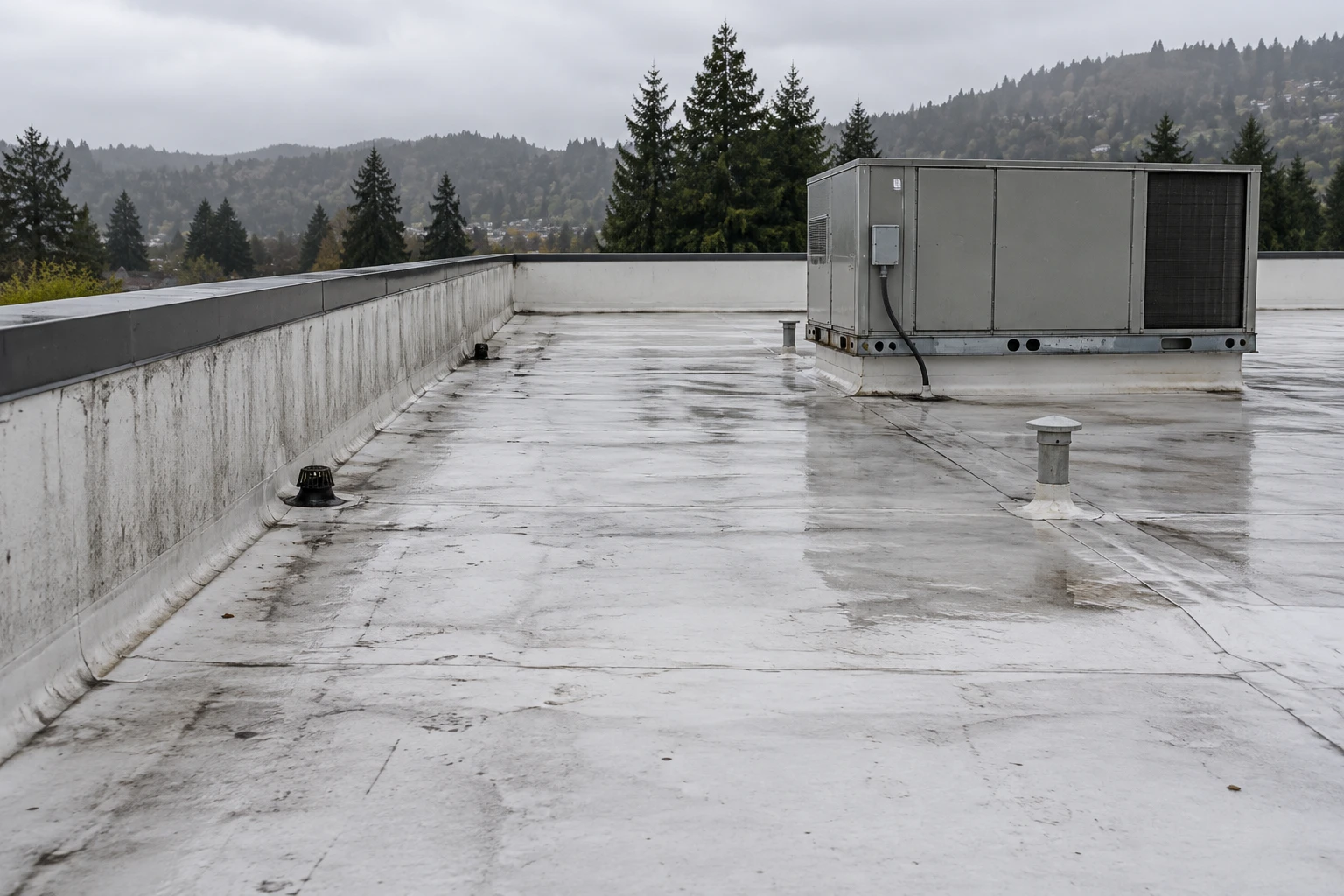
Membrane markings, seam construction, fasteners, flashing details, and roof records help identify an assembly. We compare those clues with the substrate and perimeter rather than infer a system from the building use. A PVC roof, modified bitumen, or standing-seam metal roof needs its own repair method. Photographs and notes also preserve which portions could not be reached during the walk.
Match the work to the assembly
A repair should meet attached material with a compatible lap and sound substrate. Where a seam or flashing has failed, we prepare the surface and restore the transition. A coating is a separate option, not a cover for wet insulation or loose sheets. We inspect attachment, drainage, flashing height, and moisture before discussing silicone coatings or acrylic coatings. If the assembly supports a recover, the owner can compare that scope with selective removal or replacement.
Check the details through winter
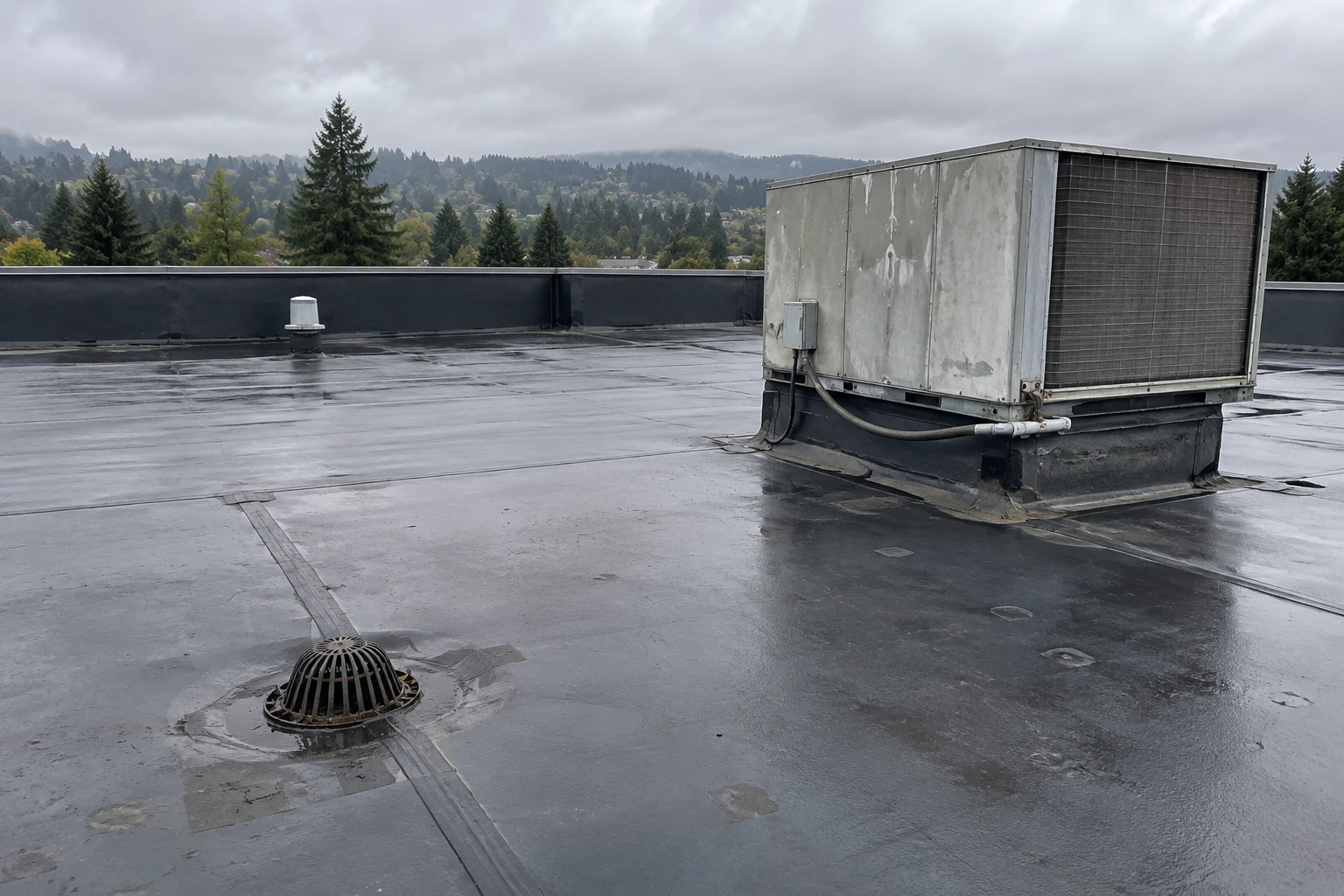
Freezing nights can change how water behaves at drains and exposed equipment. We check whether a bowl drains freely, whether seams remain closed at low points, and whether flashings still meet the wall or curb. These observations do not substitute for the inspected roof; they tell us where to test it. At an industrial property along Swan Island or a commercial building near Orenco Station, operations and roof access also shape when a section can be opened.
Price material and access separately
System choice affects preparation, attachment, flashing, insulation, and how crews sequence the work. Roof height, edge conditions, penetrations, wet areas, staging, and occupied space also affect cost and timing. We show confirmed repairs separately from concealed conditions that may change the boundary. For an older roof, a coating restoration review can be compared with replacement after moisture and substrate checks are complete.
Questions About Roof Systems
Can you identify the roof system without drawings?
Often the membrane markings, seams, fasteners, and flashing details provide useful clues. We confirm those observations on the roof and note any area that needs a test opening before specifying a compatible repair.
Does a coating solve ponding water?
A coating does not correct a low deck or compressed insulation by itself. We inspect drainage and moisture first, then price surface restoration separately from work that changes slope or removes wet material.
When is a recover possible?
The existing assembly must support added material, and the substrate, attachment, drainage, and flashing heights must allow a sound tie-in. Our roof walk records those conditions before a recover is compared with removal.
What should a system proposal describe?
It should identify the assembly, preparation, insulation, flashing, attachment, and work limits. We also separate confirmed conditions from concealed areas that need testing, so the scope stays tied to the roof inspected.
Compare roof system options
Send the address and what you are seeing. We reply with the next practical step for the building.