
Emergency Commercial Roof Repair in Hillsboro, OR
Get emergency commercial roof repair in Hillsboro around the clock, with leak control, temporary dry-in, and a documented permanent repair plan.
Emergency Commercial Roof Repair
Water entering a production room or spreading above stored goods needs a controlled first move. Our emergency roof repair line in Hillsboro, OR, is staffed around the clock, including nights, weekends, and holidays. We first clarify the affected area, access limits, and immediate building concerns, then inspect the roof when conditions allow. The first visit may require a safe tarp or temporary dry-in before permanent materials can be installed. We mark what was stabilized, what remains exposed, and the next repair decision. A commercial leak assessment follows the water path rather than treating a ceiling mark as the roof opening.
Related Roofing Pages
More pages on commercial roofing in Hillsboro:

Stabilize the roof before broad repairs
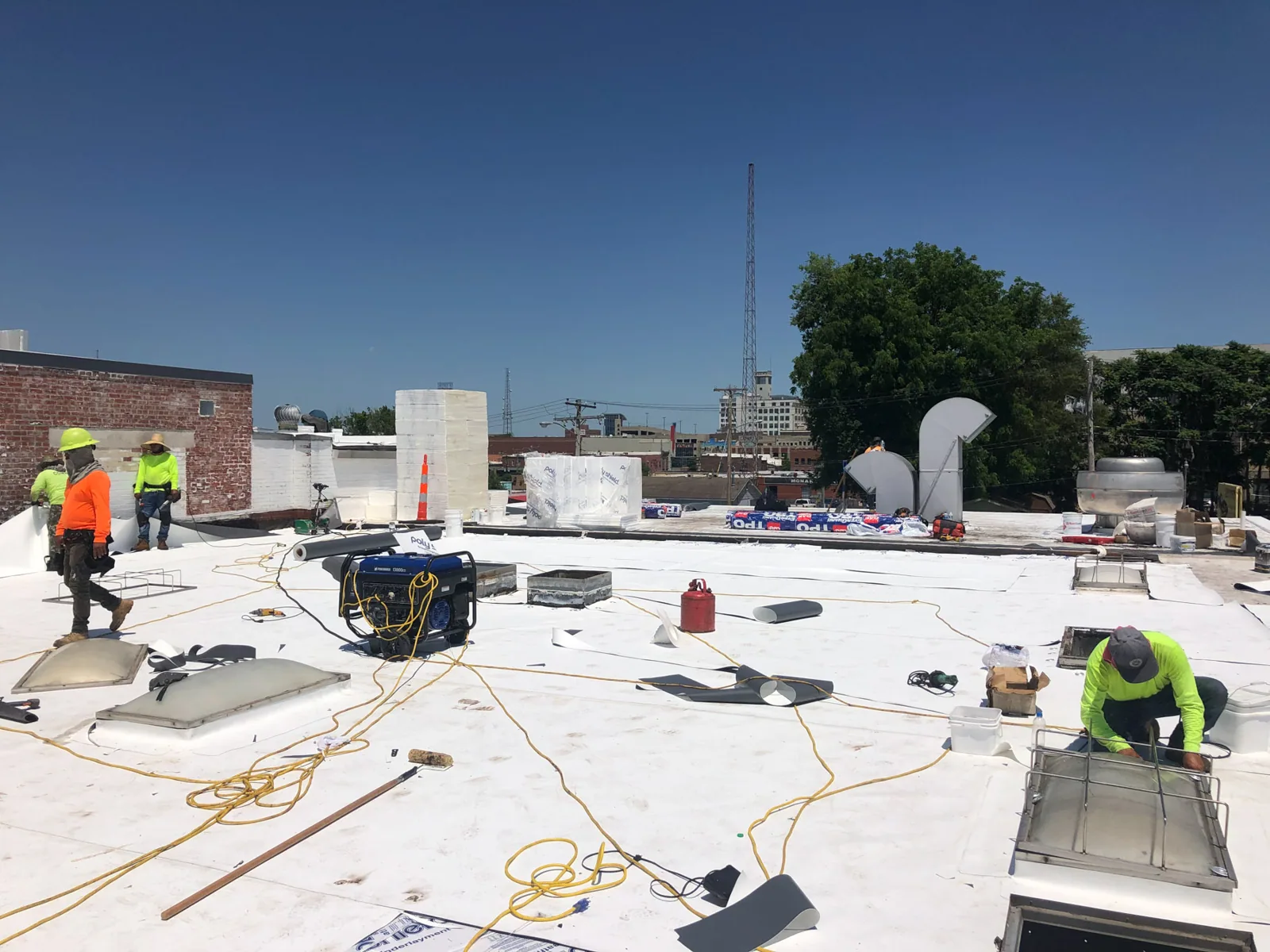
On arrival, we confirm roof access, fall protection, weather, and the safest route to the active leak. The crew checks for openings, displaced edge metal, damaged flashing, seam separation, and standing water near the report. If conditions permit, we install a temporary cover or dry-in that directs water away from the building. No membrane edge is left open without a protected boundary. With 35.93 inches of normal annual precipitation in Hillsboro and the largest monthly totals during October through January, emergency dry-in needs a clear runoff path. We check where temporary material will discharge water before securing it near a drain or curb. During an active leak, current roof conditions decide the immediate response. We log the exact limit of temporary work so it remains distinct from the permanent repair scope.
If the roof cannot be accessed safely, we explain why and identify the next safe opportunity. A photo from below can help locate a room, but it cannot replace a roof inspection when access becomes safe.
Record the active water path
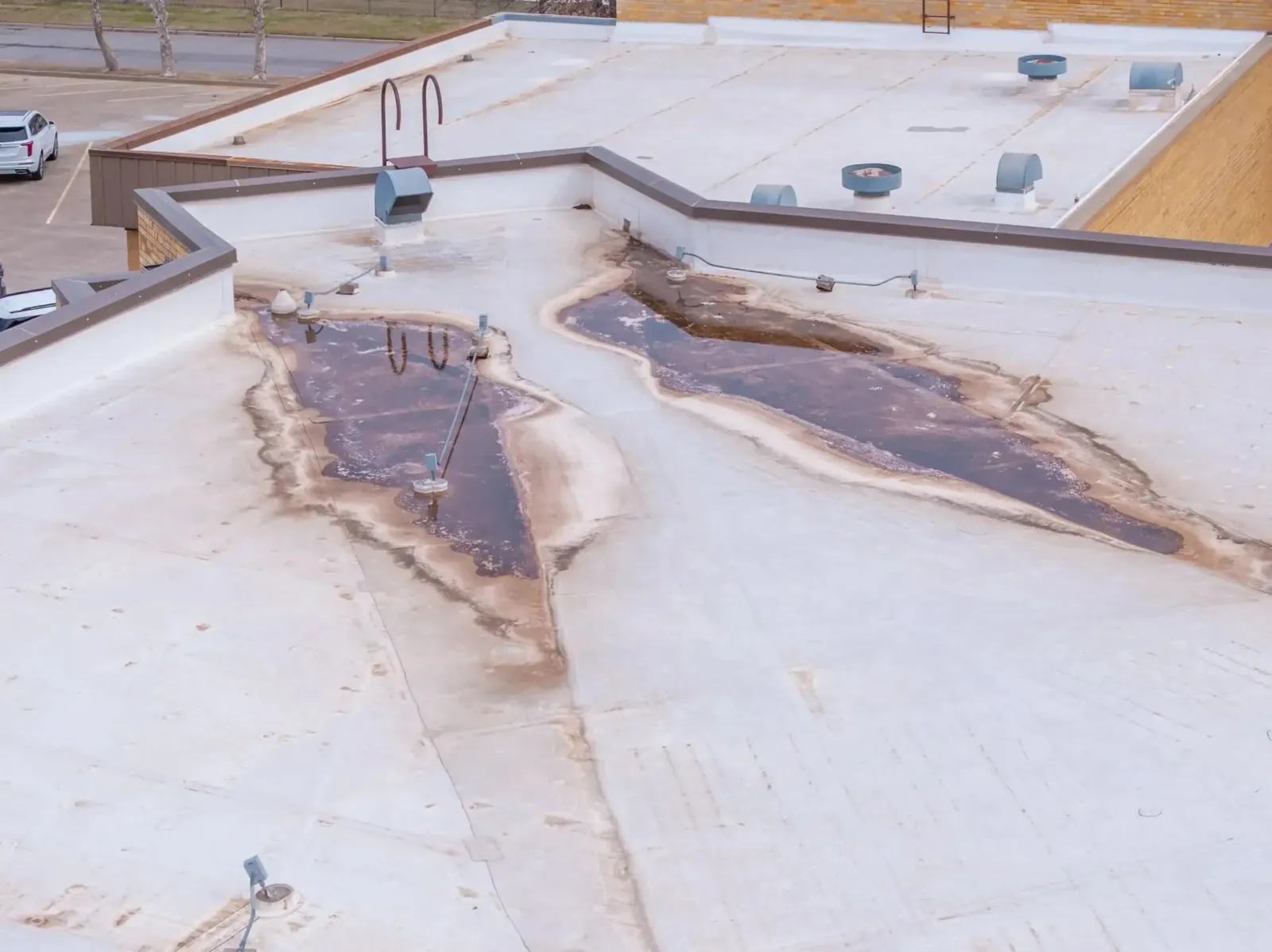
We compare the interior report with the roof plane above and around it. Water may follow a deck joint, insulation layer, or curb before becoming visible, so we inspect uphill details, drains, scuppers, seams, penetrations, and parapet terminations. Photos show what is confirmed and what remains a likely path. If the membrane assembly is unknown, we review records or verify the material before selecting a permanent patch.
Hillsboro's advanced manufacturing and drug packaging and distribution uses require roof work to respect equipment zones and operating windows. Those building types do not prove a defect or dictate a particular response. We ask the property contact about active process areas, sensitive interiors, and access restrictions, then keep the temporary work area separate from routine service paths.
After stabilization, the report identifies the temporary material, its boundary, weather exposure, and the permanent detail that needs attention. A marked condition report can help managers share the same facts with operations, ownership, and insurance representatives without mixing a suspected cause with a confirmed opening.
Move from temporary cover to permanent tie-in
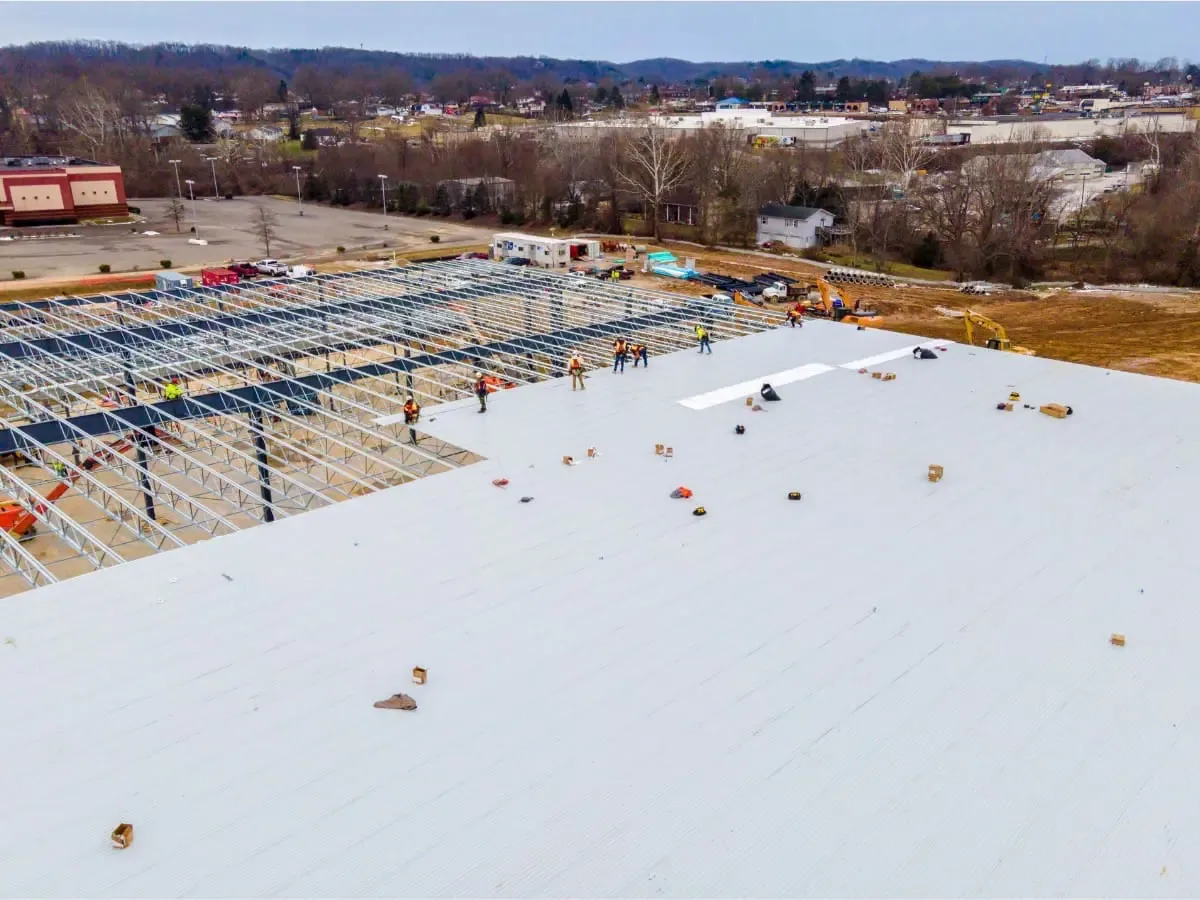
A tarp or temporary seal buys time, but it does not restore the membrane assembly. Permanent work starts with cleaning and preparing the surface, removing loose material, and reaching sound substrate. We match the patch or flashing to the existing system and close the lap in the direction of water flow. On approximately 64 days annually, Hillsboro’s daily minimum is at most 32°F. Before completing an emergency patch, we verify that the surface and selected material meet the temperature and moisture requirements for the tie-in. Where an object cut the sheet, puncture repair follows once the opening is protected. If wind lifted an edge, wind-related edge repair is scoped after the opening is protected. Surface temperature and moisture therefore matter when we choose adhesive, primer, weld settings, and the time to finish an exposed detail. If weather prevents a permanent tie-in, we secure the temporary boundary and schedule the next work window. We do not treat a rushed bead as a finished repair when the substrate is wet or unsuitable.
When moisture extends into insulation or the deck, we stop at the safe boundary, photograph the exposed condition, and obtain approval before expanding removal. The owner receives a repair price and, if needed, a separate scope for larger replacement or moisture testing.
Coordinate access with building operations
Emergency work often takes place while a building is occupied. We agree on a roof route, lift or ladder location, staging, and any restricted rooms before bringing equipment up. For a manufacturing or distribution property, the contact identifies where deliveries and process access must remain clear. We isolate the roof opening and protect the interior area where the leak is active. Temporary barriers and notices are set for the actual property, not assumed from its business type.
Oregon Highway 8 connects Forest Grove, Cornelius, Hillsboro, Aloha, and Beaverton as a regional transit route and urban arterial. That corridor and the freight role of the region's industrial areas give context to delivery planning; they do not establish traffic or access conditions at a particular address. We confirm the gate, loading point, and response route with the customer before mobilizing materials.
We keep the work record concise enough for a shift handoff. It notes what was covered, what area remains under observation, and who will coordinate the permanent visit. For a continuing leak, a clear handoff prevents temporary measures from being mistaken for full closure.
Set the next decision from the emergency visit
After the water is controlled, we give the owner photos, a marked roof location, temporary-work notes, and an estimate for the permanent repair. If the assembly or moisture extent is unclear, we state the needed test and where it would occur. A follow-up roof inspection can check adjacent seams, drains, and flashing before the next storm tests them. If the leak comes from an obstructed bowl or scupper, we can assess drain and scupper work as part of the permanent scope.
Some emergencies reveal a single displaced detail; others expose a larger pattern of wet insulation or failing laps. We separate immediate mitigation from permanent repair and longer-term replacement planning. That allows the property contact to authorize the urgent step while retaining a clear view of the full condition. We do not count temporary cover as completion of a permanent roofing scope.
The closeout also notes weather and access conditions that affected the visit. A property in Downtown Hillsboro or along Tualatin Valley Highway may need different staging, but the repair record follows the roof's actual assembly. When operations permit, we return to remove or incorporate temporary material and document the finished tie-in.
Questions About Emergency Commercial Roof Repair
Can you respond to a roof leak at night or on a holiday?
The emergency line is staffed around the clock, including nights, weekends, and holidays. We gather the affected area, access details, and immediate building concerns, then coordinate a visit based on conditions and safe roof access.
Will the first visit permanently fix the roof?
It may, if the opening is visible and a suitable permanent repair can be made safely. Active weather, wet surfaces, or concealed damage can require temporary dry-in first. We mark the temporary boundary and price the permanent work separately when needed.
What should our staff do while water is entering?
Keep people away from affected ceilings and equipment, protect movable contents where safe, and tell us which rooms or operations are affected. The building contact should follow its own safety procedures, especially near electrical systems. Share the roof-access rules before the crew arrives.
How do you know whether temporary tarping is enough?
A tarp is a short-term control only where it can be secured without creating a new water path or unsafe condition. We describe its limits and the permanent detail that remains. A follow-up inspection checks the membrane and nearby transitions before closing the repair.
Can a leak require more work after the roof is opened?
Yes. Wet insulation, deck damage, or a wider seam failure may extend past the visible entry. We photograph the exposed condition and stop at a boundary the owner can review before increasing removal or price.
Call for emergency roof service
Tell us where water is entering, what must stay protected, and how roof access works at the building. We will coordinate an emergency assessment and explain temporary and permanent repair steps.