
Commercial Wind Damage Roof Repair in Hillsboro, OR
Commercial wind damage roof repair in Hillsboro, OR. We inspect lifted edges, seams and rooftop details, then document a repair scope for your building.
Commercial Wind Damage Roof Repair
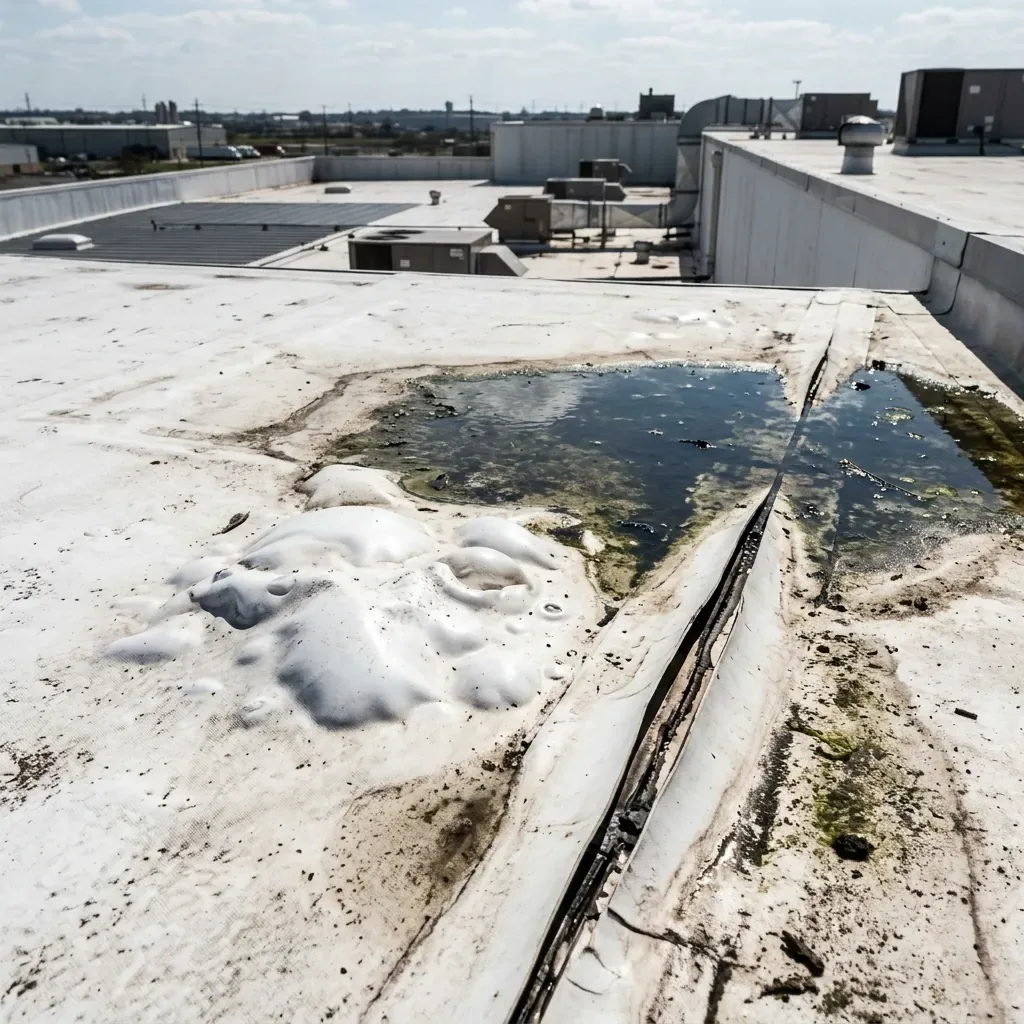
A lifted edge, loose metal, or membrane flap tells me where wind moved the roof, but not how far damage runs. In Hillsboro, OR, I start with a commercial roof inspection across the perimeter, seams, curbs, and interior reports. We mark what moved, check what remains secure, and keep a suspected condition separate from a confirmed defect.
At a production or distribution building, rooftop access and equipment paths matter. Along Tualatin Valley Highway, a useful scope accounts for work zones and occupied operations as carefully as the membrane. We photograph the exposed detail, note water entry, and price a repair that can tie into material that still holds.
Related Roofing Pages
More pages on commercial roofing in Hillsboro:
Trace movement beyond the visible edge
Wind damage often starts at a change in height or material. I inspect the perimeter termination, coping, corners, wall transitions, and seams just inboard of the edge. Metal can lift while the membrane below stays intact, or a loose termination can expose more of the field sheet. We record each condition separately so the repair price distinguishes sound from failed areas.
On a low-slope assembly, I look for displaced plates, opened laps, debris punctures, and creases across the drainage plane. Interior staining directs the walk, though water can travel beneath a sheet before appearing inside. A marked condition report connects photographs with the reported location and notes where insulation or substrate needs a closer check. That finding sets whether we patch, resecure, or open a section.
At Orenco Station, the MAX Blue Line serves the community. Before setting a repair sequence nearby, I confirm the property’s access path and work-hour limits. For nearby roof work, we confirm the building's access route, staging, and work limits with the property contact.
Separate wind entry from rain exposure
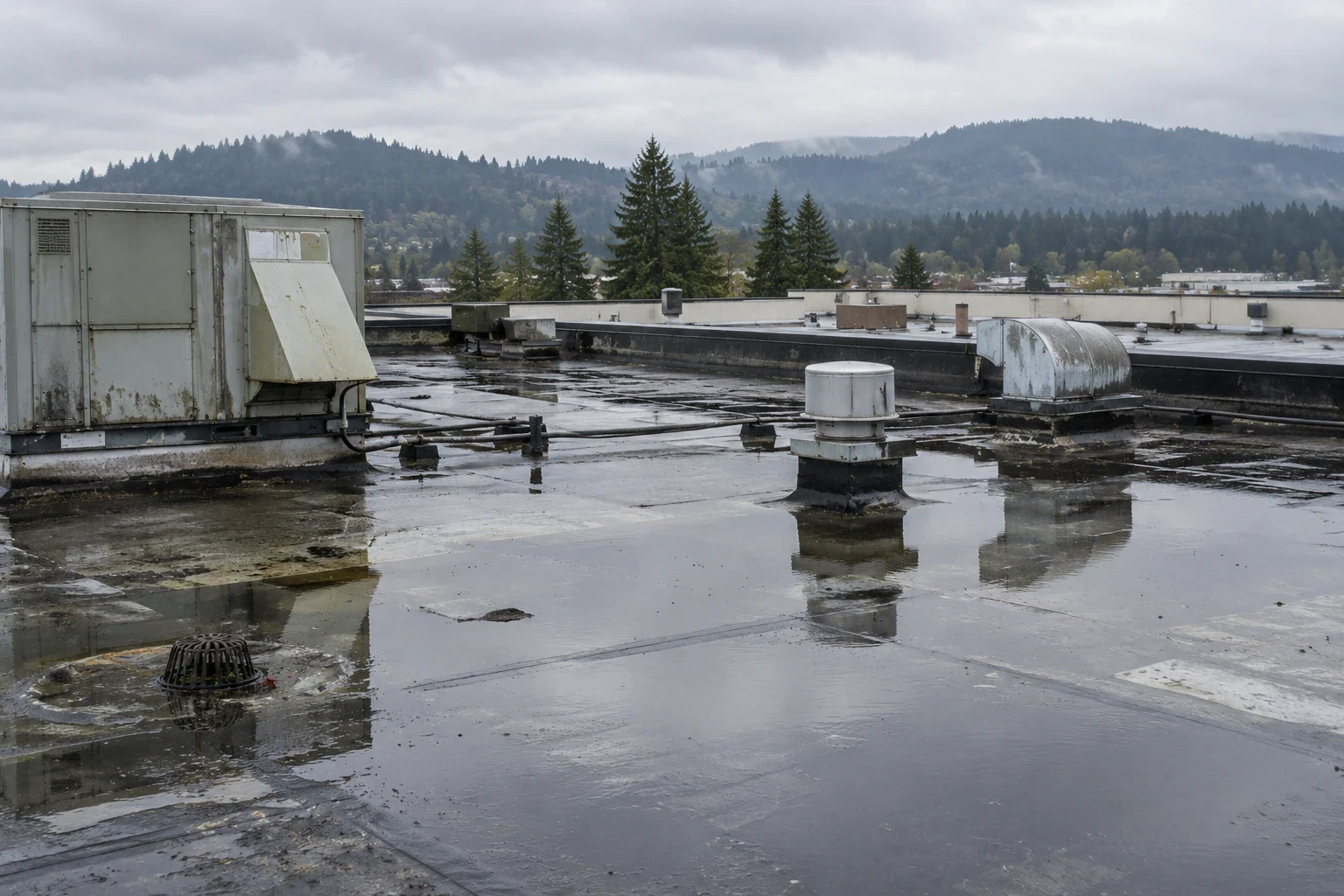
After wind, rain can reach a detail that was already loose. Annual precipitation in Hillsboro totals 35.93 inches in the long-term normal, with October through January the wettest stretch. I check whether water reached an opened lap or termination, then follow it toward drains and low points. Wet insulation changes the repair boundary and can make a surface patch the wrong scope.
We look for water tracks, wet cover board, softened insulation, and staining around curbs. A moisture survey can map suspect areas before an opening is priced; a test cut can answer a narrower question when records are unclear. The report separates observed conditions from concealed layers. If a local repair remains viable, we specify its preparation and tie-in for inspection during installation.
185th Avenue carries regional movement for people and goods across Washington County. That access context can affect lift placement or delivery planning, while the property's loading point and work rules still govern the sequence.
Check the assembly before fastening it back
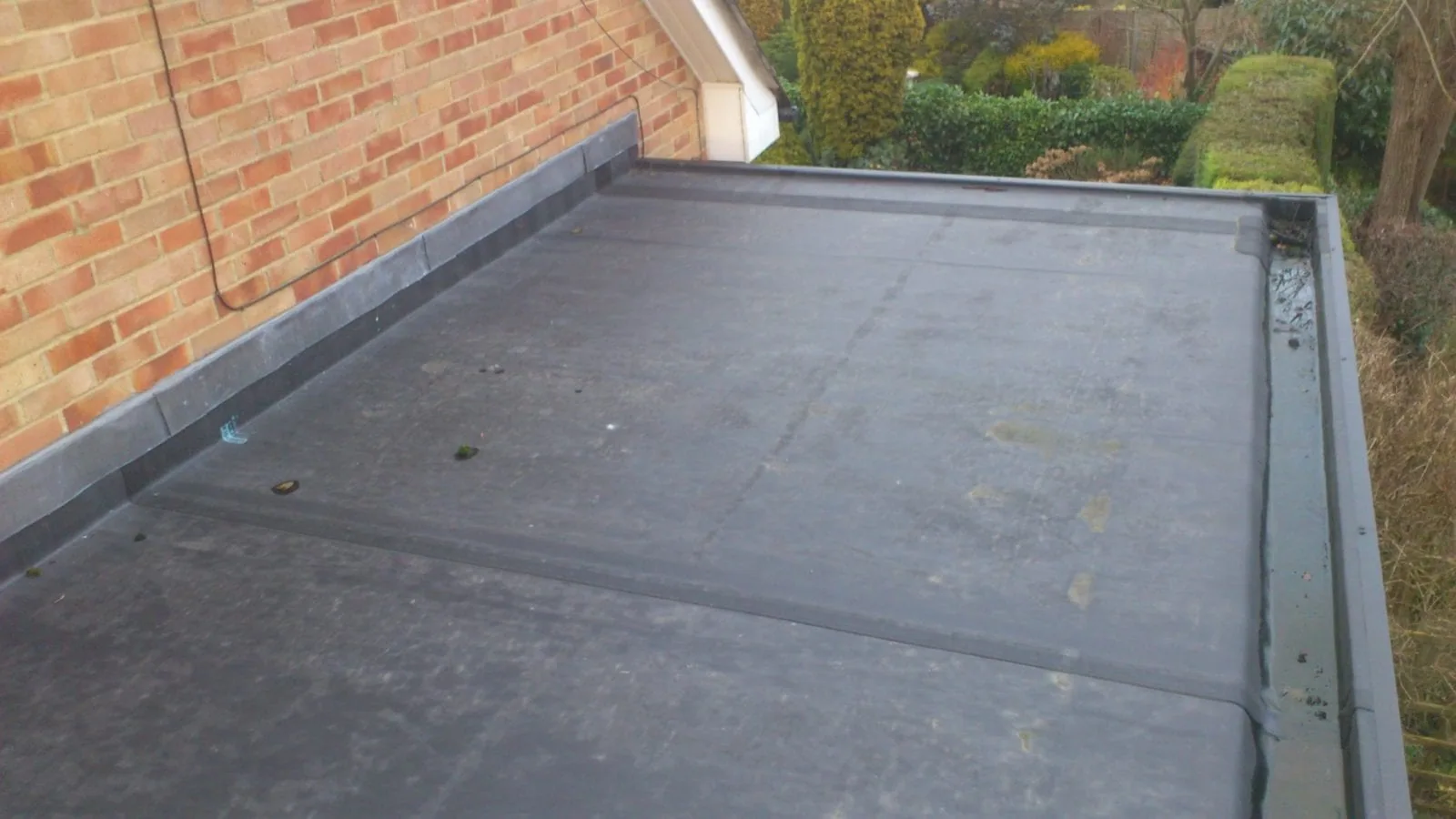
A membrane pulled from edge metal needs more than sealant at the exposed line. We check the termination, fasteners, and whether the substrate can hold new attachment. On a TPO roof, heat-welded seams and compatible flashing guide the repair. A standing-seam metal roof calls for a check of clips, panel movement, and trim. We identify the system before choosing materials.
Hillsboro's advanced-technology and medicine-manufacturing uses include packaging and distribution operations. That building mix makes equipment access and continuity relevant to a roof visit. We inspect the actual assembly and coordinate the work area with the property contact.
At a loosened curb flashing, we inspect the vertical leg, counterflashing, and membrane tie-in together. A clean boundary can support reinforcement; movement beneath the sheet or wet insulation may call for a separate investigation or replacement price.
Price a repair that reaches sound material
A localized repair removes loose material and exposes a stable surface. We secure the assembly as designed, restore the termination, and form a compatible patch with reinforced edges. Laps and metal transitions are checked before closeout. Photographs show the prepared area and finished work for comparison at the next roof walk.
When several edges have lifted or seams have opened across a broad section, we map the affected area rather than price each flap as isolated. A repair can fit where the surrounding membrane is sound and dry. Replacement or recover merits a separate price when attachment is uncertain, deterioration is widespread, or moisture lies below the surface. Access, staging, and existing layers also affect that decision.
For an active leak, our around-the-clock emergency response can stabilize exposure before a permanent scope is set. Wind-related entry may also involve failed flashing or an opened seam. We price each detail to its material and repair boundary.
At the perimeter, a repair is complete only when the edge, fasteners, and adjoining membrane all hold together. We walk the finished tie-in, check that no loose material remains, and photograph the boundary from the same direction as the original condition. If another section could not be reached, the closeout marks that limit instead of implying the entire roof was cleared.
Keep the work area controlled
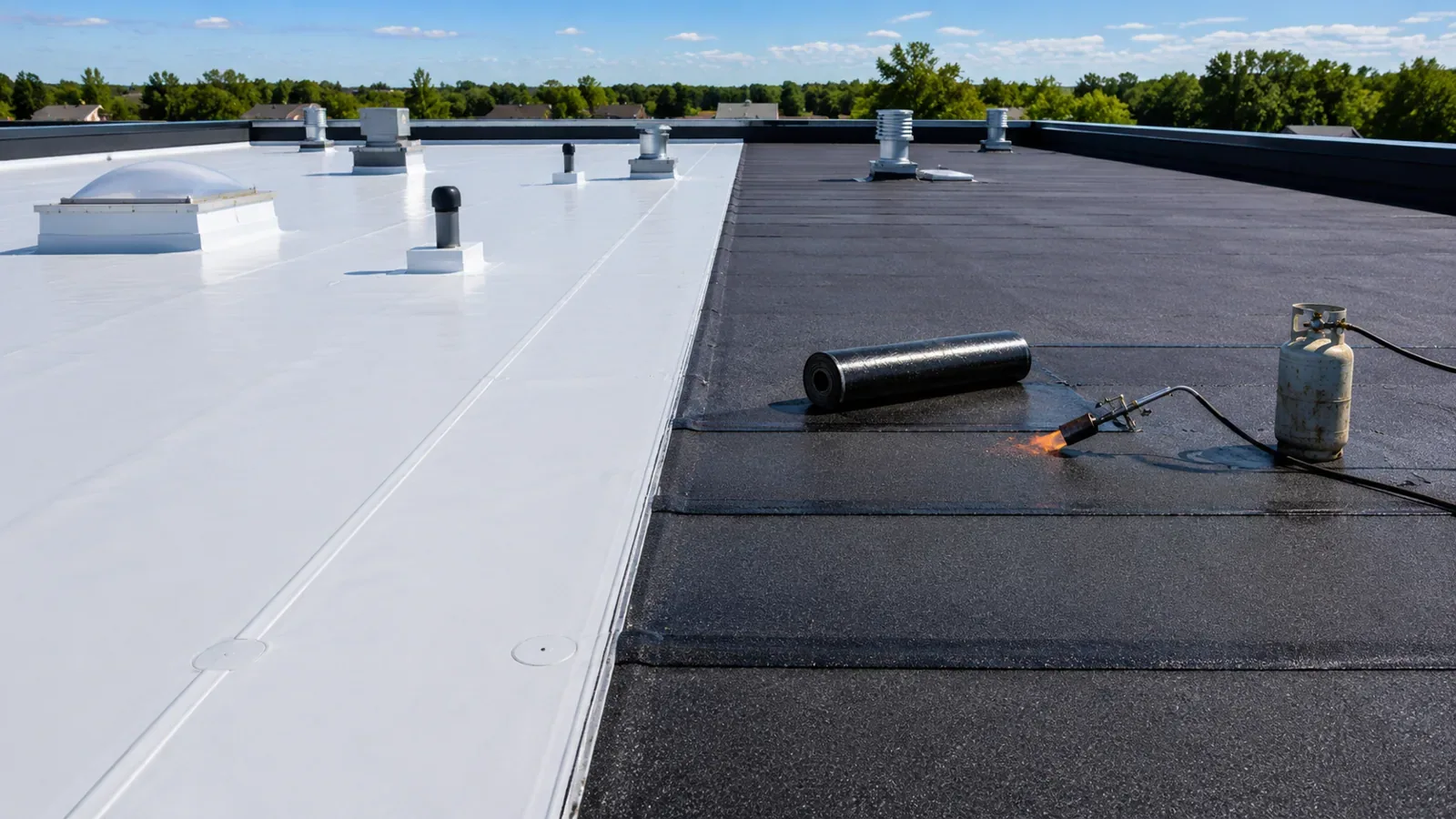
Before mobilization, we confirm roof access, fall protection, equipment clearances, loading limits, and staging. If a lift or barrier affects a shared route, we agree on timing with the property contact. At a process-oriented facility, the owner may identify equipment or deliveries that need coordination. Those requirements belong in the work plan before the roof is opened.
Wind can affect safe handling of sheets and metal, while rain can limit surface preparation or heat welding. We protect open areas at shift end and record what remains incomplete. If weather changes the sequence, we update the contact and show temporary protection in the closeout. The schedule reflects whether the scope is a spot repair or perimeter replacement.
The final record includes marked locations, photographs, materials, and areas we could not inspect. It distinguishes stabilization from permanent repair. If a later leak appears, the record helps compare the earlier termination with another seam, curb, or penetration. Arrange a Hillsboro roof walk and we will document findings and price work tied to the assembly.
Questions About Commercial Wind Damage Roof Repair
What should we do when an edge or panel is loose after wind?
Keep people away from a loose area below, and report active water entry to the property contact. We can inspect the perimeter and document whether the metal, termination, or field membrane moved. For immediate exposure, we can discuss emergency stabilization, then return to price a permanent repair once the attachment and repair boundary are clear.
Can you tell from the ceiling stain how much roof was damaged?
A ceiling mark identifies where water appeared, not necessarily where it entered. We compare it with roof seams, curbs, perimeter details, and the path across the insulation or deck. The report will show confirmed openings separately from areas that need moisture mapping or a small inspection opening.
When does wind damage justify replacing a roof section?
Repeated movement, widespread failed attachment, wet insulation, or too little sound membrane for a reliable tie-in can support a larger scope. We map those conditions and price the repair first where a local boundary remains viable. Any replacement area is shown separately, with the concealed conditions that could change its limits.
Will the repair match the existing membrane and edge detail?
We identify the assembly, surface condition, and edge construction before selecting a compatible repair method. Records, visible markings, and a closer inspection help resolve an unknown system. The written scope names the materials and preparation, and photos show the tie-in and termination after the work is complete.
How do you plan a repair at an operating building?
We confirm access, staging, equipment clearances, and work-hour limits with the property contact. Where operations or deliveries need a protected route, the plan identifies barriers and timing before the crew arrives. Weather and surface conditions can change the order, so we document any open area and update the contact before leaving it protected.
Arrange a Hillsboro roof walk
Tell us what moved, where water is appearing, and how the building operates. We will inspect the roof, mark the repair boundary, and price the work or larger option supported by the findings.