
About Commercial Roofing Hillsboro
Photographs from one roof walk should let the next manager find the same seam, drain, or curb without guessing where the repair stopped. Commercial Roofing Hillsboro works with building owners, property managers, facility teams, asset managers, and general contractors who need a clear roof decision. We inspect low-slope and metal commercial assemblies, repair bounded failures, replace roofs where condition warrants, and maintain systems so a later visit can compare what changed. The work begins with the roof itself: the membrane, its laps, flashing, drainage, substrate, and access. A commercial roof inspection records what can be seen and identifies where testing may change the conclusion.
Hillsboro’s annual precipitation normal totals 35.93 inches, highest from October through January, so we walk the bowls, low areas, open terminations, and water paths before proposing work. Before winter rain returns, we mark which outlet, seam, or termination needs correction, and a marked work boundary shows how an opening stays protected if preparation has to pause. Near Downtown Hillsboro or a production building elsewhere in the market, the roof walk documents the assembly and its operating constraints.
A leak report gives us a starting point; we trace the water path to the opening and mark the repair boundary. We compare interior marks with drains, roof slopes, wall transitions, curbs, penetrations, and earlier patches. Photographs show the detail in context, and notes identify the material where it can be verified. If insulation may be wet below an intact sheet, infrared review or a test opening can help set the repair boundary. We distinguish confirmed defects from concealed conditions so the proposal does not treat an assumption as an inspected result. The condition report with marked photographs gives the owner a useful record of the roof walk.
Access matters to what an inspection can confirm. We identify roof entry, fall-protection needs, equipment routes, and sections that could not be reached. Around a curb or rooftop unit, we check how flashing returns meet the field sheet and whether service access has affected the membrane. A drain can appear clear at its strainer while water remains in a low area nearby. We trace the drainage plane, record the bowl and surrounding surface, and determine whether a roofing repair, plumbing coordination, or more testing is needed. That sequence gives the recommendation a specific basis.
Keep repair and replacement distinct
Repair is a sound choice when a leak or split ends at a stable lap and dry substrate. In that case, our crew can clean the tie-in, replace failed flashing, and leave the adjacent sheet in place. If probing finds moisture farther into the assembly, the price should show the additional removal separately. The owner can compare a commercial roof repair with replacement planning when failures recur, tie-in material is scarce, or several roof zones show deterioration.
Replacement calls for a different set of decisions: tear-off or recover, insulation, drainage, perimeter details, and protection below. We first check attachment, added weight, substrate, moisture, and flashing height. Earlier repairs or equipment changes can make those conditions vary across a single building. The proposal keeps confirmed work distinct from concealed items that may affect price or schedule, letting a manager weigh focused repair against a broader assembly scope on comparable terms.
Work with the installed assembly
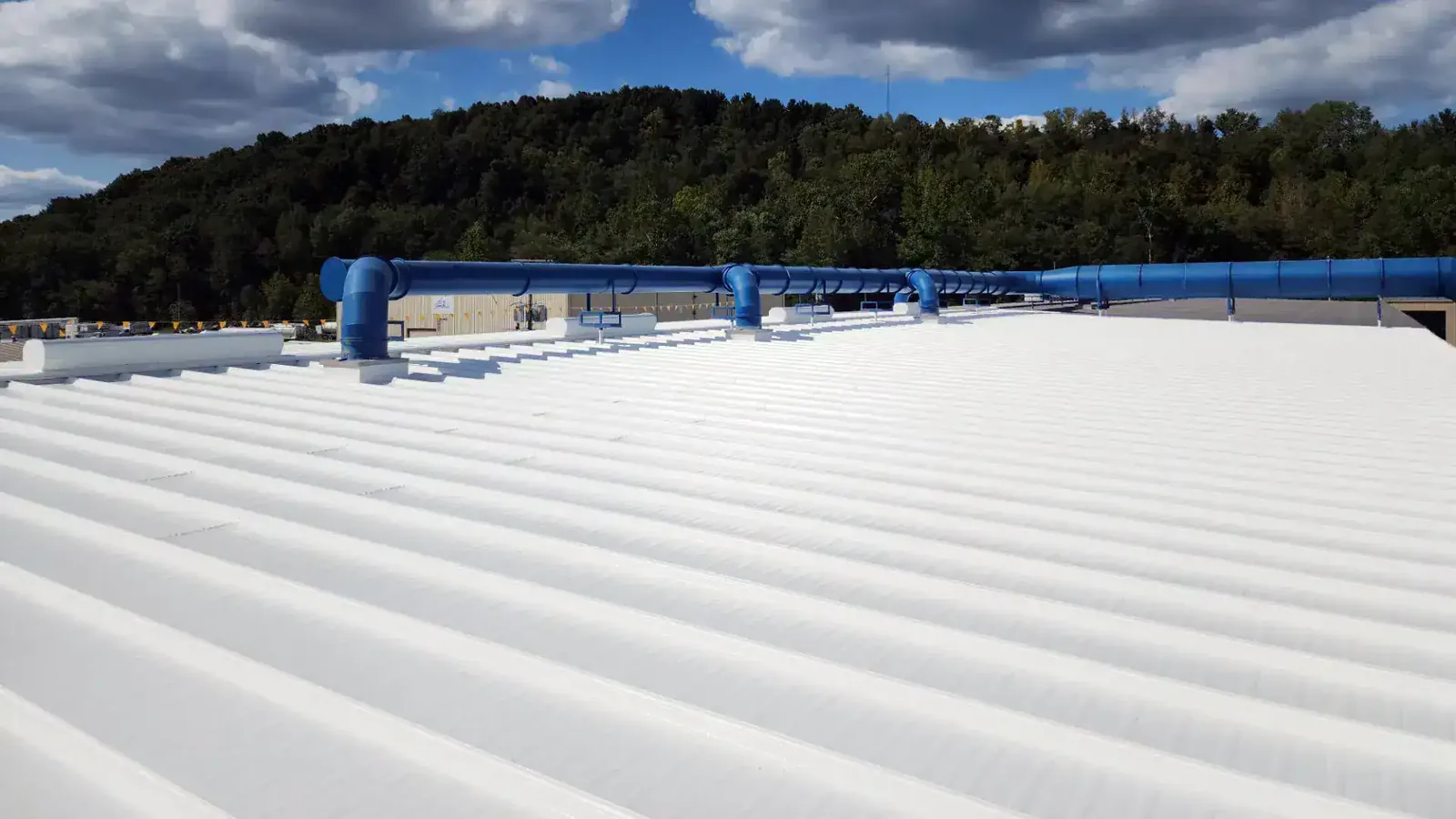
Our crews work with single-ply sheets, built-up and modified bitumen assemblies, standing-seam and retrofit metal, spray foam, and liquid coatings. Each construction has distinct laps, attachment, transitions, and repair materials. We identify what is present from records and exposed details. A TPO assembly is handled differently from standing-seam metal, and a coating is not a substitute for checking substrate and moisture. The proposed method follows the material on the building rather than a preferred label.
Hillsboro's building stock includes semiconductor manufacturing and medicine production, packaging, and distribution. Intel produces semiconductor products at Ronler Acres, while Genentech manufactures and packages medicines in Hillsboro. At process buildings, equipment clearance and operating windows shape the work sequence. At a production or distribution property, we note exhausts, curbs, service routes, and equipment that affects roof access. The schedule is discussed with the person who controls those operations. A detail can be repaired only when the work area is available and adjacent materials can be protected. The inspection record states what coordination is needed before opening the roof.
Set a work zone the property can operate beside
Before mobilization, we confirm roof entry, staging, deliveries, loading limits, tenant hours, and any area that must remain clear. An occupied building may need work divided into roof zones, with notice and protection planned below each one. When the surface opens, we secure exposed details at the end of a shift and record what remains unfinished. A repair can fit a shorter visit; a replacement or recover needs material movement, weather review, and closer coordination with rooftop trades. Our occupied-building work sequence lays out those boundaries with the property contact.
Forest Grove, Cornelius, Hillsboro, Aloha, and Beaverton are joined by a westside state route that also carries regional transit. At each property along Oregon 8, the contact confirms the roof entrance, staging boundary, and approved work hours before deliveries are scheduled. We confirm the actual loading entrance and any delivery restrictions before the job starts. The same applies at Orenco Station and other nearby commercial areas: the local designation helps place the building, while the owner supplies access rules and operating hours. We put those conditions into the sequence rather than leaving them to the day of work.
Leave the next visit a usable record
Maintenance begins with the points that can change between roof walks: drain bowls, seams, flashings, edge metal, prior repairs, and penetrations. We clear accessible outlets, check whether a patch remains bonded, and photograph new conditions. If a test or follow-up is still needed, the report names the area and why it remains open. A preventive maintenance program can return to the same marked details before a small failure extends into insulation or the interior. The record helps a new manager understand what was repaired and what remains a decision.
For owners with several buildings, we retain distinct notes for each roof while keeping the inspection format consistent. A multi-site record lets managers compare urgency, access needs, and likely capital work while keeping each roof’s findings tied to its own assembly and repair history. Roof capital planning can place near-term repairs beside replacement considerations, with cost drivers described by assembly, access, insulation, and staging. Our purpose is to leave the owner with an actionable scope: what we observed, what we recommend, what remains uncertain, and what the next visit should check. A roof capital review uses those findings to frame the next decision.
Questions From Building Owners
What does Commercial Roofing Hillsboro handle?
We inspect, repair, replace, recover, restore, coat, and maintain commercial low-slope and metal roofs. Scope and schedule follow the installed assembly, observed condition, and access needs.
Can you respond to an active commercial roof leak overnight?
Emergency response is available through the night, on weekends, and during holidays. We protect the affected area, document visible conditions, and scope permanent repair after the roof can be inspected.
How do you keep a repair proposal specific?
We mark the defect, photograph adjacent details, and identify the material that remains sound. Testing or concealed work is listed separately when it could change the repair boundary.
What happens after the work is complete?
We note the repair location and completed scope, retain photographs, and identify any condition that still needs follow-up. A later inspection can return to those details and record what changed.