Commercial Roofing for Public Agencies in Hillsboro, OR
Plan public-building roof repairs and replacement in Hillsboro, OR, with marked conditions, access coordination, and scopes ready for review.
Public Agencies
A drain bowl, parapet, and interior ceiling can describe different parts of one leak. In Hillsboro, OR, recurring rain makes it useful to trace water from the room report to the roof detail. We mark what is open, what remains sound, and which area needs a test. Downtown Hillsboro is a regional center serving western Washington County, with commerce and local-government activity. For a public building, we confirm who controls the entrance and which roof assembly is installed. We inspect the actual deck, penetrations, and perimeter details, then prepare a photo-marked condition report that procurement staff can connect to the measured repair boundary.
Related Roofing Pages
More pages on commercial roofing in Hillsboro:
Document the condition behind the work request
An interior stain is a starting observation, not a roof diagnosis. We compare its location with nearby drains, seams, wall transitions, and penetrations, then track slope and deck direction where accessible. October through January have the highest precipitation normals in Hillsboro. For agency review, the roof plan marks runoff routes beside any proposed opening and shows how each shift will leave the area protected. We check drain bowls, low areas, and overflow routes. Debris may call for maintenance; weak slope or wet insulation needs another scope. We note inaccessible areas and whether a test would answer a specific question.
For several buildings, findings can be grouped by property and urgency. A commercial roof inspection records assembly and repair boundary so staff can review a defined item.
Coordinate public access and roof access
Before work begins, we confirm hours, loading, secure entrances, fall protection, staging, and public routes that must remain open. The facility contact identifies approval steps and restricted spaces. We map the lift, material path, barriers, and daily closeout point. If an opening expands the repair boundary, we secure it and review added work before proceeding.
Regional routes help estimate when materials can reach a job, while the agency's own site rules determine the final approach. We confirm vehicle clearance, public entrances, loading hours, and any escort requirement with staff. Downtown Hillsboro's local-government facilities set their own opening hours and crew access.
Where offices or service counters remain open, the crew plan marks protected pedestrian paths and the areas that can be isolated during a shift. We review noise-sensitive work with staff and secure exposed sections before reopening nearby circulation. Urgent leak response can start before a procurement package is complete, with the temporary protection and permanent repair recorded as separate work.
Write the repair for the roof that is there
Public portfolios may include several membrane and metal assemblies. We identify the sheet, attachment, insulation, and flashing before choosing a patch, recover, coating, or replacement. A welded thermoplastic seam, a taped EPDM lap, a modified-bitumen transition, a built-up edge, and a standing-seam panel each need their own preparation. At an equipment curb or pipe support, we check the flashing termination and the substrate around it. A repair should meet sound material and leave an edge that can be inspected later.
Hillsboro winter normals include days at or below freezing. Where water remains near a drain or exposed edge, we check for a changed lap, loose sealant, or movement around a penetration. A coating is considered only when the surface and underlying moisture condition suit the system. It cannot correct wet insulation or a drainage defect. We record what was found and price any concealed work separately so the agency can review the conditions that could change the scope.
We compare an overlay and replacement against the same inspection record. An overlay requires a dry, stable assembly, attachment we can confirm, permissible added weight, and compatible drainage and code conditions. If testing shows that those requirements are absent, the replacement scope lists removal and new insulation work. A separate recover assessment explains which checks ruled the option in or out.
Keep immediate correction apart from capital work
A public facility may need an active leak controlled before a broader bid package is ready. We identify a safe repair boundary, protect the opening, and state what condition remains after the immediate work. That does not decide the full roof plan. The agency can review the marked photographs, confirm access, and set a separate test or replacement scope when procurement timing allows.
For a permanent patch, we remove loose material, prepare the substrate, and reinforce edges or flashing so the repair meets sound assembly. If moisture extends beyond the first opening, we document the finding and price the added area separately. The closeout should make clear which drain, seam, or curb was corrected and which part still needs review, giving maintenance staff a direct handoff.
When a replacement is considered, we describe removal, insulation, edge details, access controls, and temporary protection in the bid scope. We can phase the work around public access and coordinate a roof walk with operations before setting the schedule. The decision stays with the documented condition, not the facility's public use alone.
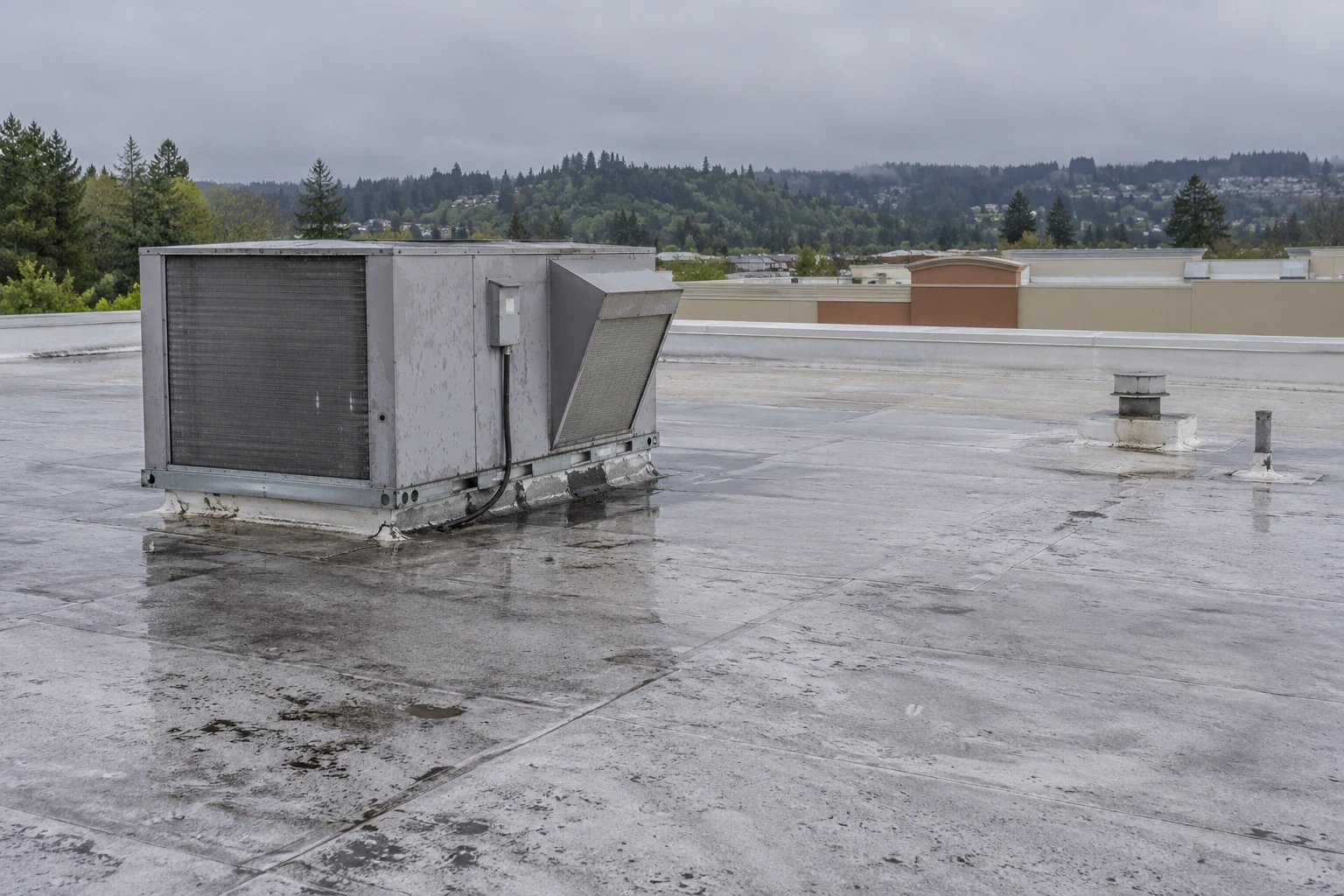
Make the scope reviewable before procurement
Cost follows the measured boundary, assembly, access, and protection below. Tear-off, insulation, edge metal, curb flashing, equipment, lift placement, and temporary dry-in can change a project. Occupied hours may limit how much roof is open. We state assumptions and separate known quantities from concealed conditions that need a test before pricing.
For a small defect, we prepare the substrate, reinforce the patch, and document the repair. If moisture extends beyond the opening, we price that work separately. Replacement can be compared with a recover after attachment, moisture, loading, drainage, and code are checked.
For public work, the scope should identify staging, work hours, access controls, and closeout records that reviewers can compare. Our roof survey can establish condition before a larger project is scoped; the managed-property process can help staff maintain records across sites.
Keep roof records with the facility file
At turnover, the file identifies each repaired location, the materials used, and any section that could not be reached. Agency staff can use that map to compare later observations without relying on memory of the crew visit. A maintenance visit can add current drain and termination notes to the record and identify items for the next budget cycle.
Orenco Station's transit-oriented setting differs from Downtown Hillsboro's civic and commerce role, but neither planning label predicts a roof's condition. We verify the building entrance, staging limits, and equipment route directly with the agency contact. The work plan then identifies barriers and notice locations based on actual public circulation, not an assumed neighborhood pattern.
For an agency with multiple facilities, a district portfolio review can keep handoffs clear. The report states what was corrected, what remains under observation, and the next decision for maintenance or procurement.
Questions About Public Agencies
Can you document several public buildings under one scope?
We can schedule site inspections and use consistent report fields while keeping each roof's assembly, condition, access limits, and repair boundary distinct. The agency receives a marked record by building, which supports comparison without assuming one repair method fits every property.
What should an agency roof report show?
Include photographs, observed assembly, marked defects, inaccessible areas, and the next test or repair decision. We identify which findings are confirmed and where moisture may extend beyond a visible opening. That gives reviewers a specific boundary to evaluate.
How do you keep a repair from blocking public entrances?
We confirm visitor routes, service entrances, loading, and building hours with the facility contact. The plan marks staging and barriers before the crew arrives. If a lift or temporary closure is needed, staff can coordinate the notice and work window in advance.
When should a public owner replace a roof rather than repair it?
Repeated seam separation across multiple roof zones, damaged deck, or moisture beyond a repair boundary may make a tear-off estimate more useful than another patch. We identify the tested area and list removal, insulation, and dry-in assumptions. An overlay comparison is included only if existing layers remain dry, secure, and compatible with the load and drainage requirements.
Can emergency roof work begin outside agency business hours?
Emergency response is available at any hour, including holidays. We coordinate access with the facility contact, protect the opening, and document the immediate condition. A permanent repair scope can follow once the roof and any concealed moisture are reviewed.
Request a public-building roof review
Share the facility, access requirements, and any leak or procurement timeline. We will inspect the roof, mark the findings, and prepare a repair or capital scope for agency review.