
Commercial Roofing for School Districts in Hillsboro, OR
Plan roof inspections, repairs, and summer replacement for Hillsboro school properties with drainage findings, secure access, and marked work zones.
School Districts
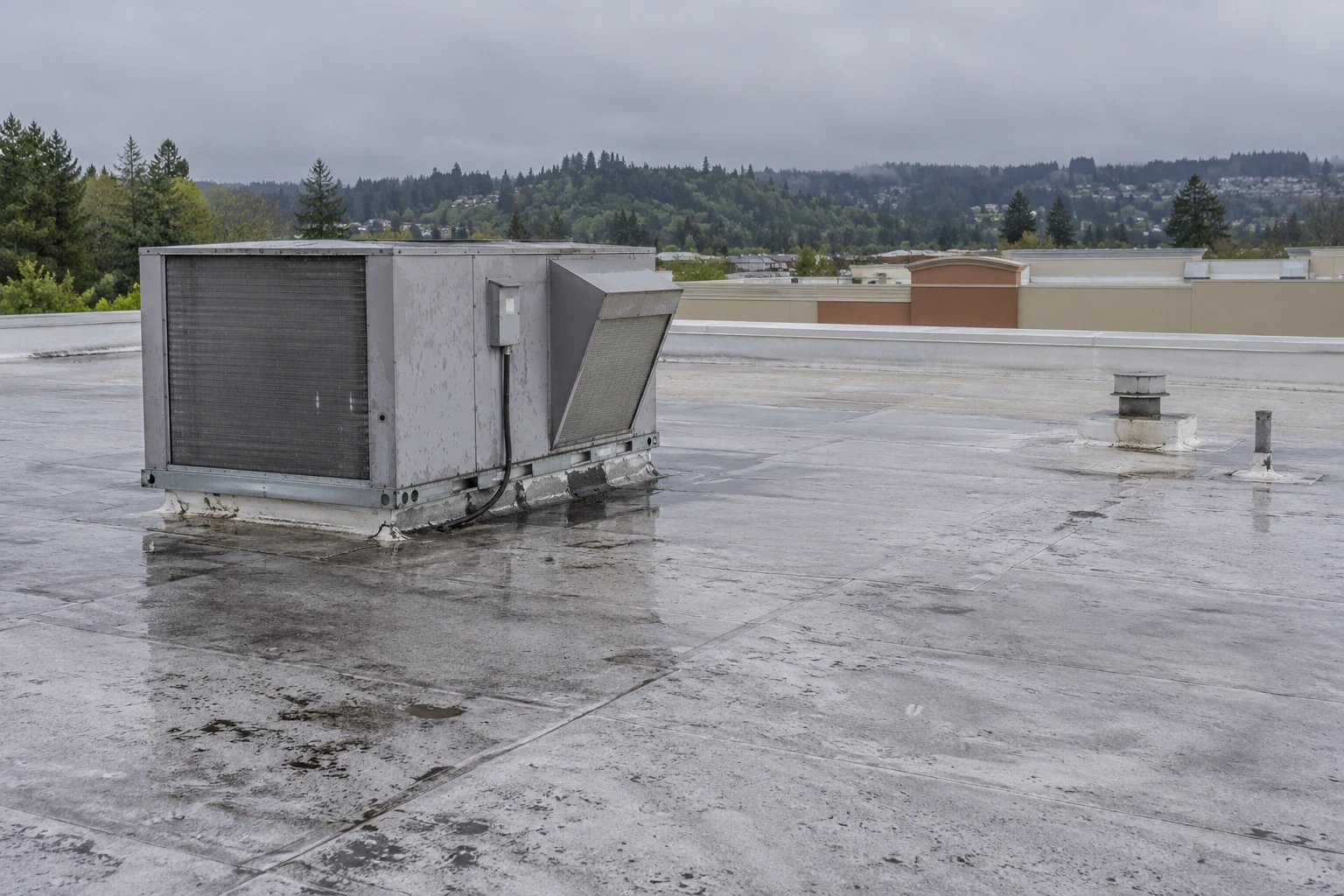
An open drain flashing above a classroom needs a measured repair boundary before the district approves removal. In Hillsboro, OR, rain can move from a drain, lap, or curb through the assembly before reaching an occupied room. We compare the interior report with roof details and mark the repair boundary. That helps district staff decide which building needs a repair now and which item belongs in capital planning.
Hillsboro's normal precipitation is heaviest from October through January, and winter includes freezing days. Drainage, exposed flashing, and seams deserve attention before occupied hours limit access. We plan around arrival, dismissal, deliveries, and restricted areas. A phased occupied-building scope keeps work zones and closeout points clear.
Related Roofing Pages
More pages on commercial roofing in Hillsboro:
Mark the condition before setting the work window
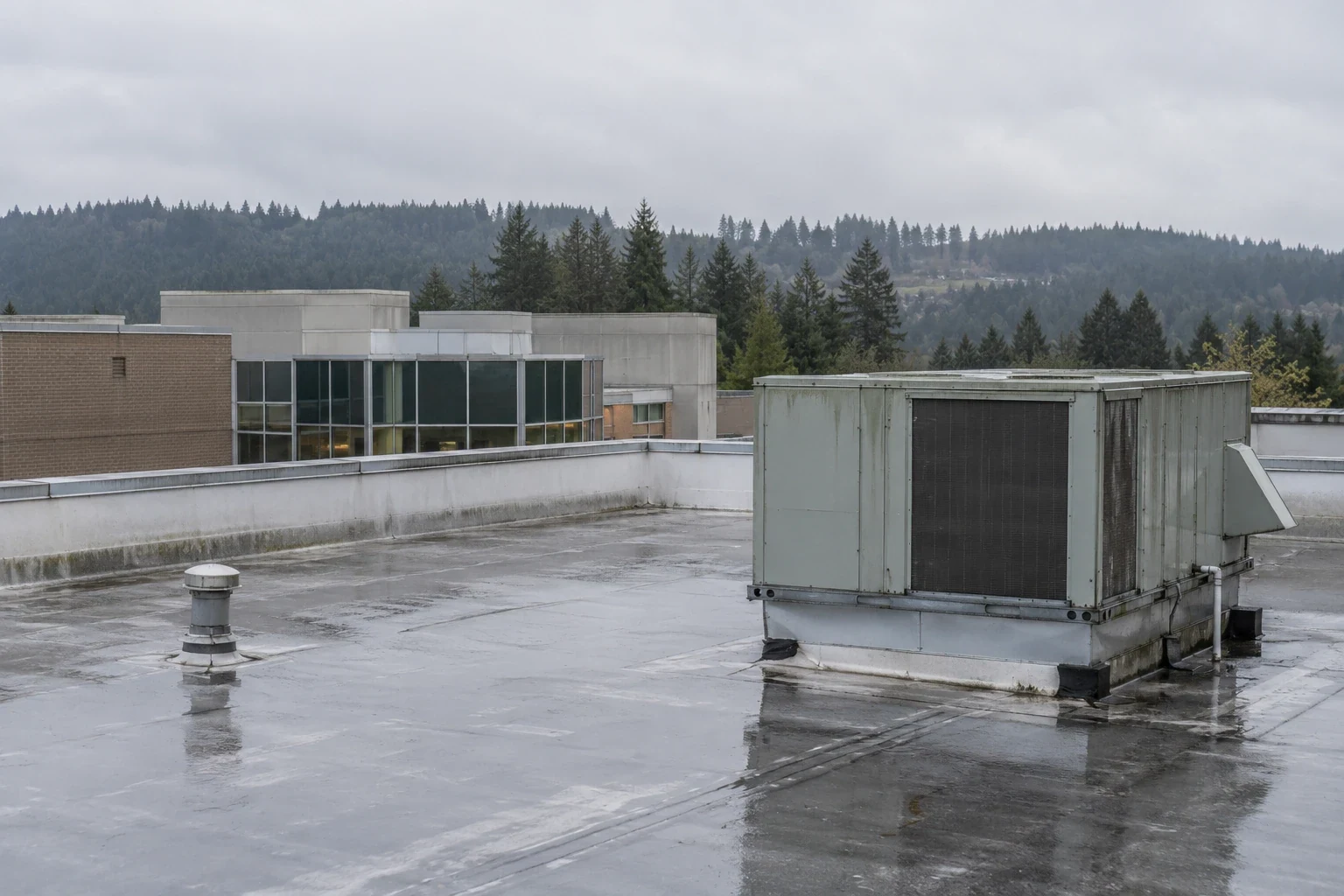
Water can follow a deck flute or insulation joint before it appears below. We compare the room location with drains, seams, penetrations, edges, and equipment curbs, then photograph likely details. The report separates a confirmed opening from a suspected route and notes blocked or unsafe areas. That helps the district choose between a patch, test opening, and broader investigation.
Hillsboro's rainfall normals are wettest from October through January. We check drain bowls, strainers, overflow paths, and low areas. Debris may need maintenance, while water held by slope or wet insulation calls for a different repair. We state what was observed and what a test should resolve.
A photo-marked condition report organizes findings by building and section. If moisture may extend below the membrane, an infrared survey or test opening can define its boundary. We document the result for facilities and budget staff.
Protect the roof between rainy school days
When a repair cannot be scheduled immediately, the district needs to know what condition remains exposed. We mark the active opening, note whether a temporary cover is in place, and identify the next inspection point. A temporary measure is not a substitute for a completed repair, so the work order should show who will check it and when. Hillsboro has about 64 days annually with minimums at freezing or colder. For a district work order, we record whether an outlet still holds water and what surface preparation must wait for suitable conditions. A drain that holds water or an edge that has lifted can be tested by both conditions. We look at the drain bowl, overflow route, laps, and exposed sealant, then choose a repair window when the substrate is suitable. The district's calendar affects the work sequence, but material preparation and dry conditions still govern whether a patch can be installed correctly.
If water reaches a room during occupied hours, the repair decision should include the roof opening and the interior area requiring protection. We can separate immediate leak control from follow-up work on wet insulation or a larger drainage issue. The marked boundary shows which problem was addressed and what remains to be checked.

Schedule around the district calendar
Before mobilization, we confirm roof access, loading, staging, fall protection, building hours, and material routes. The school contact identifies secure areas, events, and entrances that must remain clear. We map the lift and the work zone, then fix a daily protection point. Summer may allow longer work periods; term-time repairs can use smaller areas and notices.
The westside Highway 8 corridor spans Forest Grove, Cornelius, Hillsboro, Aloha, and Beaverton. We confirm vendor check-in, bell schedules, loading, and protected paths with the district contact before a lift moves, then set a work window that keeps school entrances clear. Student arrival, dismissal, and events shape the work boundary. For a school near Orenco Station, we map the assigned roof route and security steps with facilities staff before scheduling a lift.
Emergency response is available any hour, holidays included, when a new opening threatens rooms or equipment. For replacement, we phase tear-off, temporary dry-in, and daily protection so staff know which area is open.
Identify the roof before choosing a repair
District portfolios can include roofs from different construction periods. We identify membrane, attachment, insulation, and flashing rather than assume the same assembly at each school. A thermoplastic seam, EPDM lap, built-up surface, modified-bitumen transition, or metal panel joint needs different preparation. At a curb or skylight, flashing must meet sound material and leave an inspectable edge.
A recover requires a dry, stable assembly, verifiable attachment, acceptable added weight, and workable drainage under code. If testing finds wet insulation or deck damage, we price replacement separately. A coating cannot correct trapped moisture or failed attachment. The repair boundary follows the roof findings.
Downtown Hillsboro has a regional-center designation tied to compact employment and housing near transit. At a school, we inspect the deck, membrane, drains, and edges before choosing TPO repair or another method.
Build the budget from visible scope and access
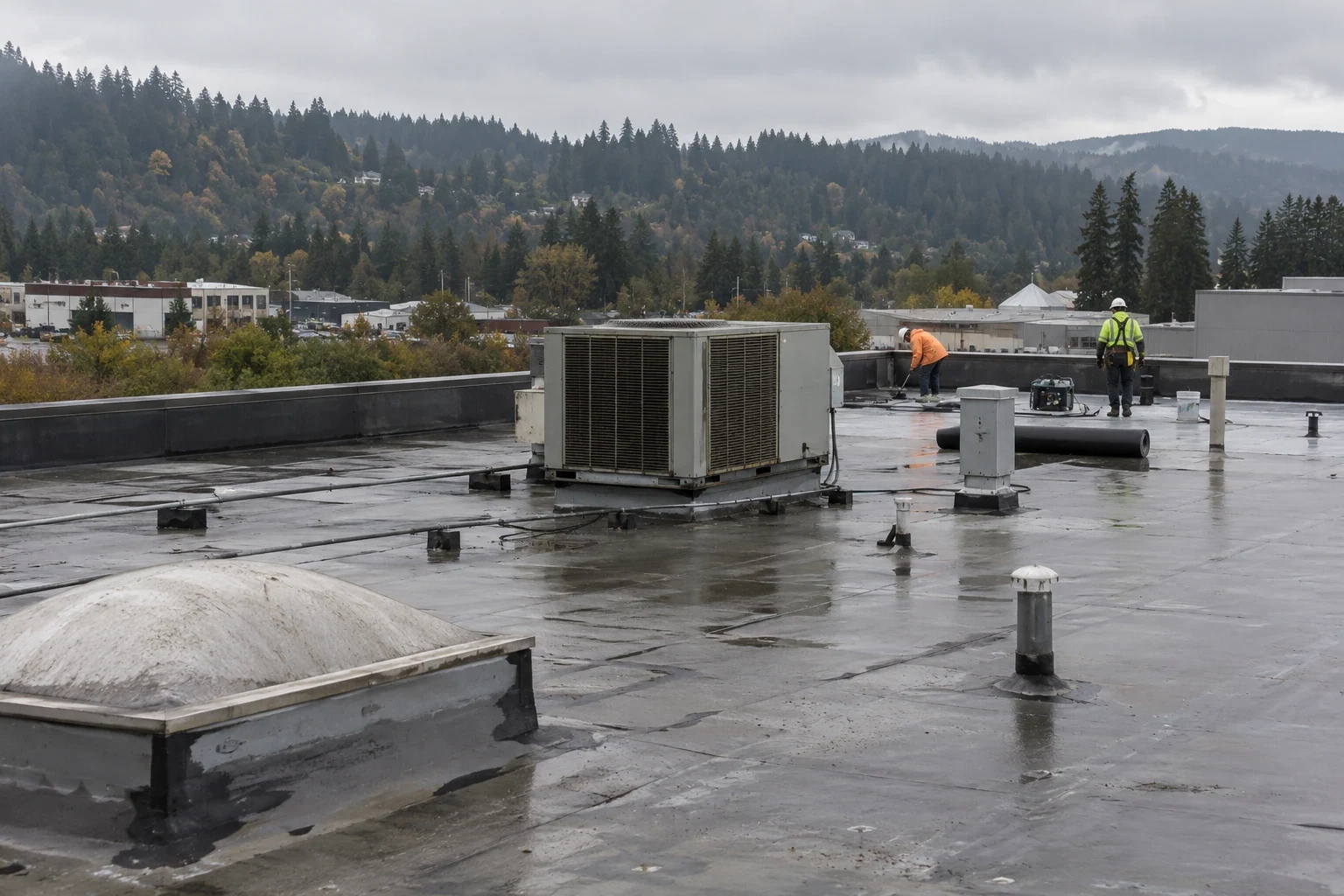
A school roof price depends on assembly, repair area, access, protection, and concealed conditions. Tear-off, insulation, edge metal, skylight flashing, equipment, and temporary dry-in can change replacement scope. Occupied hours may require smaller phases. We state assumptions so facilities and finance staff can compare the same boundary.
We remove failed material, prepare the substrate, and reinforce patch edges or curb flashing. If moisture extends farther, we mark and price it separately. A recover and replacement can be compared when the assembly meets each method's conditions.
Budget priority follows roof condition, interior impact, and the school calendar. We separate urgent water-entry work from sections ready for scheduled bidding. For each capital candidate, we identify any moisture test, access review, or assembly detail that must be resolved before a bid quantity is set.
Leave a record the next facilities lead can use
At closeout, we hand over marked photographs, the materials used, and notes on inaccessible areas; the next roof walk can recheck the same drain, lap, or curb. We can return for preventive maintenance to clear drainage, review terminations, and record changes before the wet season.
For multiple properties, consistent records help compare repair urgency without assuming every roof is alike. Our work with managed property portfolios and public facilities relies on clear handoffs. The roof file shows repairs, needed tests, and access or calendar constraints.
The inspected assembly sets the repair limits; district staff confirm access and the school calendar. We can mark the site and schedule a roof walk with facilities staff before the next budget decision.
Questions About School Districts
Can a leaking classroom roof be repaired during the school year?
We confirm access, occupied hours, secure areas, and the location of the interior impact before setting a work window. A localized repair may fit a smaller phase. If the roof must be opened, we plan temporary protection and a daily closeout so the building contact knows what is safe to use.
How do you decide whether to patch or replace a school roof?
We inspect seams, penetrations, drains, insulation, and the available sound material around each defect. A patch can work at a bounded opening; widespread deterioration or moisture may require a broader scope. We identify any test needed and price repair and replacement paths separately.
What roof conditions should be reviewed before summer work?
We mark active leaks, open seams, wet insulation, drainage issues, and details that limit a reliable tie-in. The report can separate repair items from replacement sections and note access or equipment needs. That gives the district time to set a work sequence before the building calendar changes.
Can work be scheduled at several schools in one district?
Yes. We can group roof walks or repairs by access and weather window, while keeping each building's assembly, findings, and closeout in its own record. Site staff confirm security rules and delivery routes so the shared schedule does not assume identical conditions.
What should a school roof report include?
Keep photographs, marked defects, observed assembly, inaccessible areas, and the recommended next step. We note whether a test found moisture and where the repair boundary ends. The record supports maintenance planning and lets budget staff review the same roof evidence as facilities staff.
Arrange a school roof walk
Share the building, leak location, and calendar or access limits. We will record the condition, explain where the repair stops, and prepare a scope the district can schedule.