
Self-Storage Roofing in Hillsboro, OR
Self-storage roofing in Hillsboro, OR, with attention to unit rows, drainage, and perimeter details. We inspect, mark repairs, and plan access.
Self-Storage Roofing
A drip at the end of a storage row can follow a seam long before it reaches a unit door. In Hillsboro, OR, I start at the reported spot, then check the roof slope, drain path, edge metal, and nearby penetrations. We map the zone, inspect membrane and substrate, and mark sound material for repair. A roof inspection helps the operator separate one defect from a recurring drainage or attachment problem.
The MAX Blue Line serves Orenco Station’s Hillsboro community, which combines shops and services around the transit stop. For a storage inspection in that setting, the operator identifies gate hours and the route to each roof zone. For work near Downtown Hillsboro, the operator decides roof access and where material is staged.
Related Roofing Pages
More pages on commercial roofing in Hillsboro:

Map each roof zone before repair
We compare the reported unit or office location with the roof plan and the nearest seams, curbs, drains, and wall transitions. Water can travel along insulation joints or deck flutes, so the interior mark may sit away from the opening. We photograph the suspected path and note whether the surrounding sheet is firm, clean, and attached. Hillsboro's annual precipitation normal is 35.93 inches, highest from October through January. We map each storage-row outlet and inspect adjacent seams before deciding which work belongs in the next dry repair window. On long roof runs, that recurring rain makes drain strainers, overflow routes, and low points useful inspection checks. We note whether ponding remains after adjacent areas drain and whether a seam crosses its path. A blocked outlet and a depressed field call for different corrections.
At the perimeter, we check coping, edge metal, fasteners, and the termination beneath the cap. A loose cleat can let wind movement open the edge, while a failed lap may admit water into insulation. We mark each condition separately and check the interior below before setting a repair boundary. If the assembly is unclear, we identify a small test area instead of assuming the membrane from its surface color.
Keep runoff and overflow distinct
Storage roofs often have several drains across connected sections. We inspect each bowl, clamping ring, strainer, and overflow, then trace how water reaches it from the field. If a drain is clear but water remains, we compare slope and insulation condition around the low point. The drain and overflow scope can include cleaning, a localized repair, or testing where the cause is not visible.
Hillsboro's airport averages count about 64 days a year when the overnight low reaches freezing or colder. Freeze conditions can stress sealant, open an already weak lap, or leave water at a low edge. We inspect those details after cold periods and repair to sound material. If moisture extends below the membrane, we show the removal boundary so stored contents are not protected by a patch that only covers the surface.
Oregon Highway 8, also called Tualatin Valley Highway, is the arterial that ties Hillsboro to Aloha and Beaverton. For a storage facility, we confirm gate hours, truck turning, material staging, and unit access with the operator before scheduling work above active drive aisles.
Repair the boundary the roof supports
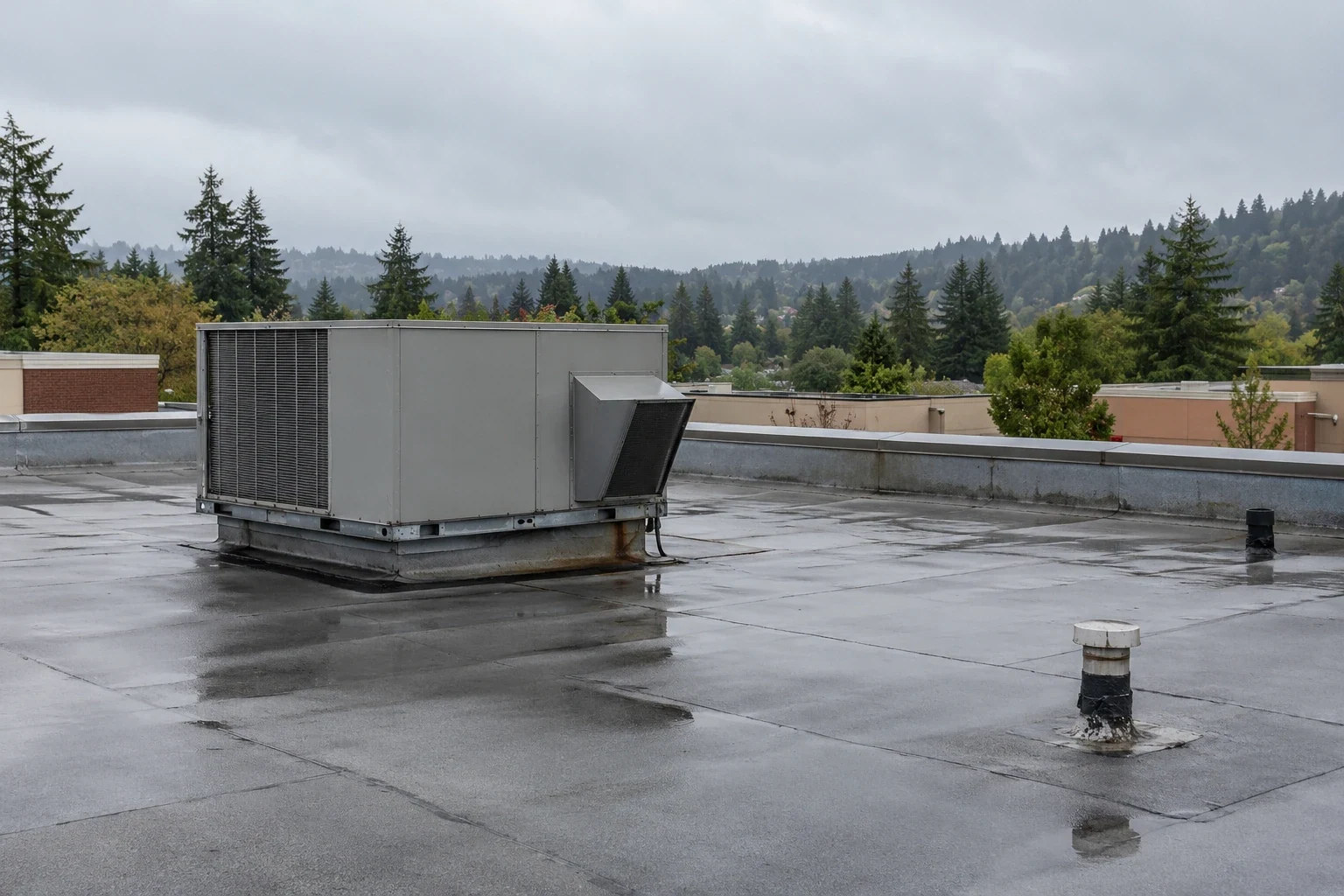
A puncture or split seam can be patched when the membrane around it remains dry and well attached. We remove loose material, clean the surface, prepare the substrate, and finish the lap with a compatible repair. Repeated openings along one line may point to movement, poor attachment, or a weak detail rather than separate isolated defects. We inspect the pattern before pricing a series of patches.
If wet insulation is confirmed, we remove it to a sound edge and rebuild the assembly. A recover is considered only when layers are dry, stable, and suitable for added weight and fastening. For connected areas with recurring failure, a replacement comparison can separate tear-off, insulation, and edge work. An industrial roof inspection can address similar long runs; the storage facility's own roof map identifies each building and repair boundary.
We verify whether the roof is TPO, PVC, EPDM, modified bitumen, built-up, or metal before selecting a tie-in. A metal edge and a membrane lap need different preparation. Where a roof section borders a later addition, we check the transition and termination rather than carrying one repair detail across the entire property.
Protect unit access while work moves
Before mobilization, we confirm gate timing, drive-aisle access, occupied units below, lift location, and material staging. The operator identifies aisles that must remain open and any unit access that cannot be interrupted. We place barriers around the active work area and keep debris out of drains and circulation lanes. When a lift affects an aisle, we schedule that phase with the contact rather than block a row without notice.
A focused repair can be isolated; broader replacement may need sections sequenced by roof zone. We open only what can be restored during the planned window, secure the temporary edge, and record completed areas. If a test opening reveals wet layers beyond the marked limit, we photograph it and price the added removal before continuing. When a phase crosses several storage rows, we mark the unit access below each roof section and agree on the daily stopping edge before opening the next area. Occupied-building phasing keeps the unit rows below accessible while one roof section is open. Near Orenco, we confirm the storage operator's gate schedule and service route, then map each roof's slope and drainage path. A maintenance visit can keep each roof zone and prior repair in one operating record. For occupied school properties, school roof work also needs a route plan set by the building contact.
Price length, details, and staging
Price follows the measured area, membrane and attachment, repair count, drain and edge details, insulation removal, and required tie-ins. Long runs can increase seam work; short sections with many penetrations can require more hand detailing. Lift placement, aisle protection, security gates, and work windows affect labor. We state those factors separately so the operator can compare repair, recover, or replacement by scope.
Timing depends on rain, substrate moisture, temperature, deliveries, and whether a repair can cure before the roof is exposed again. Hillsboro's wet season makes a secure daily stopping point important. We inspect the surface before closing a section and revise the sequence if conditions change. A proposal can identify alternates where testing would resolve wet insulation or uncertain attachment.
Call at any hour, including weekends and holidays, if water is entering. We limit exposure, then set permanent work after inspection. Temporary protection is documented by zone and returned to for a permanent repair plan. The closeout notes completed seams, drains, and perimeter details so the next roof walk can compare the same areas.
Questions About Self-Storage Roofing
How do you locate a leak over a particular unit row?
We start with the reported unit and compare it with the roof slope, seams, drains, and nearby penetrations. Photos and a marked plan show the suspected path. If insulation may be wet, we use a survey or test opening to define the repair boundary before removal.
Can units stay accessible during roof replacement?
We plan roof zones, lift placement, barriers, and material routes with the operator. Some phases can proceed above open rows; others need a timed restriction. The sequence names the aisle or unit access affected and the point when it can return to normal use.
What makes recover different from replacement?
Recover keeps suitable existing layers and adds a system over them. We verify moisture, attachment, deck, edge height, drainage, and added-load requirements first. If the assembly is wet or unstable, removal may be needed to reach a sound base.
Why does water remain after a drain is cleared?
A low field, compressed insulation, or an outlet set above the low point can hold water even after debris is removed. We compare the bowl with surrounding slope and look for wet layers. The findings show whether cleaning is enough or a roof correction is needed.
What goes in the repair record?
We document the roof zone, photographs, materials, finished lap, and any access limit. The record separates work completed from areas not opened or tested. An operator can use it to match a later leak report to the same section.
Schedule a storage roof inspection
Share the unit row or office area affected, plus gate and access hours. We will map the roof zones, mark where sound material ends, and price the work the assembly supports.