
Commercial Roof Drains and Scuppers in Hillsboro, OR
Correct commercial roof drainage in Hillsboro with drain, scupper, cricket, slope, and insulation checks that trace where water remains after rain.
Commercial Roof Drains and Scuppers
A dark ring around a drain bowl can show that water reaches the opening but does not leave the roof cleanly. In Hillsboro, OR, we check the strainer, bowl, overflow, nearby slope, and insulation before choosing a correction. A blocked drain needs clearing; a low point shaped by the assembly may need tapered insulation or a cricket to guide water. We mark the path and the repair boundary so the work corrects the cause rather than leaving another patch beside the same ponding area.
Related Roofing Pages
More pages on commercial roofing in Hillsboro:
Trace the water to its outlet
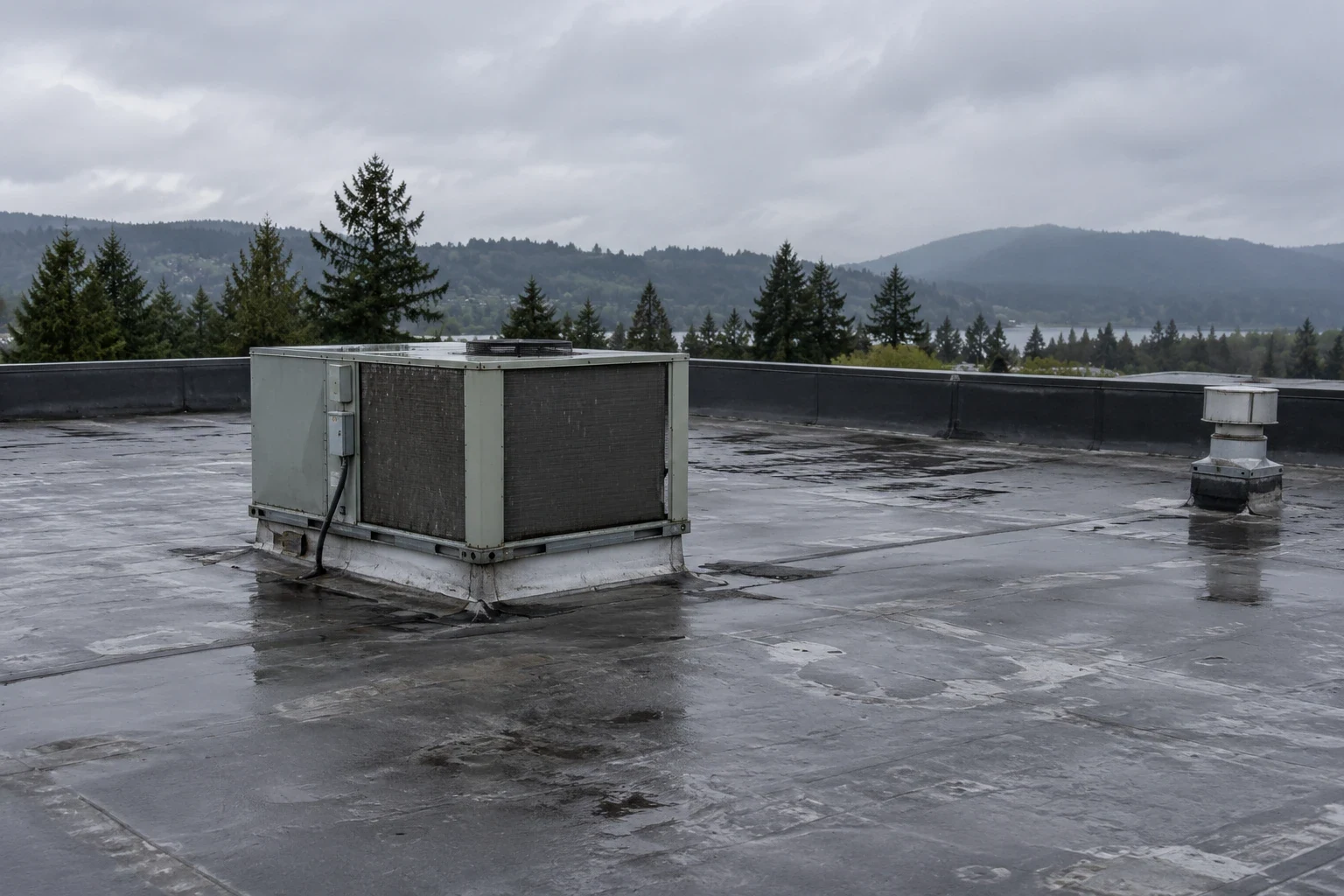
We begin at each drain and scupper, then follow dirt lines and water marks back to the area feeding them. The bowl may be loose, the strainer may be restricted, or the roof surface may sit below the outlet. At a scupper, we inspect the opening, metal lining, termination, and exterior discharge. If the route stops at a parapet or drops into a blocked conductor head, the water problem continues past the roof edge.
Drainage work also includes the overflow. We check that the secondary path is open and that its height makes sense for the finished roof surface. Debris at a strainer can often be cleared during maintenance, while a cracked bowl, separated flashing, or damaged downspout needs repair. Rainfall normals at Portland-Hillsboro Airport total 35.93 inches annually, and October through January are the wettest stretch. We record whether the primary outlet and secondary overflow can carry water before that period. At a scupper or roof edge, we can inspect the connected gutter and coping to confirm where the discharge path breaks. A drain that passes a dry-day check may still reveal slow flow under sustained rain. We inspect for water lines, debris traps, and low seams before wet weather returns, then note which outlet or roof section requires attention.
Separate a clogged drain from a low field
Water left after a storm can come from a blocked outlet, a settled deck, compressed insulation, or a roof plane that was never shaped to the drain. We compare the bowl elevation with the surrounding field and check whether the membrane is bridged over a depression. A drain should not be raised or lowered by guesswork; the final roof elevation and flashing height both matter.
When the low point spans a wide area, we inspect the substrate and insulation for soft spots or trapped moisture. A test opening can show whether the slope is within the roof build-up or caused by a damaged layer. We map the proposed correction and separate dry, sound material from areas that need replacement. The moisture survey can help identify where testing is most useful. Orenco Station is a mixed-use district on the MAX Blue Line, with shops and services close to the transit stop. For an occupied property in that setting, we plan material handling and access with the manager while preserving the roof route to drains and equipment. At each building, we measure the roof's low points and outlet elevations before planning drain work.
Use crickets to guide the drainage plane
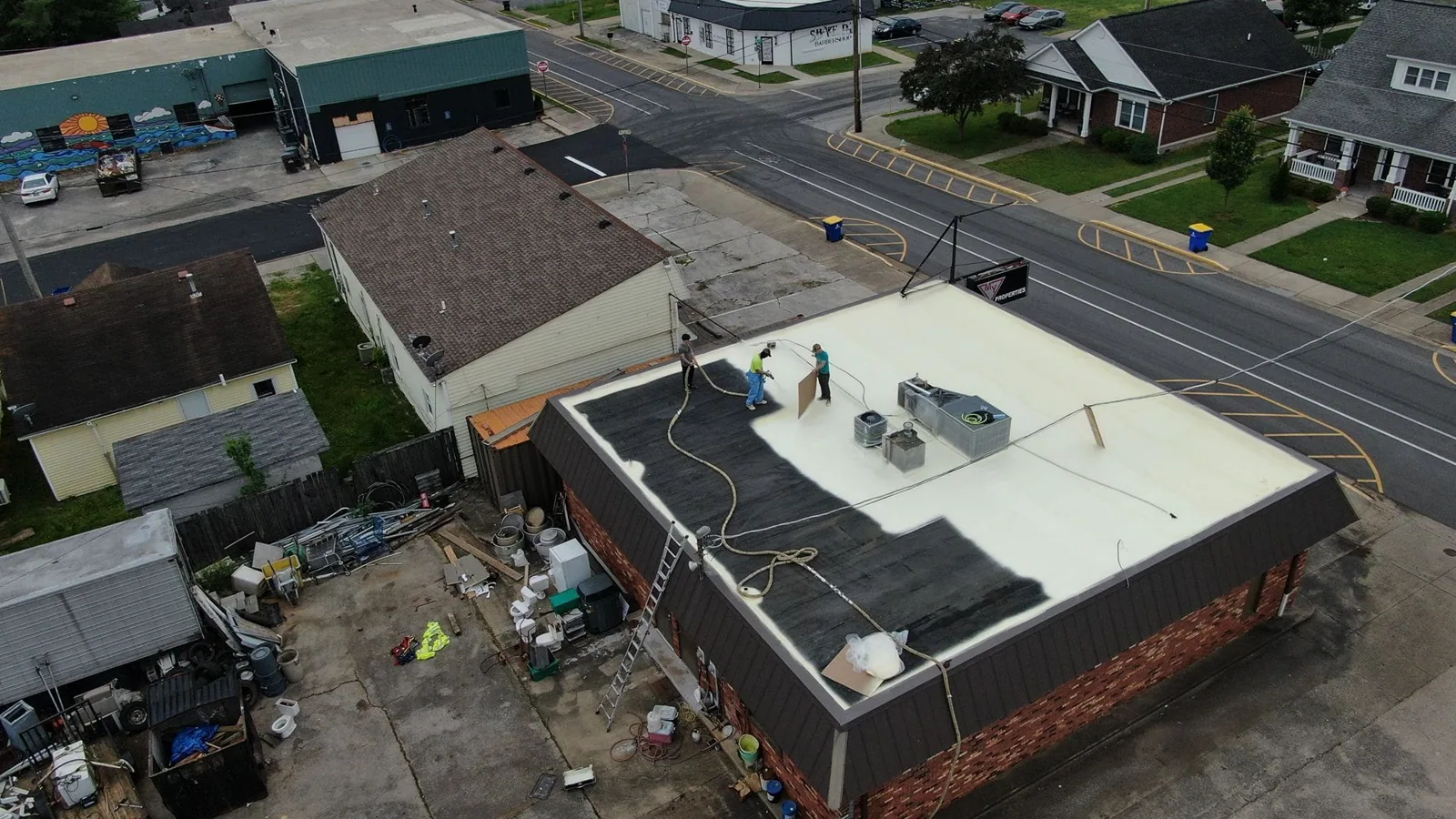
A cricket is a raised shape that splits or redirects water around an obstruction toward an outlet. We consider one behind a curb, at a wall intersection, or where a long roof plane needs another path to the drain. Its slope has to meet the existing drainage plane without leaving a shallow pocket at the transition. We coordinate the shape with membrane seams, flashing height, and any walkway or equipment support nearby.
Tapered insulation can improve drainage when the roof assembly and structure allow it. We check the drain depth, parapet height, door thresholds, and the load supported by the deck before specifying added layers. If a recover is also under consideration, the raised surface may require drain rings, scupper extensions, and new edge details. A recover evaluation should account for those elevations before the new membrane is ordered.
Where the drainage change meets a wall or penetration, the flashing must remain tall enough and firmly terminated. We inspect the lap and edge metal at each transition, then show the crickets, saddles, or tapered layout in the scope. The goal is a continuous surface that directs water without leaving a new seam or low corner in the path.
Correct the outlet and surrounding assembly
A repair may involve clearing a restriction, resetting a drain ring, replacing damaged flashing, adjusting the drain bowl, extending a scupper, or rebuilding the slope around it. We identify which work follows from the inspection and which depends on opening the roof. If wet insulation has compressed, restoring the outlet alone will not bring the field back to its intended plane.
Winter freezing can hold water in a shallow bowl or at an outlet that drains slowly. In a typical Hillsboro year, about 64 mornings bottom out at or below freezing. We look for a cracked bowl, separated scupper seal, or damaged conductor attachment after a cold period. We look for cracks around the bowl, separated sealant at the scupper, and damage where a metal conductor attaches. The repair must tolerate movement and leave a clear discharge route through the colder period.
Along the Tualatin Valley Highway corridor, commercial properties sit along an urban arterial linking Hillsboro with surrounding communities. A roof near a busy route still needs its own drainage map, roof access, and ground discharge check. We confirm where water exits the property so repair work does not send flow onto a walkway or service entrance.
Measure the correction before setting scope
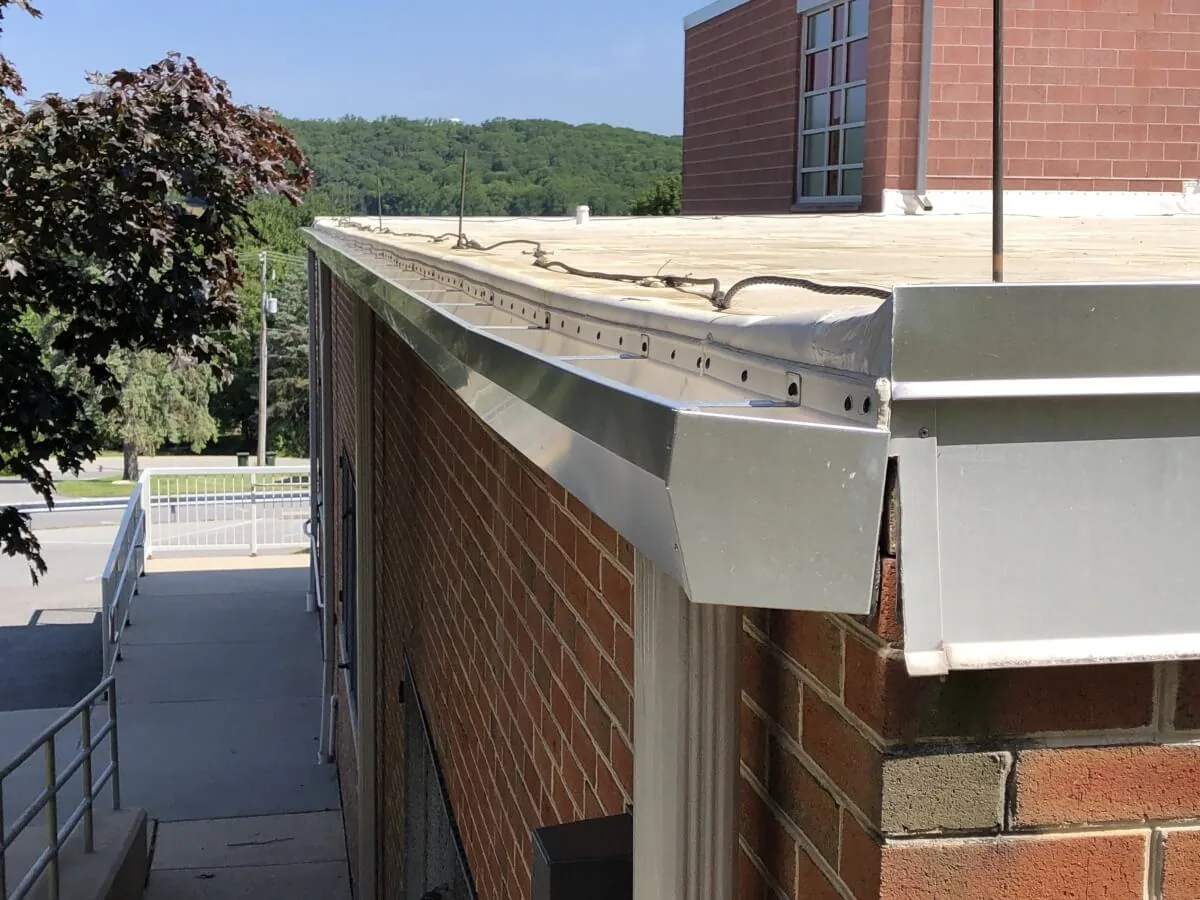
Drainage work is priced by outlet count, roof access, membrane type, metal replacement, wet insulation, deck repair, and how much taper or cricket is needed. A simple cleanout and a rebuilt drainage plane are different scopes. We mark the affected sections and show which quantities are known before opening the assembly.
For a portfolio manager, the report can list each drain, scupper, overflow, and recurring low area by roof section. Photographs show whether the bowl and flashing were changed and how the finished surface meets the outlet. Tanasbourne and AmberGlen make up a regional center for employment and housing, with high-quality transit. A marked condition record can map the roof’s outlets, access route, and work limits for a specific property.
Keep outlets clear through the repair
We protect the active outlet while removing failed material and forming the new drainage shape. The crew prepares the substrate, installs tapered components or a cricket where specified, and ties the membrane and flashing into sound surfaces. Before closeout, we check that drains, scuppers, and overflows remain open and that no debris is trapped beneath the finished detail.
Work is staged so rain cannot enter an open drain detail or unfinished edge. We sequence one area at a time, keep the roof walk path clear, and confirm the day's stopping point with the building contact. In an occupied facility, a working drain may need temporary protection from debris while the area is being rebuilt.
After the repair, we photograph each outlet and mark the final water path on the roof plan. If water remains after the next rain, the property team can report the location against the same drawing.
Questions About Commercial Roof Drains and Scuppers
How can we tell if the drain or the roof slope is the problem?
We inspect the bowl, overflow, surrounding surface, and insulation elevations. A restricted strainer may need clearing; a low field or compressed layer may require a broader correction.
Does a cricket belong behind every rooftop curb?
No. We check how water approaches the curb and where a usable outlet sits. A cricket is useful when its shape can direct flow without creating another pocket or interfering with flashing.
Can a new roof layer leave the drain too low?
Yes. Added thickness can recess the bowl or reduce flashing height. We measure the finished elevation and include compatible rings, extensions, or another drainage detail in the scope.
What if the low area contains wet insulation?
We map and photograph the opening, remove material supported by the findings, and rebuild the plane with dry, sound layers. The drain correction is coordinated with that repair boundary.
Will you check where a scupper sends the water?
At the outlet, we check exterior discharge and connected metalwork. The scope can include a conductor head, gutter, or downspout when that part of the route is damaged or restricted.
Trace a Hillsboro roof drainage problem
Share where water remains and which interior areas are affected. We will map the drain, scupper, and low points, then price a correction tied to the roof assembly.