
Warehouse Roofing in Hillsboro, OR
Warehouse roofing in Hillsboro, OR starts with drainage, seams, and loading-area access. We inspect the assembly and price repairs or replacement by scope.
Warehouse Roofing
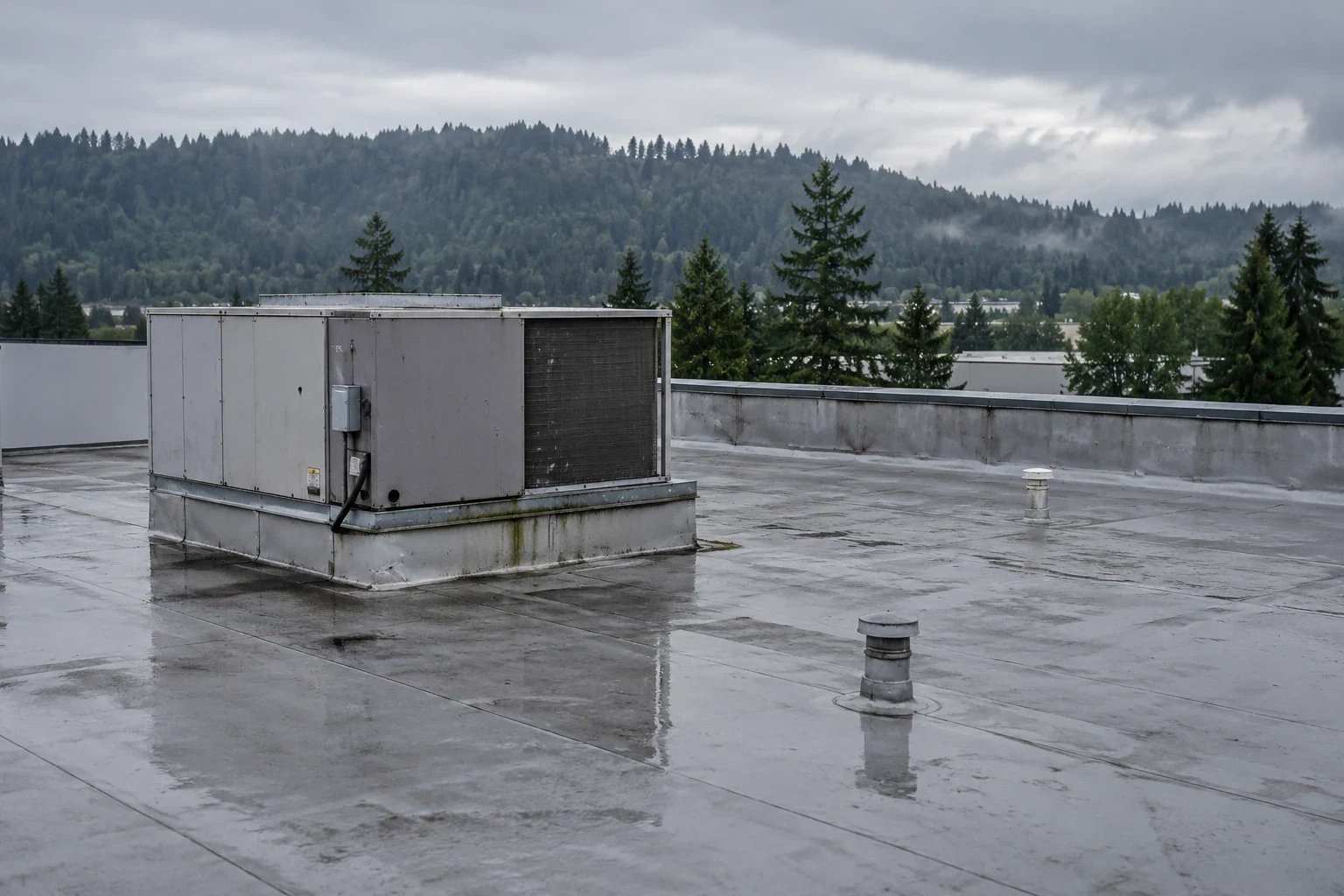
A warehouse roof has to shed water without interrupting the movement below it. In Hillsboro, OR, I look first at the low points, drain bowls, roof edges, and the paths around curbs or vents. A raised lap beside a loading zone can send water across a broad field before it reaches a ceiling. We map that route, check the membrane and insulation, then set a repair boundary on material that is still sound.
Hillsboro’s advanced technology manufacturing and its regional freight connections make equipment clearance and delivery access useful items to record on a warehouse roof walk. A manufacturing-plant roof raises similar equipment questions. We confirm the assembly, drainage, and service paths at each building, then set a work sequence around the operating needs the owner identifies. A commercial roof inspection records the conditions that affect the next move.
We inspect seams, perimeter fastening, penetrations, and any area where water remains after adjacent surfaces dry. The result should separate an isolated patch from wet insulation, broad membrane failure, or a drainage issue. Tanasbourne and AmberGlen are another Hillsboro employment setting where occupied buildings and service access can shape a work sequence.
Related Roofing Pages
More pages on commercial roofing in Hillsboro:
Follow the water across the field
A roof walk begins with the route water can take, not just the mark it left indoors. We check slope transitions, drain strainers, overflow outlets, and the seams leading to them. We compare the interior location with the roof plan and photograph each likely entry before recommending a cut or patch.
Hillsboro’s normal precipitation is concentrated from October through January. Repeated wet periods can test a loose lap, a blocked drain, or flashing that has pulled from its termination. We clear the inspection area enough to see the detail, then distinguish standing water from an active leak path. Where the assembly is unclear, a moisture survey or selective opening can help establish whether insulation is wet beyond the visible mark.
At the edges, we look for movement in coping, loose metal, and fasteners that no longer hold a firm termination. The corridor designation for 185th Avenue helps locate the building in Hillsboro’s employment network, but our field walk determines how its roof is attached. We verify the deck, perimeter, and corner details in the field. That keeps the recommendation tied to observed conditions rather than a warehouse label or a broad assumption about local buildings.
Set a repair boundary that will hold
A membrane patch needs a clean surface and enough sound sheet around the defect to create a reliable tie-in. We remove failed material to a stable edge, prepare the substrate, reinforce corners where the system calls for it, and inspect the finished lap. If water has reached the insulation, covering the surface alone leaves the wet layer in place. We mark the affected area and price the removal and restoration separately from any dry-field repair.
Warehouse roof systems may include TPO, PVC, EPDM, built-up roofing, modified bitumen, metal, or a recover assembly. The visible surface does not establish what lies beneath it. We identify the membrane, attachment, insulation, and deck condition before selecting compatible materials. A membrane puncture repair addresses a localized opening; TPO roofing is considered only when the observed assembly and project requirements support that system.
Replacement enters the comparison when seams have failed across connected areas, moisture is widespread, or repeated repairs no longer meet stable material. A recover may be possible if the existing layers stay dry, secure, and fit to carry added weight and attachment. We review edge heights, drains, curbs, and code requirements before pricing it. A metal roof retrofit can be evaluated when a compatible existing metal assembly makes that path relevant.

Keep loading and roof access in the plan
Work on an operating warehouse needs a clear route for materials, a defined staging area, and protection around open roof sections. Before mobilization, we confirm lift access, delivery timing, fall-protection points, rooftop equipment paths, and the areas that must remain clear. We also identify who can authorize a temporary interruption if a drain or penetration has to be opened.
A repair may fit into one controlled area, while replacement across several bays usually calls for phases. We cover each opened section before leaving the roof, keep temporary tie-ins out of drainage paths, and coordinate noisy or access-sensitive work with the building contact. On a distribution floor, a stopped loading door can change operations; the sequence should account for that before the crew arrives. Our distribution-center roofing plan confirms the affected bay before staging. Our occupied-building roofing service plans around people and equipment that remain in use.
For a larger project, marked drawings show the work limits, protected areas, penetrations, and completed sections. We document changes when tear-off reveals wet insulation or a different deck condition. That record supports the next decision without extending the scope by guesswork. The inspection can distinguish urgent water control from work that can be scheduled in a later phase.
Price the assembly and the work area
Price changes with the repair boundary, the number of penetrations and edge details, the amount of insulation to remove, and the way crews can reach each roof section. A narrow seam repair is not the same scope as restoring a saturated zone and rebuilding its drainage plane. We measure the affected area, note the material and attachment, and identify any test opening needed to confirm concealed layers.
Schedule depends on weather, surface moisture, material conditions, delivery access, and the number of phases. Hillsboro’s normals include recurring winter freeze conditions as well as a wet season. We check the actual forecast and roof surface before setting work that depends on a dry substrate or a stable membrane temperature. If a window closes, we protect the opening and coordinate the next safe sequence rather than leave exposed material.
Maintenance can reduce avoidable calls when it clears drains, records new punctures, checks flashings, and tracks earlier repairs. It does not make a weak assembly sound or remove moisture already below the membrane. A preventive maintenance visit gives the owner marked findings and a prioritized list tied to the roof. If water is entering now, our emergency roof repair crew responds around the clock, weekends and holidays included, to control exposure and define the permanent repair.
Questions About Warehouse Roofing
Can warehouse roofing be repaired without stopping shipments?
We first identify the roof area, delivery routes, and any loading operation that could conflict with staging. Many repairs can be isolated, but a lift, open deck, or active leak may require a short controlled pause. We set the work boundary with the facility contact and note which doors, equipment paths, or roof zones must stay open.
How do you find the source of a leak in a long roof bay?
The interior stain is one clue, not a repair map. We trace the drainage plane uphill and inspect seams, curbs, drains, and perimeter transitions that connect to it. When the membrane hides moisture, infrared readings or a selective opening can map the wet area before we price removal.
What makes a warehouse roof a candidate for recover?
A recover needs a dry, stable assembly that can accept the proposed attachment and added load. We verify existing layers, deck condition, drainage, and the height available at edges and penetrations. If wet insulation or loose material is present, we show where removal is needed instead of burying that condition beneath another system.
How does rain affect a warehouse roof replacement schedule?
Hillsboro’s wetter normal months run from October into January, so a broad replacement needs careful exposure control during that period. We phase tear-off so each opened area can be made watertight within the work window, and we check the substrate before installing new materials. Forecast and site conditions determine the daily sequence.
What should a warehouse roof report include?
The report should show the assembly we identified, photographs of seams and penetrations, drain and edge findings, and marked repair locations. It should separate confirmed wet areas from spots that need an opening or survey. We also record access limits and the scope assumptions that affect price, phasing, and closeout.
Arrange a warehouse roof walk
Tell us how the building operates and where water is appearing. We will walk the roof, mark the repair boundary, and price the repair or replacement scope the assembly supports.