
Commercial Ponding Water Roof Repair in Hillsboro, OR
Commercial ponding-water roof repair in Hillsboro, OR. We inspect low areas, drains and insulation, then separate drainage fixes from membrane repairs.
Commercial Ponding Water Roof Repair
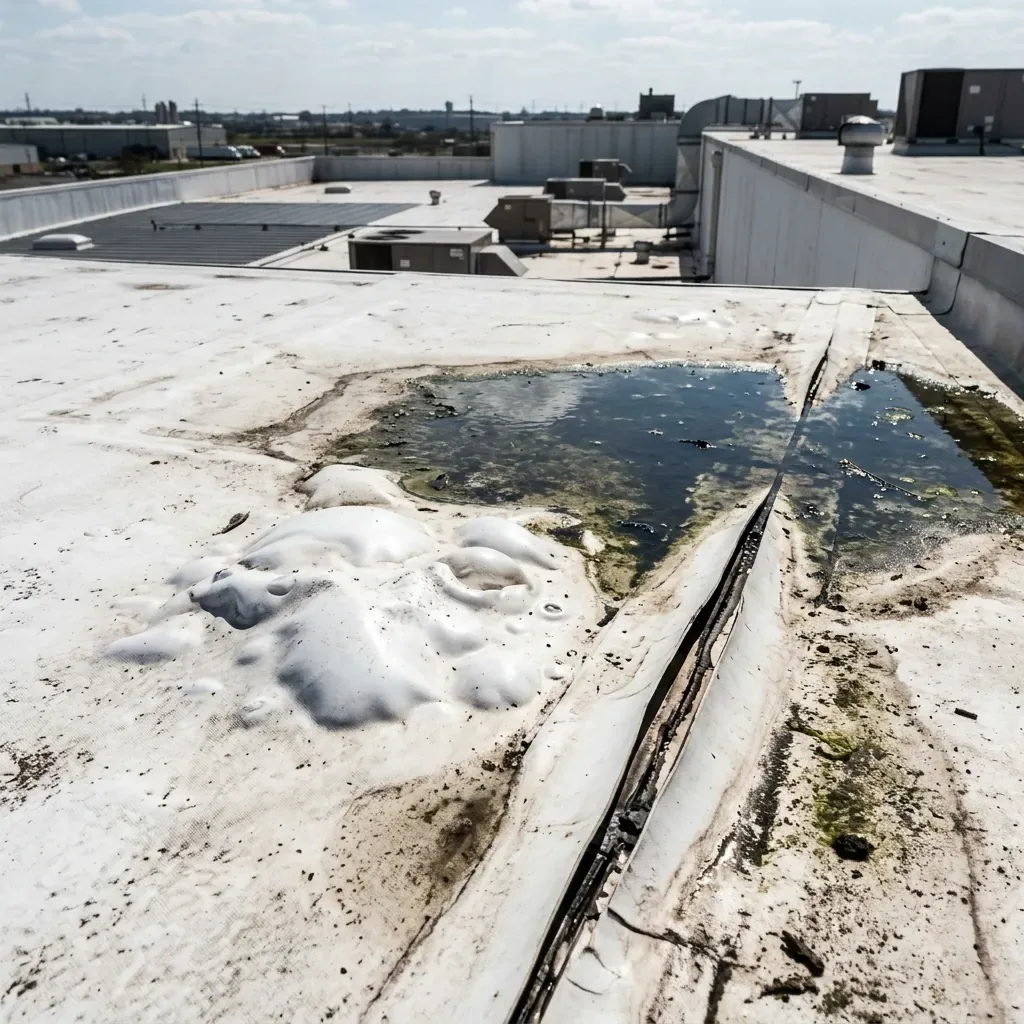
A drain bowl that stays full after nearby roof areas clear can point to a blocked outlet, a low deck, compressed insulation, or a slope that no longer carries water. In Hillsboro, OR, I mark the water line and trace the drainage plane before choosing a patch. Normal annual precipitation totals 35.93 inches in Hillsboro, with the highest monthly amounts between October and January. A ponding inspection checks the outlet and marks the full waterline before deciding whether clearing the bowl will restore flow. If the outlet itself looks restricted, a drain and scupper inspection separates the bowl from the field around it. That makes a slow drain worth separating from a roof depression that holds water after the outlet clears. Around Tanasbourne and AmberGlen or along Tualatin Valley Highway, the scope follows the roof we inspect.
Related Roofing Pages
More pages on commercial roofing in Hillsboro:
Map the low area and its outlet
Water can collect because debris narrows the bowl, the strainer is displaced, or the roof surface has settled. I note where the pool begins, how far it extends, and whether the overflow path is open. A roof walk after drainage has had time to work distinguishes a temporary obstruction from a persistent depression. Photos and measurements give the owner a reference point.
The inspection follows the route from the pond toward the drain, including field seams, curbs, and changes in membrane height. If water stands against a lap, we check whether the edge remains sealed and whether the substrate below feels firm. For split or open seams, the repair boundary depends on sound sheet beyond the opening. A seam patch will not correct a low point that keeps loading that detail.
Near Orenco Station, we confirm how roof access and equipment clearances affect the route. The station community is planned around the MAX Blue Line and mixed uses. That setting informs access planning, while the actual drain layout and roof records determine the work.
Check what the standing water reaches
A persistent pool can stress a membrane, expose a weak lap, and keep insulation wet after the surface begins to dry. We check the waterline, blisters, soft spots, open penetrations, and any interior reports below the low area. Infrared or another moisture survey can help map suspect insulation, while a test opening can confirm a specific layer when records do not answer the question. About 64 days annually have freezing or colder minimums in Hillsboro. We inspect whether water remains against an exposed lap and photograph any separation or displaced flashing before choosing the repair boundary. A water pocket can therefore meet a cold surface condition during the year. We inspect nearby drain details and exposed equipment supports for movement, then note whether the membrane remains flexible and bonded. Washington County’s 185th Avenue has a regional role carrying people and goods. The property contact confirms where a lift can stand and how drainage materials can reach the roof without obstructing normal circulation. A useful follow-up record is the marked condition report. For properties around that access route, delivery and lift arrangements can affect when a drain repair or insulation opening is performed. We confirm the owner's site rules rather than infer them from the corridor.
Choose between clearing, correcting, and rebuilding
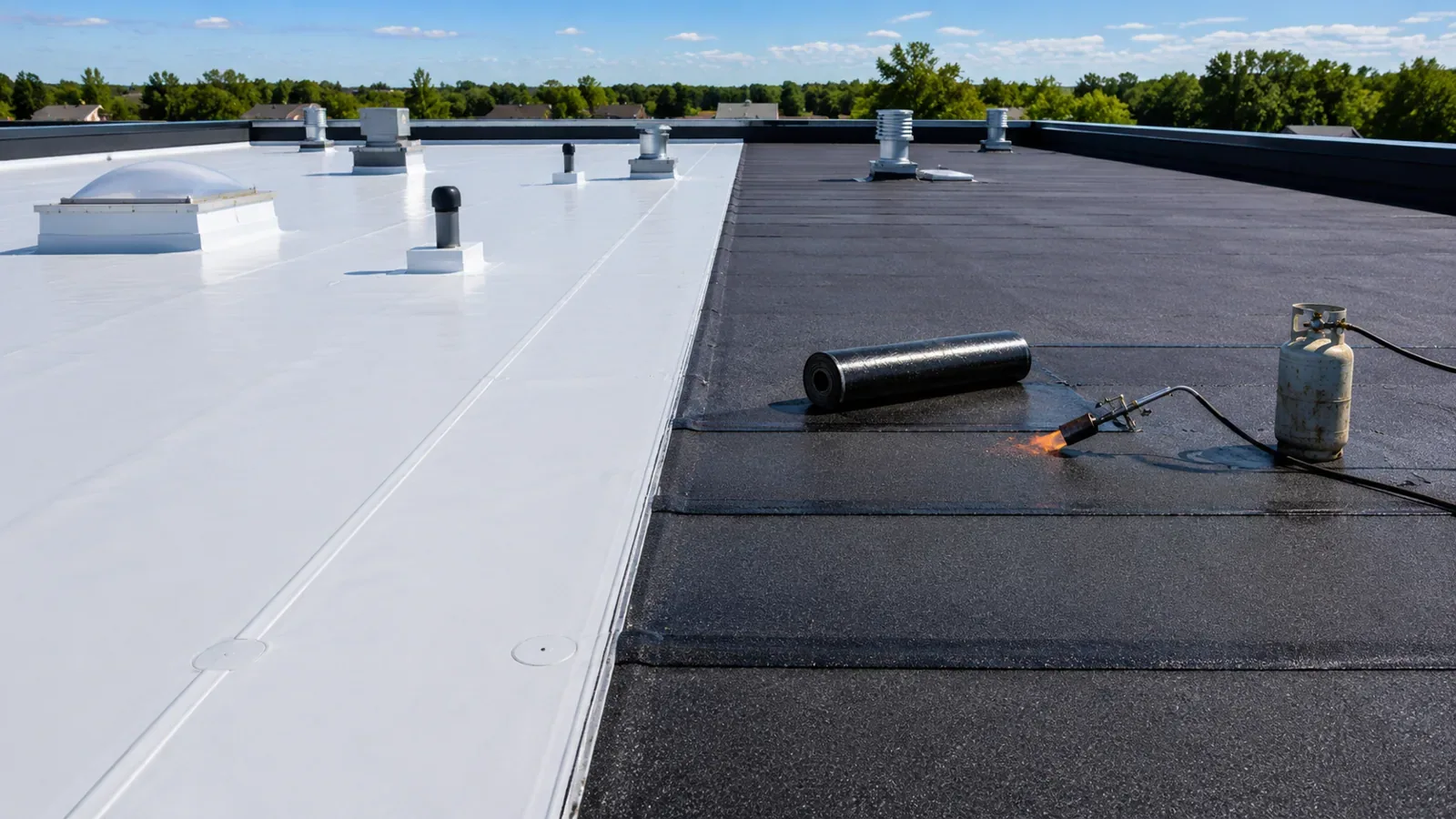
If debris or a displaced strainer is the cause, clearing the outlet and restoring the drain detail may resolve the obstruction. If the surface holds water after the outlet is open, we assess the depression, insulation, and deck before pricing a correction. A local membrane repair can close a nearby defect, but it cannot correct a slope problem.
Where a dry, stable assembly can accept new slope material, tapered insulation may improve flow to the drain. The design must account for existing height, attachment, edge transitions, and added load. If moisture extends beyond a small area or the substrate has lost support, we show the boundary and price removal or replacement separately. A recover requires checks of moisture, attachment, weight, drainage, and code.
We document the choice with photographs and a scope that identifies what will be opened, reused, and left outside the repair. Emergency service can address active entry while the permanent drainage decision is prepared. This keeps temporary water control distinct from work that changes the roof's drainage plane. Wind that opens an edge also calls for a separate wind-damage inspection.
Tie the repair into a compatible roof system
A patch beside a pond needs clean, sound membrane and a boundary above the recurring waterline where the assembly permits it. We remove incompatible residue, prepare the surface, and use materials suited to the existing sheet. A TPO assembly requires compatible membrane and welded seams; other systems need their own repair method. We check the completed lap and nearby termination rather than relying on surface sealant alone.
Hillsboro includes advanced manufacturing and distribution operations, including Intel's Ronler Acres semiconductor operation and Genentech's manufacturing, packaging, and distribution site. Those process-oriented uses put equipment paths and operating schedules on the inspection list. We identify the membrane, insulation, and drainage at the property before writing the repair scope.
A drain replacement may also require work at the deck opening, clamping ring, or interior leader connection. We record what can be seen and coordinate any access below the roof with the property contact. The closeout notes repaired materials, photographs, drainage observations, and any area that still needs monitoring.
Watch the waterline after the repair
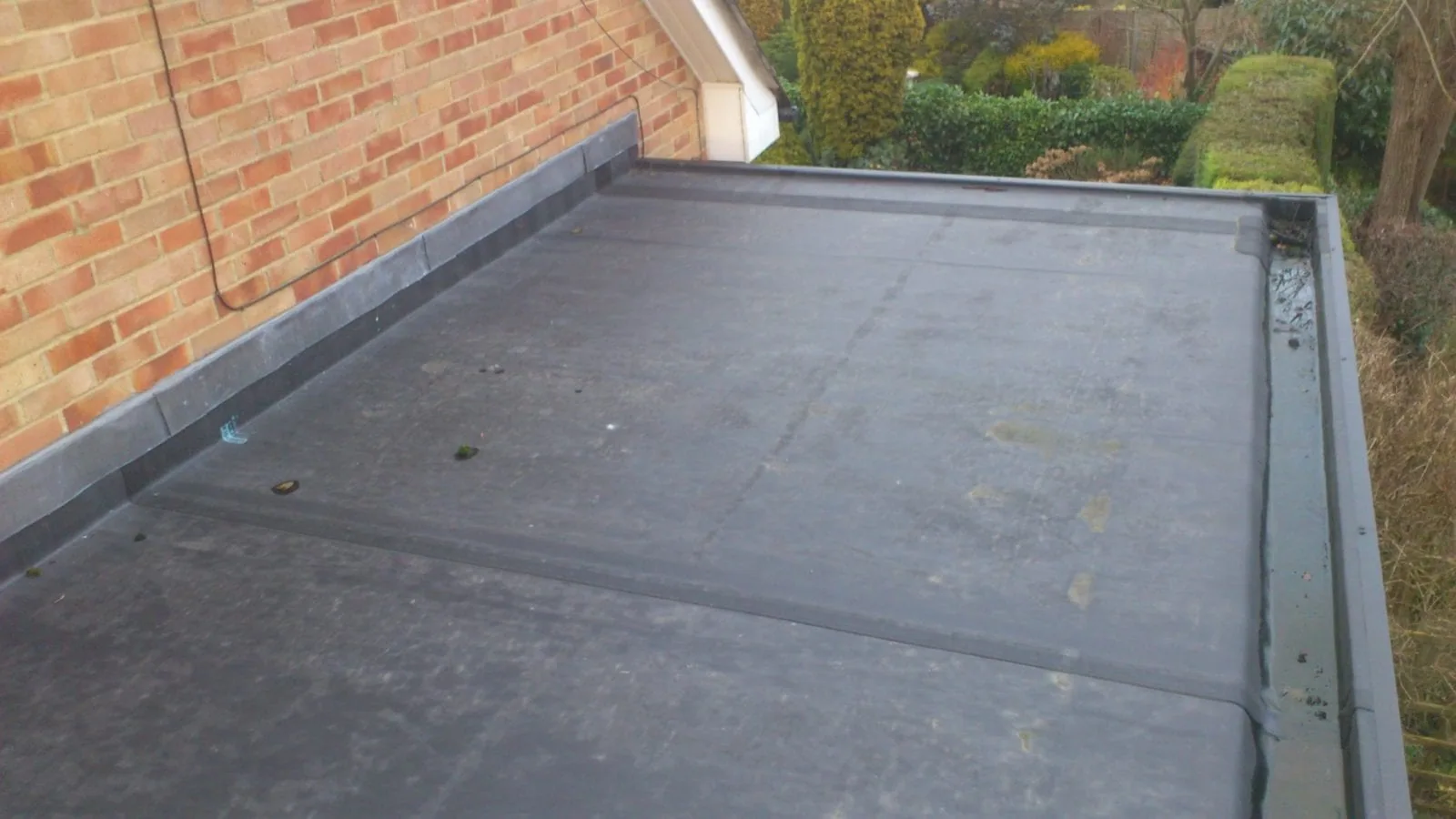
After the work, we compare the pond with the marked pre-repair location and check the outlet, overflow, and nearby membrane. A clear drain does not prove that the deck has slope, so the record distinguishes a corrected obstruction from a persistent low area. If the owner chooses monitoring before a larger correction, photos taken from the same points can show whether the pool changes.
Recurring rain in the cooler months makes an open drain path and sound transitions useful inspection items. We note leaves or other material that must be removed, seams exposed to repeated standing water, and repairs that merit another look after a wet period. The maintenance scope can include these observations without claiming that routine cleaning will correct a structural depression.
For a property portfolio, marked locations let the next manager compare findings across roof sections and plan work by condition. We can inspect, document, and price a drainage correction, membrane repair, or larger assembly decision. Arrange a Hillsboro roof walk and we will show where water remains, what it reaches, and which work addresses that cause.
Questions About Commercial Ponding Water Roof Repair
How can you tell a clogged drain from a low roof area?
We inspect the bowl, strainer, outlet, overflow, and surrounding surface, then note whether water remains after the path is clear. A persistent pool may involve slope or compressed insulation. Photos and a moisture check help show whether the issue is routine debris, a local defect, or a broader assembly concern.
Does ponding water mean the roof needs replacement?
Not by itself. A clear outlet and dry, stable assembly may support a focused correction or repair. Wet insulation, failed attachment, or a depression extending across a section can change the scope. We mark the affected area and price a local repair separately from removal or replacement.
Can a coating fix a spot that holds water?
A coating can protect a compatible, prepared membrane, but it does not create slope or restore compressed insulation. We first check drainage, moisture, and surface condition. If a coating remains appropriate, the written scope identifies preparation and the details that need reinforcement around the low area.
What does a moisture survey add to the inspection?
A survey helps map areas that may contain wet insulation so an owner can decide where a test opening is useful. It does not replace confirmation of concealed layers. We record the survey findings and any test results separately, then price the repair boundary supported by that evidence.
Will clearing the drain prevent the pool from returning?
Clearing helps when debris restricts the outlet. If the roof surface remains depressed after drainage is restored, water can return until that condition is corrected. We document the outlet and low area independently, then explain whether maintenance, a local repair, or slope work addresses each finding.
Arrange a Hillsboro drainage inspection
Show us where water remains and when the area was last checked. We will inspect the outlet and roof assembly, mark moisture concerns, and price the work that addresses the condition found.