
Commercial Roofing for Investors and REITs in Hillsboro, OR
Review roof condition, repair exposure, and replacement timing across Hillsboro investment properties with marked findings and scopes tied to each assembly.
Investors and REITs
A roof line in an acquisition model needs a clear condition boundary. In Hillsboro, OR, recurring rain can expose a failed lap or drain detail before the next capital review, while a dry ceiling does not establish that insulation is sound. We inspect the assembly, mark defects, and separate confirmed repair from conditions needing an opening or moisture test. That ties the roof decision to evidence at the property.
Hillsboro has two Intel manufacturing facilities in Washington County, including the Ronler Acres technology-development factory. Record rooftop equipment, access limits, and tenant operations with membrane condition. We can prepare a due-diligence roof survey for a transaction or capital plan, then distinguish repair, recover, and replacement options.
Related Roofing Pages
More pages on commercial roofing in Hillsboro:
Separate observed condition from assumed life
A roof report should show what was seen, where it was seen, and what could not be confirmed. We photograph seams, penetrations, perimeter terminations, drain bowls, and any visible membrane damage. If a section is blocked by equipment or access rules, we mark that limit rather than implying that the entire surface was inspected. An investor can then weigh the roof evidence against lease obligations, planned occupancy, and the timing of other building work.
Hillsboro normals record recurring precipitation, with wetter normal months from October through January. We look at the drainage plane, overflow routes, and low points in the context of that wet season. A clogged drain may be a maintenance item; ponding linked to slope or wet insulation may call for a broader evaluation. The distinction affects both near-term repair and the reserve a buyer carries into ownership.
Our commercial roof inspection can include a hands-on walk, photographs, and a marked plan. Where moisture is suspected beyond the visible opening, we can use an infrared moisture survey or a test opening to answer that specific question. The finding should identify the method and its limits, not convert one reading into an unsupported replacement forecast.
Put the capital drivers beside the roof
Roof cost follows scope, access, assembly, and sound material at the tie-in. Tear-off, insulation replacement, edge metal, rooftop equipment, occupied-hour limits, and disposal can change a replacement price. A recover is considered only when the existing roof is dry, attachment verifiable, added weight acceptable, and details can be rebuilt. We price those conditions separately instead of relying on a single square-foot assumption.
A localized leak with dry surrounding material may support a repair and follow-up inspection. Broad seam failure, wet insulation, or deteriorated edges can change the replacement boundary. We mark affected areas, identify any needed test, and show which work can be scheduled later with its condition stated.
Cornelius adopted a Town Center Plan and an Urban Renewal District for a defined redevelopment area. For assets near Cornelius, we keep access, phasing, and roof condition tied to each property.
Compare a repair, recover, and replacement
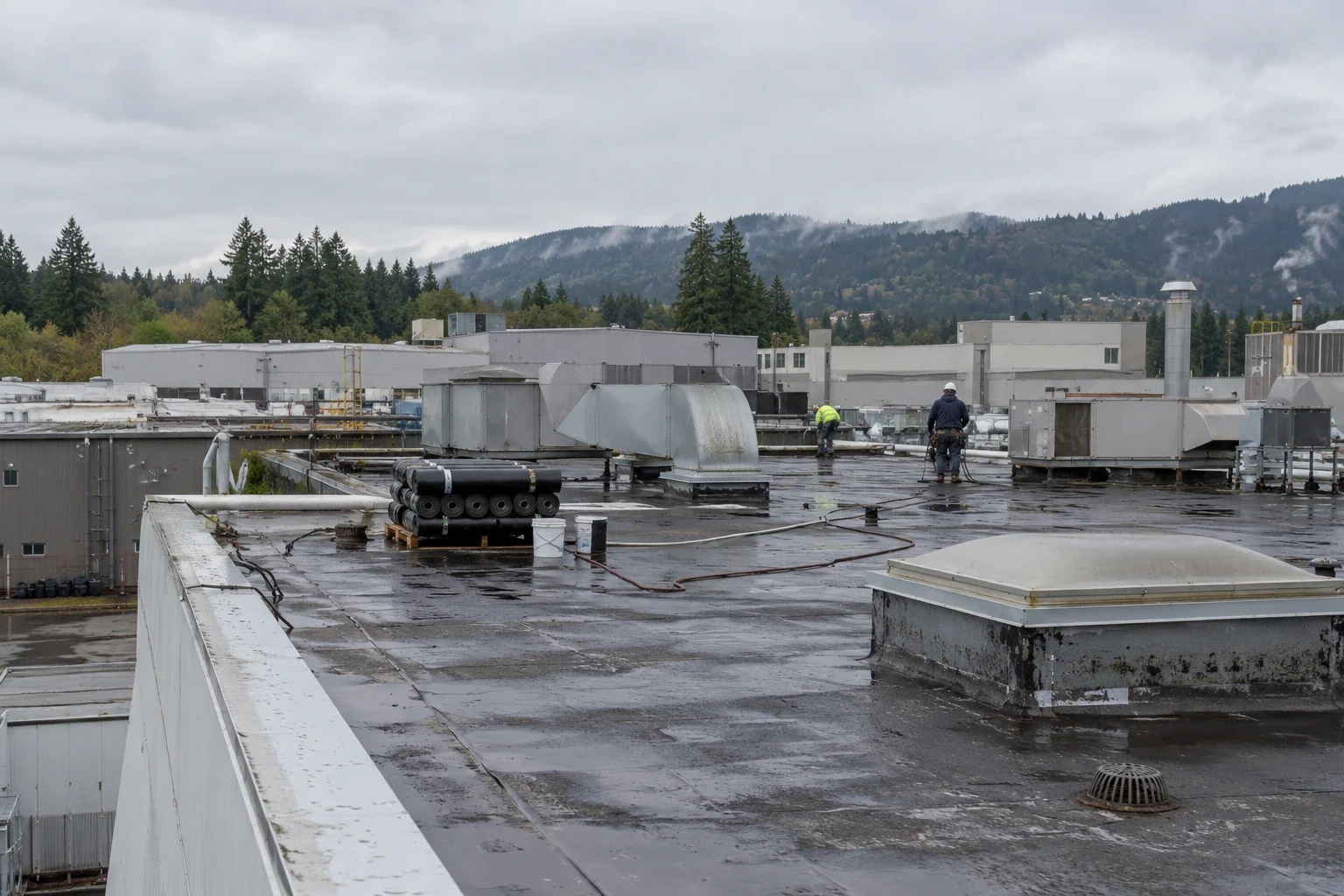
A repair should stop at a sound boundary. We remove loose material, prepare the substrate, and install a compatible patch with reinforced edges or new flashing where the detail needs it. The closeout identifies the area and materials so later inspections can determine whether the same condition moved. If moisture extends past the exposed zone, we document the additional area and price that work before it disappears under a new layer.
Replacement is a separate decision when the assembly has widespread deterioration, the deck or insulation needs work, or a repair cannot reach sound material. A recover can be evaluated only after moisture, attachment, loading, drainage, and code conditions are checked. The decision is not driven by age alone. We can provide a capital-planning record that lists immediate corrections and longer-horizon work, with each recommendation linked to a photograph or test finding.
For a portfolio owner, the most useful comparison uses the same categories but does not pretend the buildings are identical. We can group work by urgency and operating impact, then prepare a replacement scope for roofs where repair no longer addresses the underlying condition. The owner receives a marked boundary, material assumptions, access needs, and the concealed conditions that could alter final quantities.
Keep the building operating through roof work
Before mobilization, we confirm roof access, loading capacity, staging, fall protection, equipment clearances, and the building's occupied hours. Those details govern lifts, material routes, temporary protection, and the daily point where an open area must be secured. If tenants, production, or deliveries share the site, the property contact helps identify restricted windows and notification points. We plan noisy or disruptive work with the actual operation instead of relying on a generic schedule.
Oregon Highway 8, known as Tualatin Valley Highway, ties Hillsboro to Aloha and Beaverton on one side and Cornelius and Forest Grove on the other. The route carries regional transit as well as local commercial activity. The property contact confirms the truck approach, lift location, and roof path before material is ordered.
On a multi-building asset, work can be phased by access and weather window. A roof section is opened only when protection and materials are ready, and the crew closes it before leaving. Emergency service remains available at any hour, including holidays, when a new opening needs attention before planned capital work can begin.
Turn inspection notes into a property record
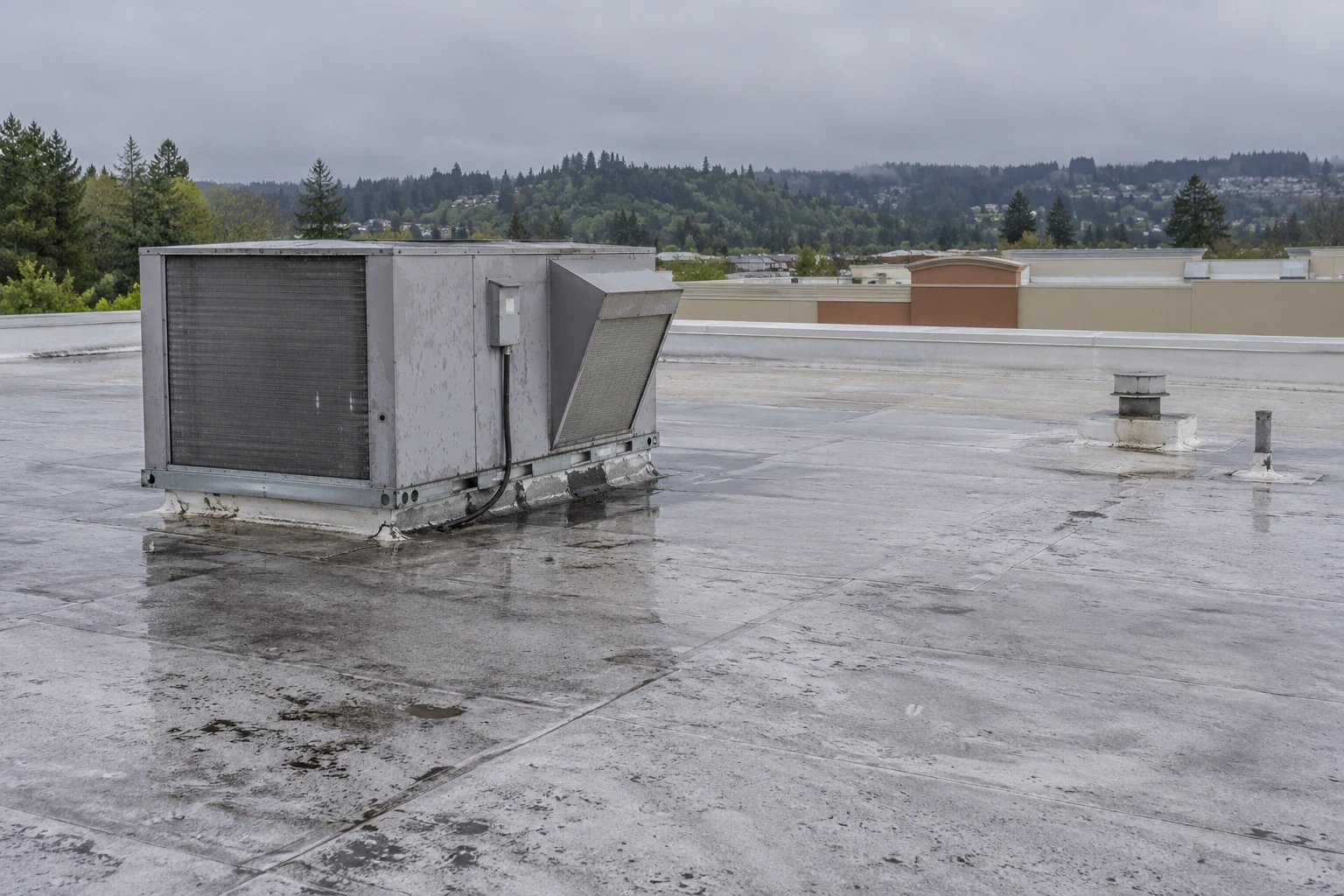
Keep the photographs, marked roof plan, assembly notes, repair details, and follow-up findings with the asset. A future buyer or manager can compare the same seam, curb, or drain and see whether the condition changed. We can return for preventive roof maintenance to clear drains, review terminations, and record new movement before a leak becomes the only trigger for inspection.
In Hillsboro, a winter freeze pattern adds another reason to review drain bowls, exposed sealants, and rooftop supports after cold weather. We note whether water remains at a low point and whether a repaired edge still meets sound material. A roof record gives ownership a consistent basis for deciding which repair should be scheduled and which capital item needs a fuller scope.
For investors holding buildings across the west side, we can organize findings by assembly, condition, access, and urgency. The property management process can then carry those marked findings to site staff without losing the repair boundary. Where manufacturing operations affect access, our industrial roof work accounts for equipment and schedule needs. Each scope stays tied to the inspected property.
Questions About Investors and REITs
Can a roof inspection estimate remaining service life?
We document visible condition, moisture evidence, prior repairs, and areas needing more testing. A remaining-life figure needs evidence an inspection may not provide, so we describe repair or replacement conditions and state the assumptions behind the finding.
What should a buyer request before closing on a Hillsboro property?
Request roof records, prior repair locations, assembly details, access rules, and any moisture testing. We can inspect the accessible roof, mark defects, and state what needs a test opening. The resulting scope separates immediate water-entry work from capital items that can be priced on a longer schedule.
When does a recover make sense financially?
A recover is considered only if the existing assembly is dry and stable, attachment can be verified, added weight is acceptable, drainage remains workable, and code requirements can be met. We check those conditions first, then compare the recover scope with tear-off and repair alternatives.
How do you compare roof conditions across unlike assets?
Use common report fields for assembly, observed defects, moisture, access limits, and next action, while keeping each repair tied to its own roof. We can group the resulting work by urgency, but a membrane or building use does not substitute for an inspection finding.
Can roof work be phased around tenants or production?
We confirm operating hours, access, staging, and sensitive equipment with the property contact. The scope identifies work zones and daily protection points. If weather or a concealed condition changes the sequence, we update the contact before moving into another roof area.
Request an investment-property roof review
Share the building location, available roof records, and the decision date. We will mark the condition, explain the repair boundary, and prepare a scope for the next capital step.