
Johns Manville Commercial Roofing in Hillsboro, OR
Assess Johns Manville roof systems in Hillsboro, OR. We trace seam, flashing, drainage, and insulation conditions before defining a compatible repair or reroof.
Johns Manville Commercial Roofing
A repaired lap that lifts at its edge can send water beneath a Johns Manville membrane. In Hillsboro, OR, we first confirm the installed system, inspect the seam and flashing, and check how the roof drains. Johns Manville offers commercial TPO, PVC, EPDM, and modified-bitumen assemblies, but the appropriate repair follows the material actually on the building. We mark the defect, look for wet insulation, and separate a local correction from a replacement decision.
At its Hillsboro location, Genentech makes and packages medicine and also distributes it. Intel's Ronler Acres site produces semiconductor products, making process buildings part of the city's commercial context. Equipment paths, sensitive areas, and scheduled access are worth confirming during a site walk. We plan around the property's operating contact and document the clearances before material or tools reach the roof.
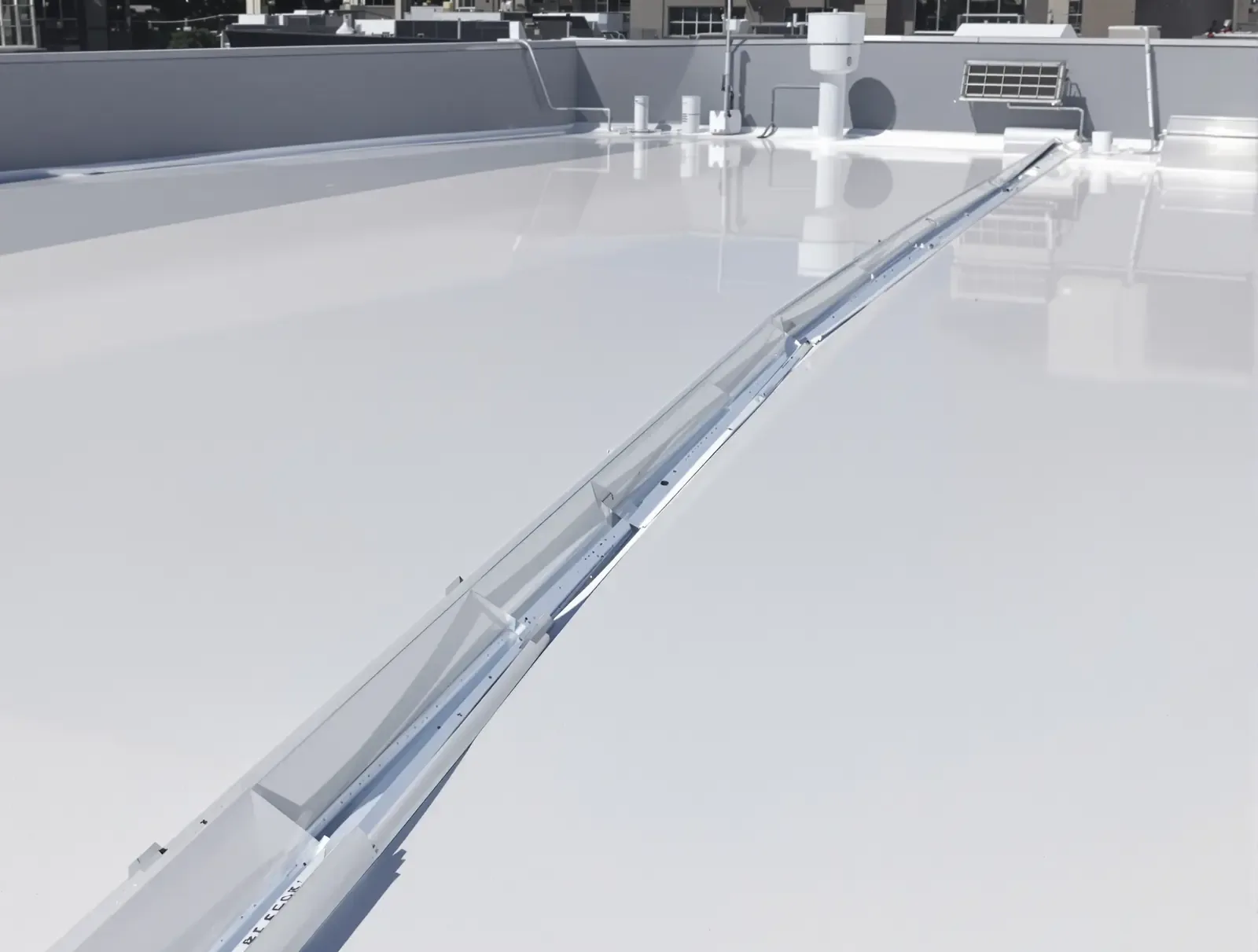
Related Roofing Pages
More pages on commercial roofing in Hillsboro:
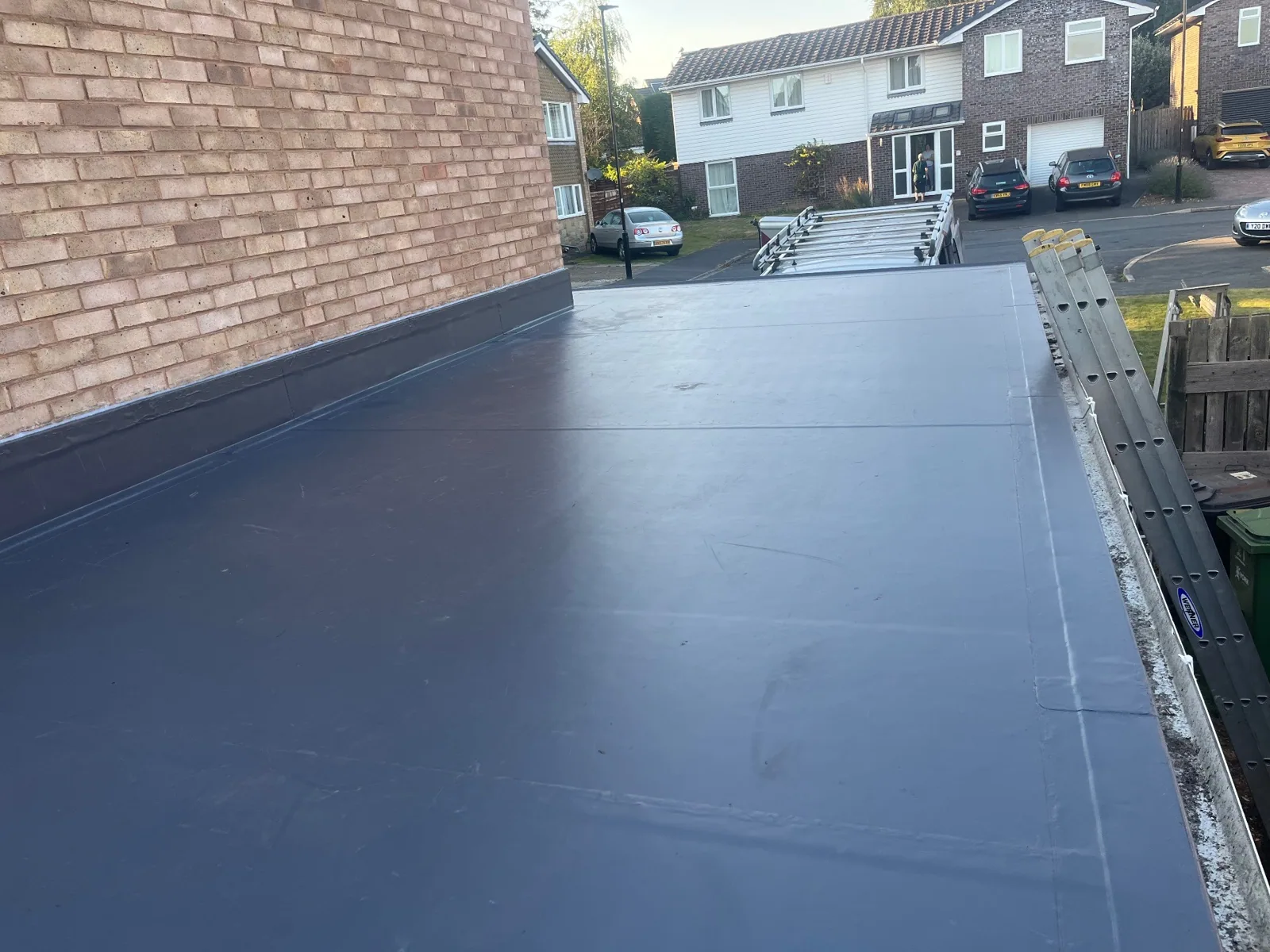
Confirm the membrane and seam method
Johns Manville's commercial portfolio includes thermoplastic membranes and EPDM, alongside modified-bitumen systems. TPO and PVC seams are heat welded, while EPDM uses compatible adhesives or cover materials at its laps and details. Modified bitumen relies on a different sheet and seam construction. The repair method must fit the installed assembly, so we check markings, edge cutoffs, and prior work instead of selecting a patch from color alone.
At a curb or wall, flashing can be the weak transition even when the field membrane remains sound. We inspect corners, termination bars, counterflashing, and the material turn-up, then compare those details with the surrounding substrate. If roof records identify a Johns Manville product, we use that information to guide compatibility checks, not as proof of present condition. A cover-board and insulation review can help decide whether a targeted opening is needed before the boundary is priced.
Owners comparing an aging membrane with replacement can examine GAF commercial systems and Carlisle SynTec assemblies using the same inspection record. We compare seam method, attachment, perimeter details, and compatibility with the deck, not just the product label. If a roof has mixed repairs or a prior overlay, the existing assembly may matter more than the name selected for a new system. The scope records what needs removal, what can remain, and where a test would answer an unresolved layer question.
Follow the wet mark to its roof detail
Water can travel below a membrane before it appears indoors. We compare the reported room with nearby laps, penetrations, drains, and wall lines, then mark the roof locations that fit the path. A seam probe helps test a thermoplastic weld; soft insulation or a broad stain pattern may call for moisture mapping or a selective opening. The Hillsboro precipitation normal totals 35.93 inches annually, with October through January the wettest months. We check runoff around the marked JM repair and keep its prepared edge protected if work pauses. That recurring wet period makes drainage plane changes and the condition of terminations important to inspect before closing a repair. We clear the view at the drain, note ponding or debris, and see whether the outlet and overflow are open. A commercial roof inspection records those conditions in relation to the suspected opening rather than treating the interior symptom alone.
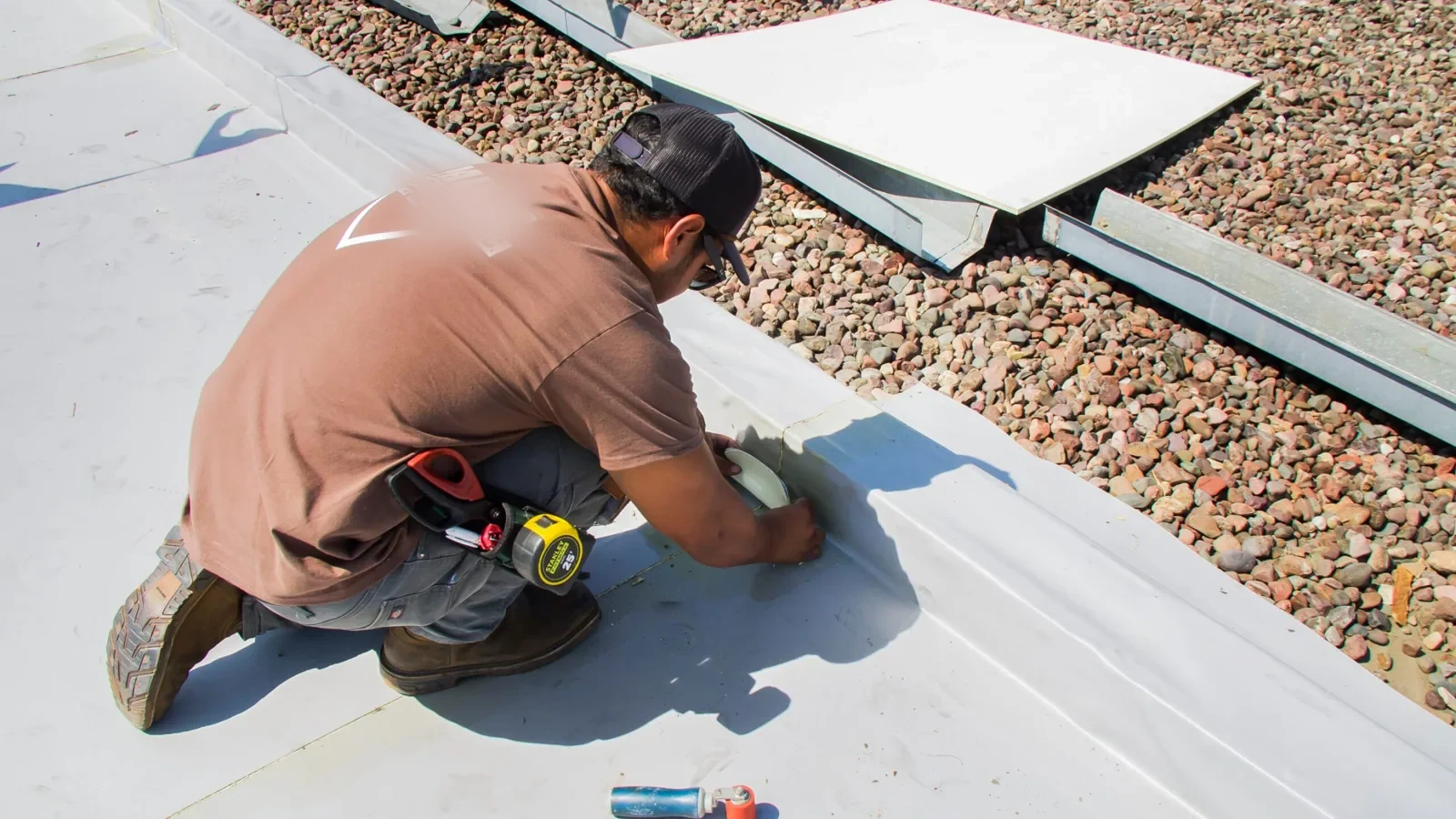
Choose the correction that reaches sound material
For a thermoplastic sheet, we prepare the weld area and test the seam after repair. EPDM requires a clean surface and compatible flashing materials. A modified-bitumen repair may need reinforcement or a replacement sheet at the damaged transition. In each case, we remove loose material to a stable boundary and check the insulation below when the evidence points to moisture. A flashing correction can be scoped separately from field-sheet work when the transition is the source.
Repair remains sensible when the defect is limited and adjacent material can hold a new detail. Replacement or recover merits a separate price when seams fail across the roof, insulation is wet in several areas, or previous repairs leave no dependable boundary. We inspect deck condition, attachment, drain height, edge metal, and roof penetrations before outlining an overlay. The comparison states what removal, insulation, and temporary protection include so the owner can evaluate the options against the actual assembly.
Emergency response is available any hour, weekends and holidays included, for an opening that needs water control. We document temporary protection and return for permanent work under conditions suitable for the membrane and repair materials. Access rules, air intakes, and production schedules are coordinated with the property's contact.
Plan work around wet surfaces and access
Rain changes how a repair area can be prepared. Water, dirt, and residue at a seam can prevent reliable bonding or welding, so we confirm the roof surface is ready before closing the detail. If weather interrupts a shift, the open area receives temporary protection and the work boundary is checked before crews leave. The schedule accounts for the actual forecast and roof condition rather than treating a calendar date as a suitable work window.
Oregon Highway 8, also called Tualatin Valley Highway, connects Hillsboro with Cornelius, Aloha, Forest Grove, and Beaverton. For process or distribution properties along the route, we confirm the real delivery entrance, truck staging, and roof access with site staff. The corridor does not determine a building's logistics. At the property, a phased work plan can keep tenant routes and equipment service paths clear while a repair or reroof progresses.
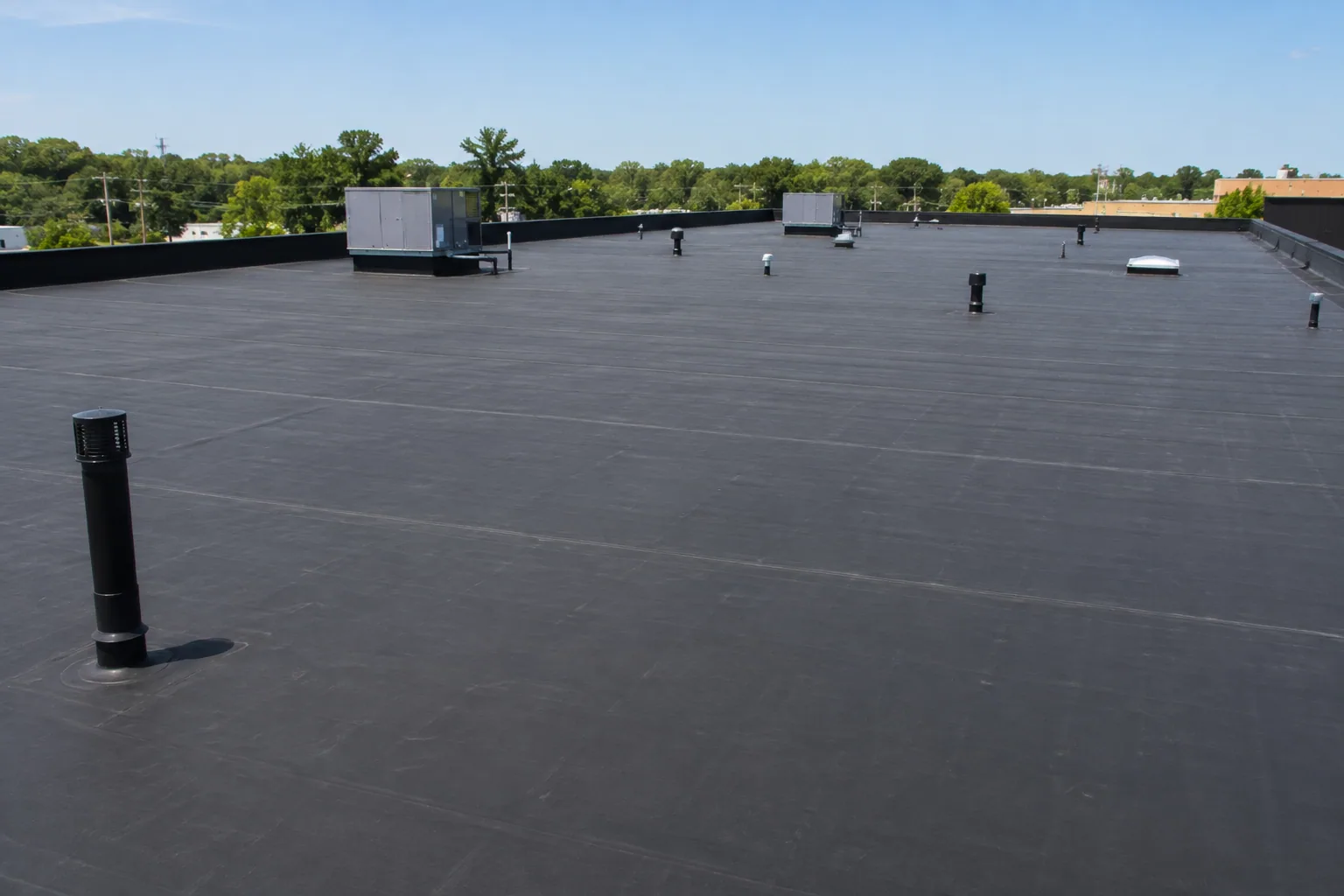
Record what the next repair needs to know
The closeout should name the confirmed membrane family, repaired location, materials, photographs, and any remaining test question. We note adjacent seams or drains that deserve another look, so maintenance staff can distinguish the repaired boundary from an unreviewed area. On a multi-section roof, each assembly is recorded separately. A marked condition report carries those observations into future budget and maintenance reviews.
We can revisit seams, terminations, and drainage details through planned maintenance. A commercial building near Tanasbourne and AmberGlen may have different access constraints from a process facility, though the same inspection method applies: follow the water path, identify the material, and check the boundary. Arrange a roof walk to review the Johns Manville assembly in place. We will mark findings and price a repair, recover, or replacement scope only where the roof condition supports it.
Questions About Johns Manville Commercial Roofing
Which Johns Manville membrane is on the building?
We check product markings, repair history, exposed edges, and the seam or lap construction. Those clues help distinguish a thermoplastic sheet, EPDM, or modified bitumen. If an overlay conceals the existing layer, a selective opening may be needed before materials are specified.
Can the same repair materials be used across JM systems?
No. TPO, PVC, EPDM, and modified bitumen have different seam and flashing requirements. We identify the installed assembly, prepare a representative area, and select compatible repair materials. The finished edge is inspected before the scope is closed out.
What does moisture below the sheet change?
Wet insulation can require removal beyond the visible split, because a surface patch does not dry the layer below. We map the suspected area and use a survey or opening when it will clarify the boundary. The repair and replacement options then show the measured area separately.
Can an existing Johns Manville roof take another layer?
A recover depends on the current layers, attachment, deck, moisture, drainage, and available height at edges and curbs. We inspect those conditions before recommending it. If the existing assembly is not suitable, the replacement scope identifies what needs removal and restoration.
What should be in a Johns Manville repair record?
Include the system identified, photographs, marked location, repair materials, and seam or flashing detail checked after the work. We also record access limits and unresolved conditions. That record helps the next roof walk distinguish prior work from new movement or water entry.
Set a Johns Manville roof walk
Tell us where water appears and what roof records are available. We will inspect the installed system, mark the repair boundary, and return options tied to the membrane and substrate.