
Restaurant Roofing in Hillsboro, OR
Restaurant roof repairs, inspections, and replacement in Hillsboro, OR. We check exhaust curbs, drains, and seams, then plan around service hours.
Restaurant Roofing
An exhaust curb with a split corner can admit water where the membrane changes direction. I inspect the flashing, nearby field seams, drain path, and service clearance before recommending a repair. In Hillsboro, OR, restaurant roof work must also account for kitchen hours, deliveries, and any rooftop equipment that needs trade access. We mark the actual defect and check whether the insulation below it is dry. Orenco Station’s shops and services occupy a Hillsboro station community on the MAX Blue Line. A restaurant visit there starts by confirming the exhaust-service path and the entrance used to move roofing material. A roof inspection records curb corners, exhaust clearances, and the repair boundary before material is selected. We confirm access, staging, and service routes with the property contact, then let the roof details determine the work.
Related Roofing Pages
More pages on commercial roofing in Hillsboro:
Inspect exhausts before a leak spreads
Kitchen exhaust, vents, conduit, and gas-line supports interrupt the membrane and create transitions that need regular inspection. We check curb corners, flashing height, metal counterflashing, and adjacent laps. Grease or rooftop service traffic may affect the surface, so we note what needs cleaning before repair materials go down. At Hillsboro, the annual precipitation normal reaches 35.93 inches, with its wettest months between October and January. We mark exhaust-curb and drain defects before that period so repairs can be planned around kitchen access. That seasonal pattern makes exhaust curbs, drains, and wall terminations useful inspection points before sustained rain. We trace a suspect path against the interior report, then use readings or a selective test cut only if moisture continues beyond the visible breach.
At an occupied restaurant, roof access can intersect with kitchen service and deliveries. We coordinate the hatch, staging area, and temporary restrictions before moving material. Occupied-building roof work can fit the hours the manager provides. A grocery roof has some similar refrigeration and service penetrations, though its equipment and operating routes differ.
Trace water from the low point
Water that remains around a drain after nearby areas clear may point to a blocked bowl, a depressed section, or insulation that has lost support. We inspect the strainer, clamping area, overflow, and membrane around the outlet. A roof plan and photographs show where the low point sits. Hillsboro has an annual normal of roughly 64 days with lows of 32°F or colder. At an exhaust curb or drain, we inspect exposed laps after cold weather and photograph any separation before preparing the repair. Water trapped at an edge, curb, or drain can freeze and thaw against an already weak lap. We look for separated seams, brittle sealant, and flashing movement, then select a repair compatible with the assembly and surface conditions. Wet substrate can change both preparation and timing, so the scope records what is confirmed. The Tualatin Valley Highway corridor is an urban route connecting Hillsboro with Cornelius, Aloha, Forest Grove, and Beaverton. At restaurants near the corridor, we confirm the delivery entrance with the property contact, then inspect the drainage plane, overflow route, and service paths. Drain and scupper repair can be priced with membrane work when the outlet contributes to the leak.
Keep the repair tied to sound sheet
We patch a local opening when the surrounding material is dry, secure, and capable of receiving a stable lap. The crew removes failed sheet to an edge that can hold a tie-in, prepares the substrate, and checks the finished transition. If wet insulation or connected seam failure reaches farther, marked limits keep that added removal subject to owner approval.
System identification governs the method: a heat-welded thermoplastic seam, an EPDM transition, an asphaltic lap, and a metal panel joint are not interchangeable. We confirm the installed assembly through records, attachment, and visible details before specifying material. Modified-bitumen repair illustrates why a surface's color alone cannot identify its construction.
We compare replacement when moisture is widespread, repeated patches have reduced reliable tie-in area, or several details fail together. A recover remains conditional on dry, secure layers and suitable added attachment and load. A replacement scope can phase around kitchen service; Shopping-center roofing may share suite coordination, while restaurant equipment clearances shape this sequence.
Schedule work around meal service
Before mobilization, the manager identifies service entrances, delivery windows, exhaust access, and any kitchen period when noise must stop. We agree on lift placement and a staging footprint that keeps the route open for staff and vendors. A curb repair and a larger roof phase do not need the same work window, so the schedule reflects the area that can be safely closed each shift.
Before materials arrive, we confirm the loading point and property rules with the contact.
For tear-off, we set a protected closeout sequence before removing the first section. The crew records the membrane left in place, seals the transition, and checks the completed boundary before leaving. If hidden moisture changes the planned limit, we show the added area for approval. Emergency roof response is available any hour, including weekends and holidays, when water is entering and exposure needs prompt control.
Price equipment, access, and roof area
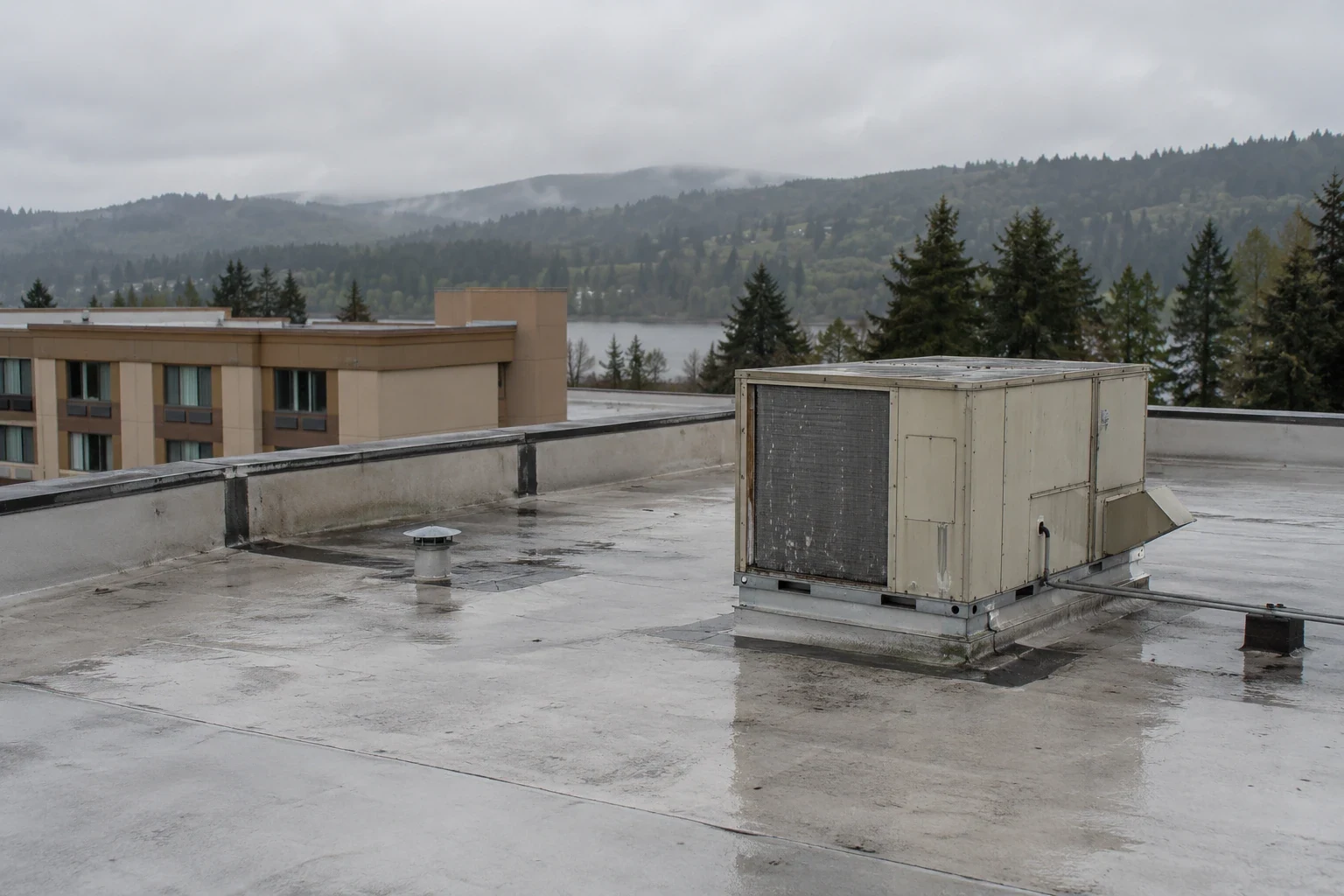
Cost depends on the confirmed repair boundary, assembly, number of curbs, insulation removal, and available access. Lift placement, protection, service-trade coordination, and the size of each work phase affect labor. We measure the roof area and list any test opening needed to settle a concealed condition. The estimate separates confirmed repairs from an option that still depends on testing.
Timing follows weather, surface moisture, material preparation, and restaurant hours. We check the forecast and roof surface before opening a section. If a wet window interrupts work, we protect the roof and coordinate the next safe period with the property contact. The schedule should keep open areas small enough to close before the day ends.
For planned maintenance, we can record drains, exhaust curbs, prior patches, and details to revisit. Photos give the next inspection a specific comparison point. Tell us where water appeared, whether a service trade needs roof access, and which business hours matter. We will inspect the assembly and return marked findings, repair options, and a scope tied to what the roof shows.
Questions About Restaurant Roofing
Can a roof repair be done without interrupting kitchen service?
We confirm the access route, exhaust needs, lift position, and work hours with the property contact. A localized repair can often be isolated, while replacement or a deck opening may need a planned window. The scope identifies any service route or temporary restriction before work starts.
What do you inspect around a kitchen exhaust curb?
We check flashing corners, curb height, counterflashing, nearby seams, and whether the curb or connected equipment has moved. We also inspect the drain path and interior report. Photos and marked limits show whether the repair can stay local or needs a test opening.
How do you know if water reached the insulation?
Surface conditions and interior symptoms guide readings or a selective opening. We compare suspect areas with seams, drains, and curbs, then record confirmed wet material separately from places that still need testing. That establishes how far removal should extend.
What could make a restaurant reroof cost more than expected?
More curbs, wet insulation, difficult lift access, or trade coordination can change quantities and labor. We measure confirmed scope and show concealed conditions separately until an opening settles them. Kitchen hours and delivery limits can also affect phasing.
What should be in the roof repair record?
Photos, marked locations, material installed, the finished lap, and any access limits make the record useful. We identify details that need a later check, such as an exhaust curb or drain. The next maintenance visit can compare those same points.
Arrange a restaurant roof walk in Hillsboro
Tell us where water appeared and when roof access is available. We will inspect the curb, drains, and membrane, then price the repair boundary supported by the findings.