
Grocery Store Roofing in Hillsboro, OR
Grocery store roof inspections, leak repairs, and replacement in Hillsboro, OR. We check refrigeration curbs, drains, seams, and delivery access.
Grocery Store Roofing
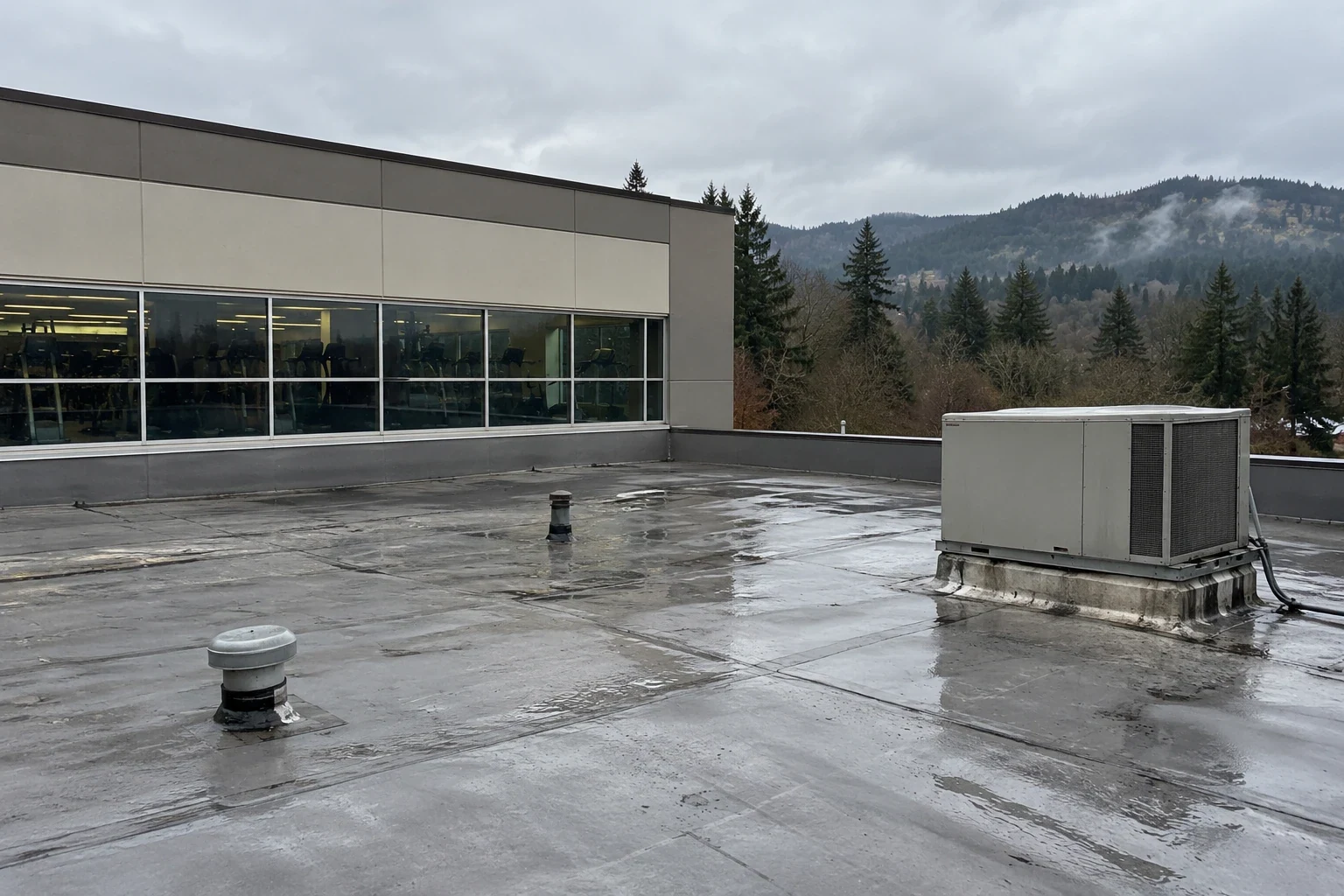
A refrigeration curb with a lifted corner can send water along the roof before a ceiling mark appears over an aisle. I inspect the flashing, nearby seams, pipe supports, and drain path, then compare those details with the interior report. In Hillsboro, OR, a grocery roof also needs a work boundary that keeps deliveries and equipment service in view. We identify the assembly and check the substrate before recommending a patch. Orenco Station sits on Hillsboro’s MAX Blue Line; the surrounding mix of shops and services makes a grocery property’s receiving route and roof access worth confirming on site. We start with a commercial roof inspection that marks the curb and water path. Near Tanasbourne and AmberGlen, store staff confirm the hatch, lift position, and staging area before the visit. For a grocery property nearby, we confirm delivery access and occupied routes with the store contact before setting work; membrane and curb details determine the roofing scope.
Related Roofing Pages
More pages on commercial roofing in Hillsboro:

Inspect curbs and service penetrations
Refrigeration equipment adds curbs, lines, and service routes that interrupt a roof field. We inspect flashing height, corner patches, fasteners, and laps around each transition. A service technician may need clear access, so the walk records where equipment work overlaps a repair zone. If a curb has moved, the flashing detail may need rebuilding rather than another surface bead.
A market roof can contain several generations of work. We compare membrane markings, seam construction, edge metal, and available records before choosing a compatible patch. PVC roof work calls for its own preparation, and Shopping-center roofing may share access constraints; on a grocery building, however, refrigeration equipment and the service clearance around it can govern the inspection route.
We photograph penetrations, drains, and previous patches, then mark the confirmed repair boundary. Where the membrane hides moisture, a survey or selective opening can help distinguish a surface defect from wet insulation. Moisture mapping gives the owner a better basis for removal limits; a reading is compared with the roof condition and opened only with approval.
Keep water moving toward the outlet
At each drain, we check the bowl, strainer, clamping ring, overflow, and membrane around the opening. A clear outlet can still sit in a depressed section where water remains. We compare the low point with slope and insulation condition, then photograph any ponding. Airport normals put Hillsboro's yearly rain at 35.93 inches, mostly from October through January. For a grocery roof, we check drain and overflow paths before any section is opened. For a store roof, the wet-season pattern makes drainage and exposed transitions useful inspection points. We document ponding, overflow condition, and seam performance, then tie the recommendation to those field observations.
Hillsboro’s winter normals include about 64 days a year when the daily minimum reaches freezing. Water trapped near a drain or exposed curb can freeze and thaw against weak flashing. We look for lifted laps, brittle sealant, and movement, then match the repair to compatible material and surface conditions. Drain and scupper work can be scoped alongside membrane repair when the outlet itself contributes to the problem.
Coordinate the roof with store operations
Before mobilization, we confirm the roof hatch, lift placement, delivery entrance, staging area, and refrigeration service route. The store contact identifies delivery windows and any equipment that cannot lose access. Highway 8 passes through Forest Grove, Cornelius, Hillsboro, Aloha, and Beaverton; 185th Avenue is a regional people-and-goods corridor. Neither route identifies a grocery store’s receiving door. The store contact confirms truck circulation, refrigeration service access, and the safe lift zone before we set the visit.
We sequence tear-off so the open section can be dried in before the shift ends. The foreperson checks temporary tie-ins and keeps drainage paths clear; if removal exposes wet board beyond the agreed boundary, we photograph it and obtain approval for a separate scope. Occupied-building reroofing also accounts for refrigeration service and customer access, rather than assuming the roof can be opened across a full bay.
Choose a repair that reaches sound material
A patch can remain local when the opening is isolated and surrounding sheet is dry, attached, and clean enough for a tie-in. We remove failed material, prepare the substrate, and inspect the finished lap. Wet insulation, loose attachment, or repeated failures around several curbs changes that boundary. The scope identifies removal separately from a surface repair so the owner can compare the actual work.
If moisture testing finds connected wet areas or the available substrate will not support a durable tie-in, replacement may be the more reliable comparison. An overlay remains conditional on dry layers, sound attachment, acceptable added load, and workable drainage and code details. Replacement planning maps each phase to the areas confirmed on the roof, with curb, edge, and drain work priced as part of the measured scope.
Cornelius adopted a Town Center Plan in 2019, while Downtown Hillsboro is a regional center in the westside market. At each grocery property, the observed assembly and equipment layout determine the work. Big-box retail roof work can share long seam and delivery concerns, but a grocery scope must also account for refrigeration service paths.

Record repairs near equipment and drains
After repair, the record should show the prepared surface, finished lap, materials, and marked curb or drain location. We note any area that could not be accessed and any condition that needs a later check. This gives the next service visit a comparison point near the same equipment rather than a vague note that the roof was inspected.
Routine maintenance can check strainers, edge metal, curbs, and prior patches before a small defect becomes a larger interruption. It cannot remove wet insulation or restore a failed assembly by itself. We prioritize each item by observed condition and note which one merits a repair scope. Preventive maintenance can keep those findings current between replacement projects.
For a dispatch check, give us the active leak location, refrigeration service route, and loading window. We can discuss interim water control when access and roof conditions allow, then set permanent work after the assembly is confirmed. We will walk the roof, record the findings, and price a repair boundary that fits the assembly.
Questions About Grocery Store Roofing
How do you check a leak near refrigeration equipment?
We inspect the curb flashing, corners, nearby seams, drains, and service penetrations, then compare them with the interior report. If the roof hides moisture, readings or an approved test opening can refine removal limits. The report notes the equipment route that must stay accessible.
Can a grocery roof repair happen during delivery hours?
We confirm the loading window, roof route, lift position, and staging with the store contact. A small patch may be isolated, while a deck opening or replacement phase can need a temporary restriction. The scope names the affected area and the access plan before work begins.
Does a blocked drain always mean the membrane needs repair?
No. We clear the view, inspect the bowl and overflow, then check whether water remains because of slope, insulation, or a membrane defect. The findings separate maintenance from drainage correction and localized sheet repair.
What changes the boundary of a refrigeration-curb repair?
Movement, wet insulation, failed corners, or separated seams can extend work beyond the curb. We inspect adjacent material and mark the sound tie-in area. If a concealed layer remains uncertain, we show the test needed before expanding the repair.
What does a grocery roof closeout record include?
Photos, marked locations, materials installed, curb and drain findings, and any access limits provide a usable record. We note where refrigeration service must remain clear and identify details to recheck on the next maintenance visit.
Arrange a grocery roof walk in Hillsboro
Tell us where water appeared and which refrigeration or loading routes need access. We will mark the findings and price the repair or replacement phase the roof supports.