
Commercial Roofing for Logistics and 3PL in Hillsboro, OR
Plan roof repairs and replacement for Hillsboro logistics buildings with drainage findings, loading access, and work zones mapped to daily operations.
Logistics and 3PL
A blocked drain or open roof seam can interrupt more than the space directly below it. In Hillsboro, OR, a distribution building may have loading, storage, office, and equipment zones sharing one roof, so we trace the water path before setting a repair boundary. We mark the membrane condition, check drains and curbs, and confirm how the crew can reach the work without crossing an active loading route. The scope then gives the site manager a repair sequence tied to the building.
A westside service call can involve more than the roof hatch: a delivery entrance, active dock, and equipment route may all compete for space. Regional freight connections add to that traffic, and the building's own circulation plan decides where a crew can stage. We verify the truck approach, loading window, lift position, and roof entry with the property contact before setting a roof inspection or repair sequence.
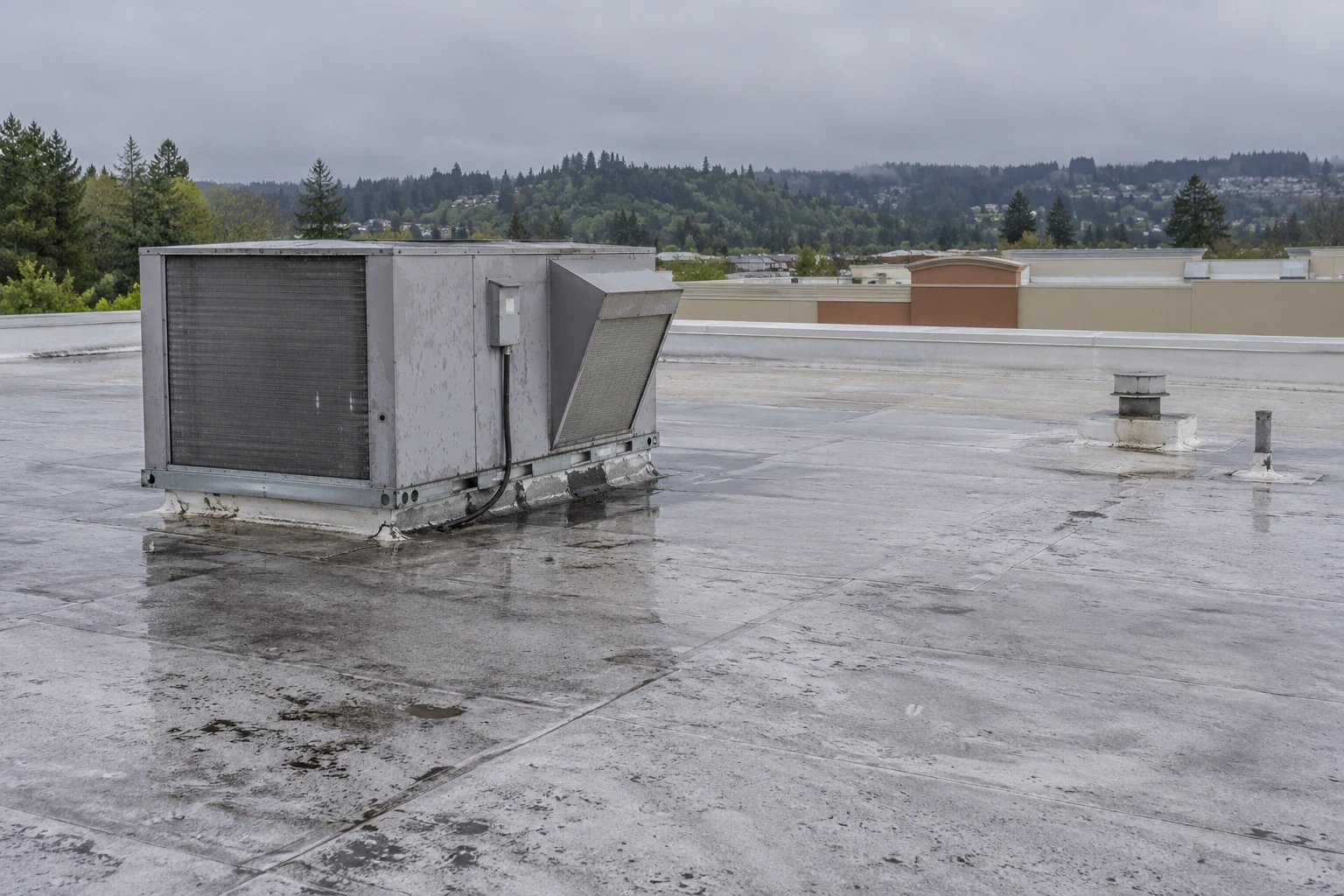
Related Roofing Pages
More pages on commercial roofing in Hillsboro:
Trace the leak across the storage bay
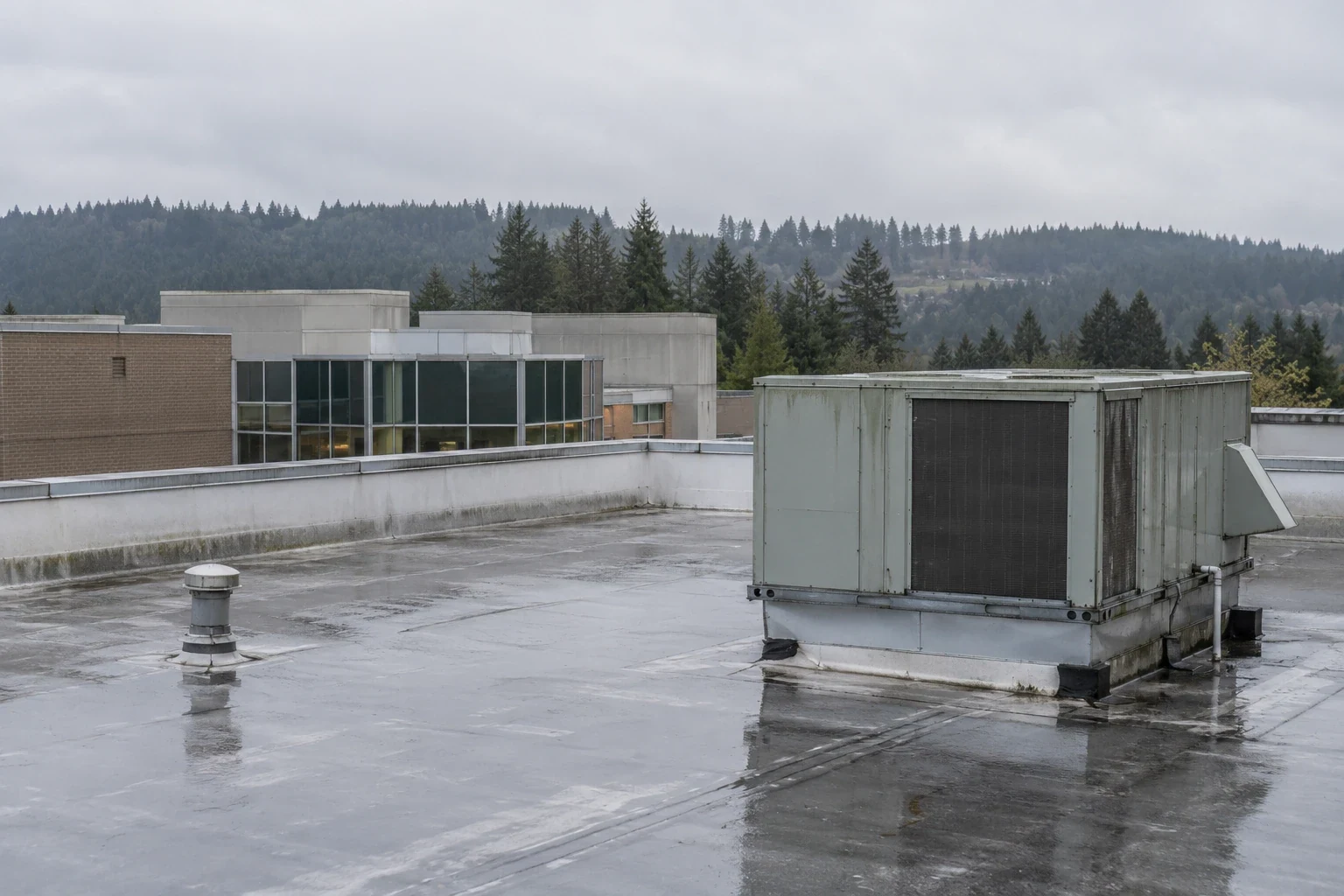
A ceiling stain may be below the water path, not below the opening. Water can follow deck flutes, insulation joints, conduit, or a low roof area before it reaches inventory or a work zone. We compare the interior report with field seams, penetrations, parapets, equipment curbs, and drain bowls above it. Photographs and marked locations distinguish a confirmed defect from a suspected route through the assembly.
Hillsboro's normal precipitation is heavier from October through January. For a logistics roof, that seasonal rain makes drainage plane, overflow path, and low points useful places to inspect. If water remains after nearby areas clear, we look for a blocked outlet, slope issue, or insulation that has taken on moisture. Clearing debris may resolve a maintenance issue; wet insulation or an opened seam needs a defined repair.
Our report identifies the observed membrane, repair history, access limits, and any area requiring another test. If moisture is suspected beyond the visible damage, we can propose an infrared moisture survey or test opening with a stated purpose. The property team can then decide whether to authorize localized work or price a broader section.
Protect loading flow while work is overhead
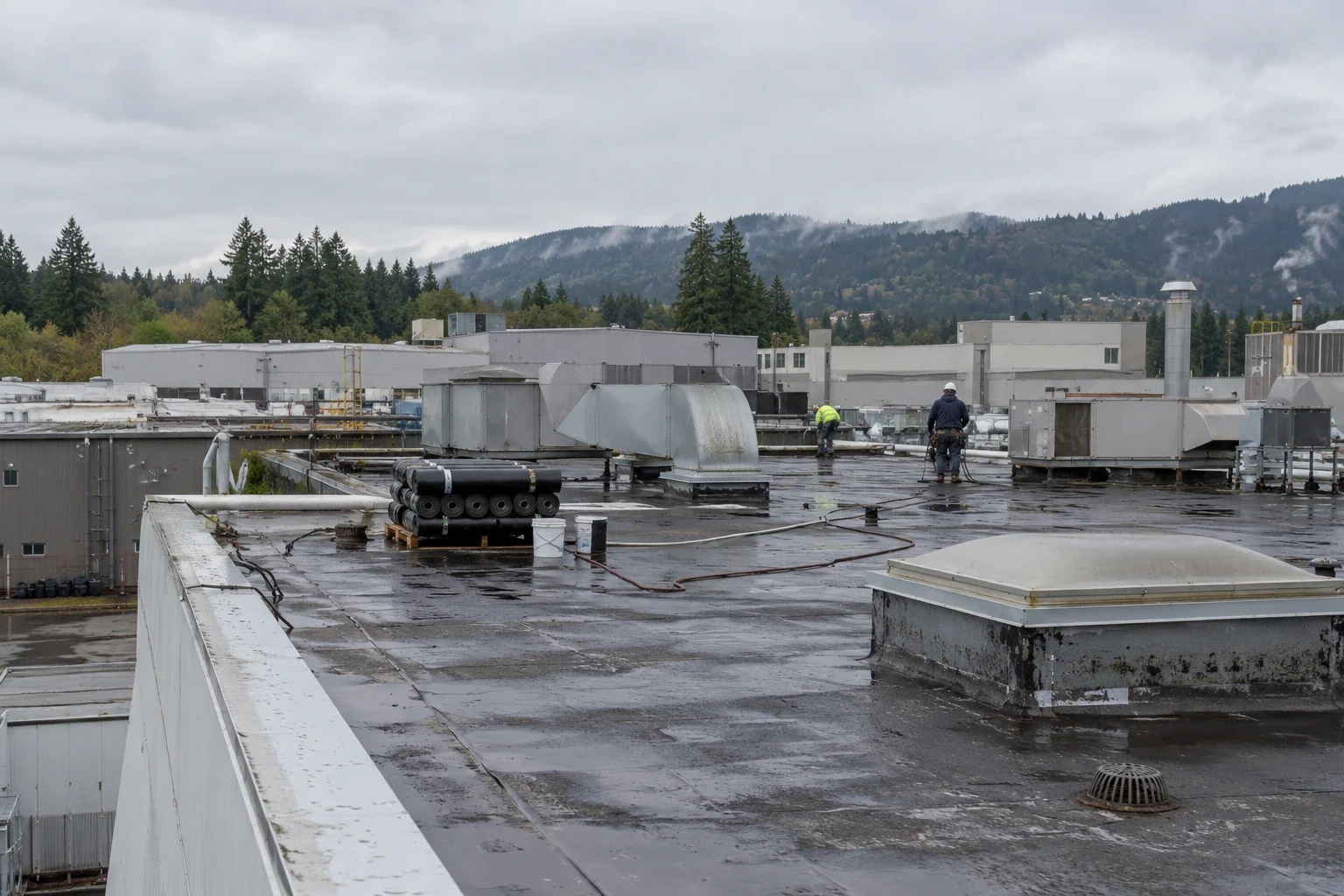
Before bringing material to the roof, we confirm truck approach, delivery hours, loading zones, fall protection, staging, and the route to roof access. A lift may need to avoid a dock shift or a lane used by freight vehicles. The site contact identifies restricted areas, and we mark the work zone, material path, and daily roof closeout point. If the repair expands after an opening, the crew secures the roof and reviews the added boundary before continuing.
185th Avenue carries people and goods across Washington County, while Swan Island's industrial area has one public approach over the North Going Street Bridge. For a warehouse or production building, we confirm its own gate, delivery path, and schedule, then keep roof staging clear of that operating route.
For occupied distribution buildings, noisy work and temporary barriers can be placed in agreed windows. We keep walk paths clear and protect open roof areas at shift end. We respond around the clock, holidays included, when a new opening threatens stock or active operations.
Match the patch to the membrane and traffic pattern
Forklift aisles below the roof do not change the roofing material, but rooftop service routes and equipment can affect where wear appears. We identify the membrane and attachment before specifying a patch. A thermoplastic seam, EPDM lap, modified-bitumen transition, built-up surface, or metal panel joint needs compatible preparation. At equipment curbs and pipe supports, the flashing must meet the field sheet without leaving a weak edge.
Distribution buildings may include additions or prior recover work that leave different assemblies across one structure. We mark each transition and do not assume a patch that suits one roof area will bond to another. If records are missing, we inspect the substrate or specify a test before deciding. That check matters where roof access follows narrow service paths and the repair must stay clear of rooftop equipment.
A local repair can be appropriate when the surrounding material is sound. If the seam failure repeats across the field or insulation is wet beyond a small area, we show a separate replacement scope. A recover is evaluated only after moisture, attachment, added weight, drainage, and code requirements are checked.
Price the work around throughput and access
Project cost depends on the measured repair area, assembly, access, and protection needed below. Tear-off, insulation replacement, perimeter metal, curb flashing, lift time, and disposal can change the scope. For logistics work, a restricted dock window or staged delivery can also change sequencing. We state those assumptions and separate confirmed roof quantities from concealed conditions that need an opening before they can be priced accurately.
A patch should meet sound material. We remove failed membrane, prepare the substrate, reinforce edges, and inspect nearby laps and terminations. The closeout shows where the work stops and what material was installed. If wet insulation reaches past that boundary, we mark the extent and price it as an additional decision rather than cover it with a surface layer.
For a multi-building operator, a multi-site roof program can group inspections by access window and keep findings in consistent records. Manufacturing and investment-property roof reviews use similar records for different decisions; each building still needs its own repair boundary and operating plan.
Use the closeout to plan the next roof walk
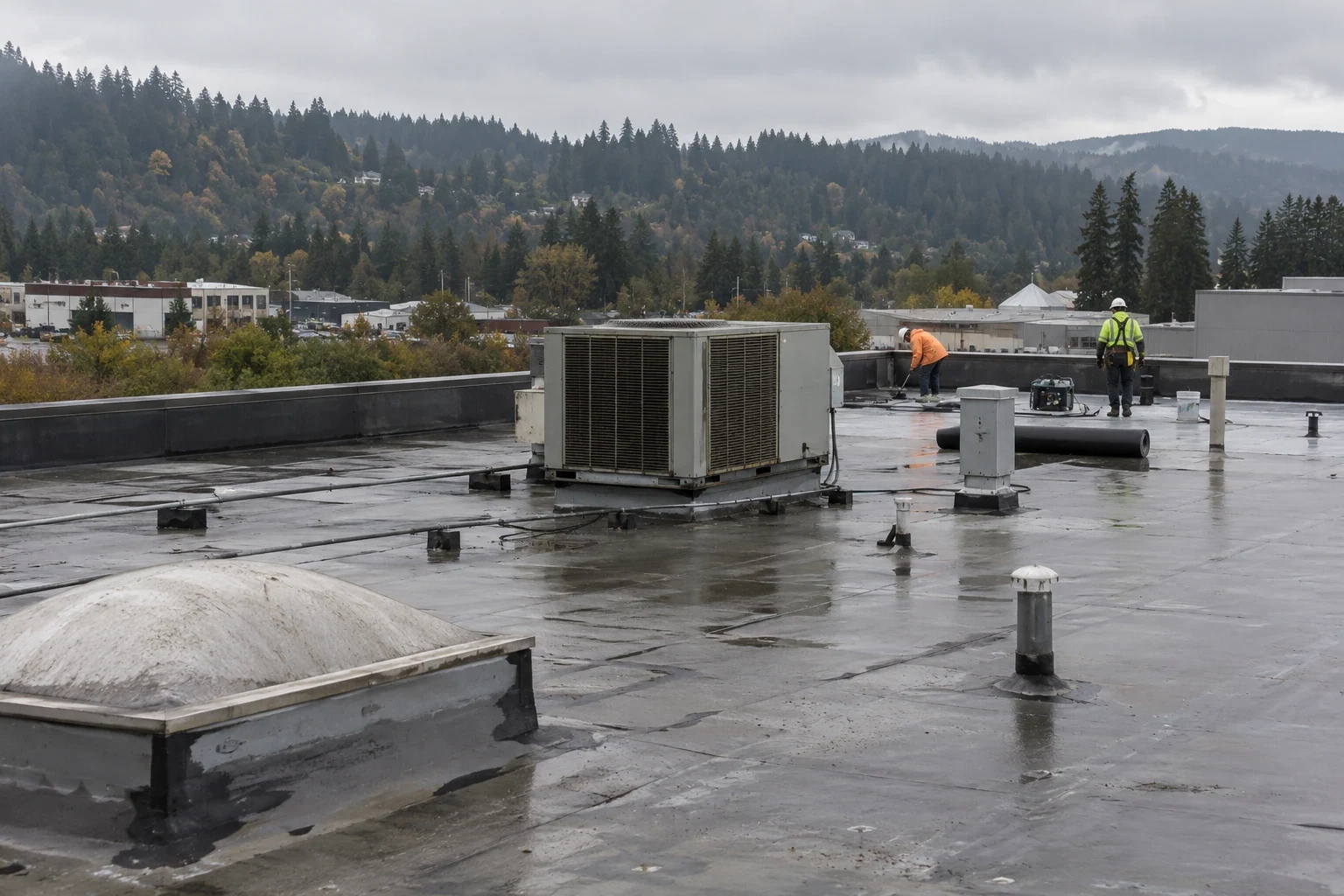
A roof record should let the next shift or manager locate the repaired seam, drain, or curb without guessing. We leave photographs, marked locations, materials, and access notes. A follow-up walk can check whether a repair edge moved or a drain is holding debris. Our maintenance visits can be coordinated with approved site windows and loading schedules.
Hillsboro has about 64 days each year with daily lows at or below freezing. After cold weather, exposed sealant, edge metal, drains, and rooftop supports deserve review where water may remain. We note any changed condition and separate it from a prior repair. The owner can then plan a targeted maintenance visit, additional test, or capital scope instead of treating each new leak as an unrelated event.
Where managers coordinate buildings in Forest Grove and Hillsboro, Oregon Highway 8 provides corridor context, while each roof inspection confirms the assembly and access. For a property portfolio, our managed-property roof reviews keep records organized by site.
Questions About Logistics and 3PL
Can roof repairs be scheduled around dock activity?
We confirm delivery hours, lift location, roof access, and restricted lanes with the site contact. The work plan identifies where materials can be staged and which roof area will be opened. If the schedule changes, we secure the section and update the next work window before returning.
How do you locate a leak above stored goods?
We compare the interior location with drains, seams, curbs, and roof transitions. Water may travel through insulation or along the deck before appearing below. The report marks the likely entry point separately from the interior path and identifies any test needed to confirm the repair boundary.
What roof details need attention after winter?
We review drain bowls, edge metal, exposed sealant, equipment supports, and seams where water can remain. With about 64 freezing-minimum days in a typical Hillsboro year, we check exposed details for movement or a changed repair edge before the next rain.
When is a recover possible for a distribution building?
The existing assembly must be dry and stable, attachment verifiable, added weight acceptable, and drainage and flashing workable under code. We check those conditions and compare the recover with localized repairs or replacement. A roof's size or use alone does not decide the method.
What should the roofing closeout include?
Keep photographs, marked locations, materials, and notes on access limits with the building records. We identify adjacent areas to watch and any moisture test or opening completed. Site staff can use the record to plan the next inspection around operations.
Schedule a logistics roof review
Share the leak location, loading schedule, and roof access rules. We will mark the condition, confirm the repair boundary, and plan work around the site's operating windows.