
Sika Sarnafil Roofing in Hillsboro, OR
Review Sika Sarnafil PVC roofing in Hillsboro, OR. We inspect welds, flashing, drains, and insulation before defining the repair boundary or reroof scope.
Sika Sarnafil Roofing
A probe that stops at a Sarnafil weld may reveal a small opening, or the edge of a larger separation. In Hillsboro, OR, we identify the PVC assembly, inspect its seam and flashing, and follow nearby drains and curbs before selecting a repair. A heat-welded surface is only one part of the roof. Attachment, insulation, terminations, and earlier repairs determine whether a patch can reach sound material.
Hillsboro includes advanced manufacturing and medicine packaging operations. Genentech’s Hillsboro operation manufactures, packages, and distributes medicine; Intel’s technology-development headquarters is at Ronler Acres. For process-oriented buildings, equipment access and defined work windows belong in the roofing plan. We inspect the roof in place and coordinate its access with the property contact.
Related Roofing Pages
More pages on commercial roofing in Hillsboro:
Check drainage before closing a weld
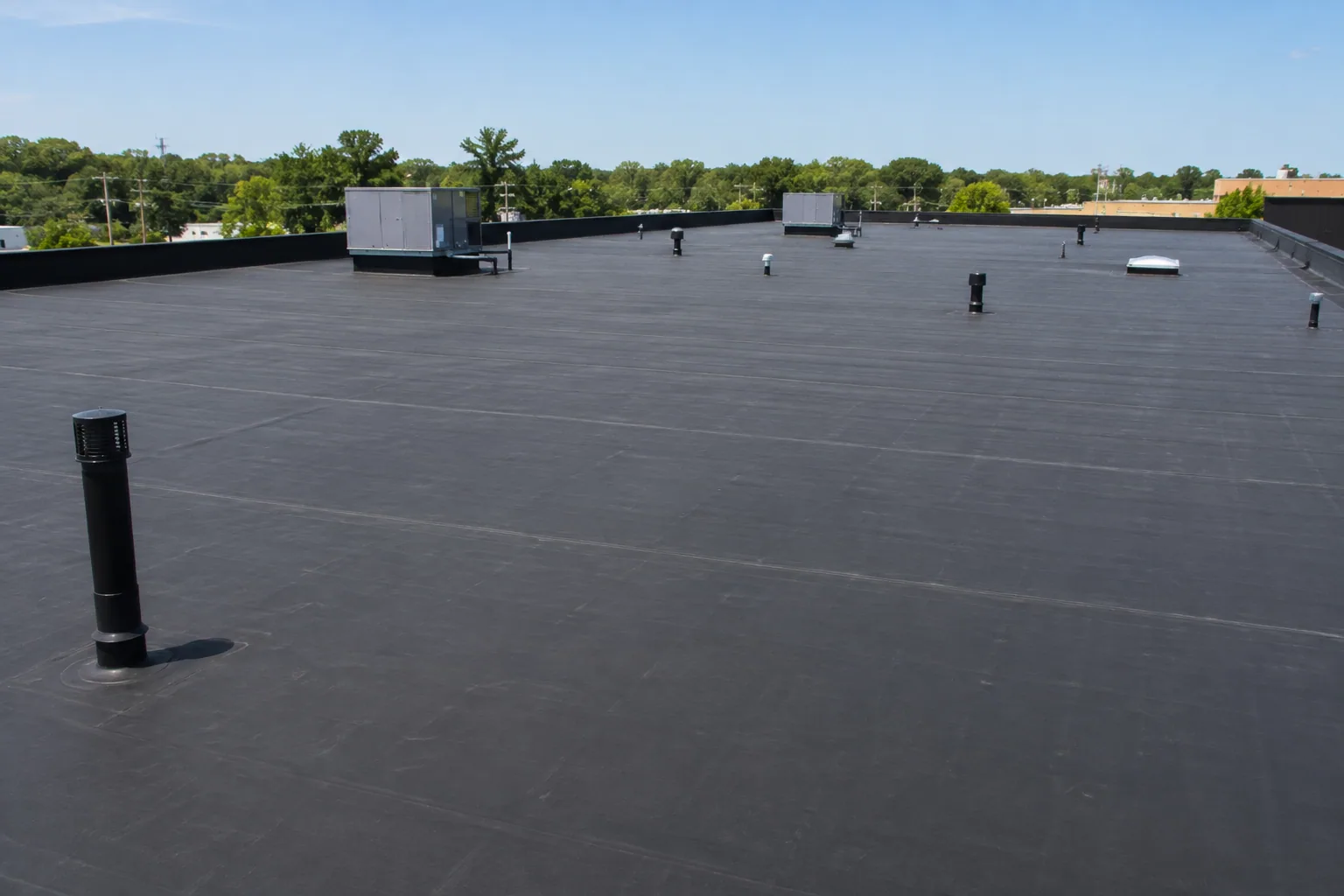
Hillsboro’s annual precipitation normal measures 35.93 inches and is highest from October through January. At a Sarnafil repair, we check that the prepared weld area can drain and that temporary protection keeps runoff off exposed insulation. We inspect Sarnafil laps, drain bowls, scuppers, and curb transitions before a prolonged wet stretch tests the detail. Water at a low point may come from drainage, membrane movement, or a blocked outlet. We record the observation and trace a likely path instead of treating standing water as proof of a seam failure.
Freezing conditions also matter when the repair needs a dry, prepared surface. In Hillsboro, normal daily minimums are at most 32°F on about 64 days each year. We check the PVC sheet and drain flashing directly after a cold period, recording movement before specifying a weld repair. We use the local freeze-day pattern when planning, then confirm actual surface moisture and forecast conditions before welding.
Trace the seam into its flashing
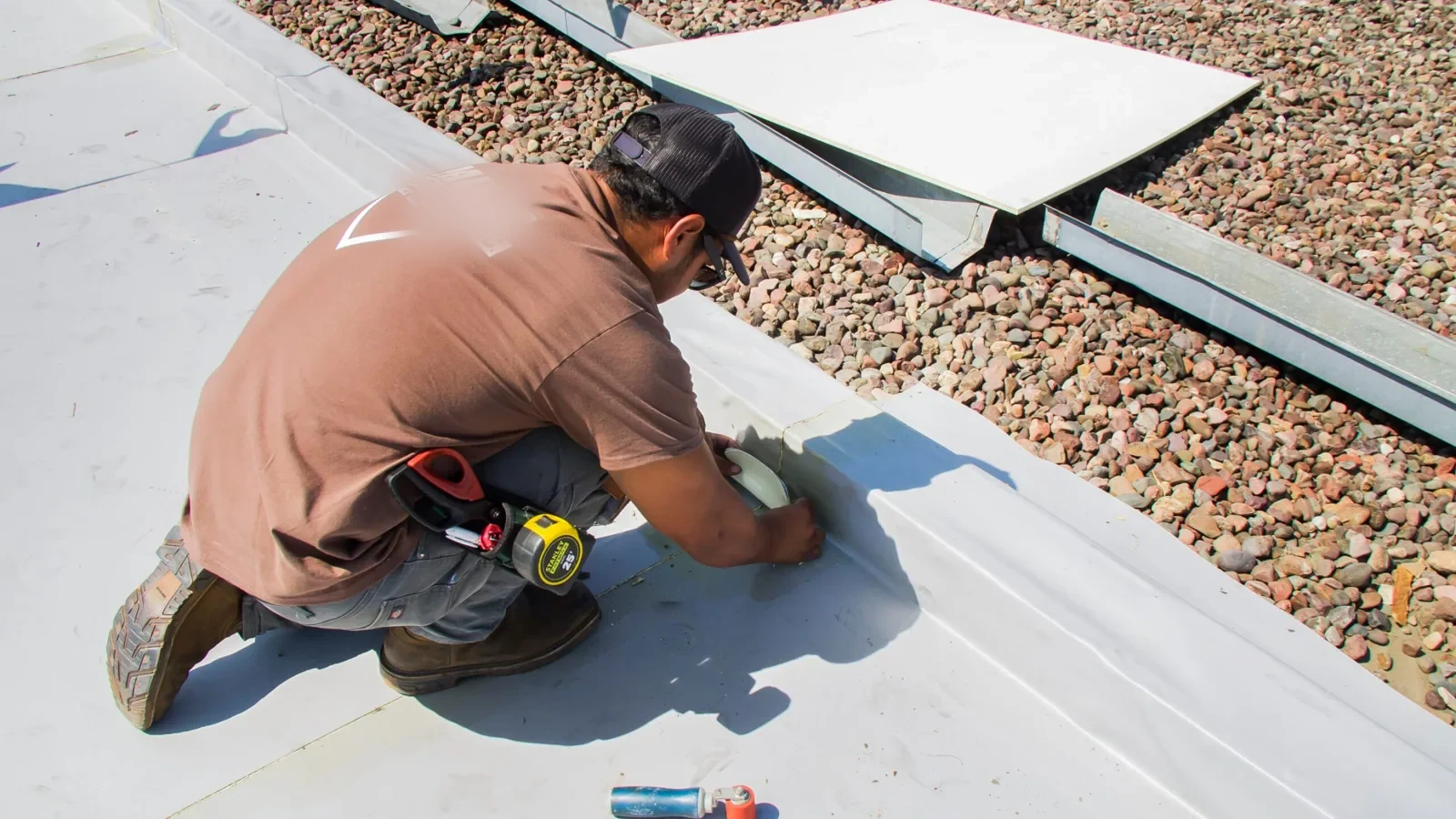
Sarnafil PVC seams are heat welded. We check the weld with a probe, inspect for fishmouths or contamination, and look at material just beyond the lap. At walls, equipment curbs, and pipe penetrations, we examine the flashing corners, termination, and any patch that interrupts the drainage plane. An interior stain is logged as a clue, then compared with the roof detail that could carry water toward it.
At a suspect Sarnafil lap, we probe the weld beyond the visible mark and check whether the nearby sheet remains flexible. The walk follows that detail toward drains, curbs, and the repair edge, so the written scope names the material that can accept a new weld and any test that would change it. A roof inspection records what the crew can see and notes where a test opening could resolve a concealed layer.
Match the patch to the PVC assembly
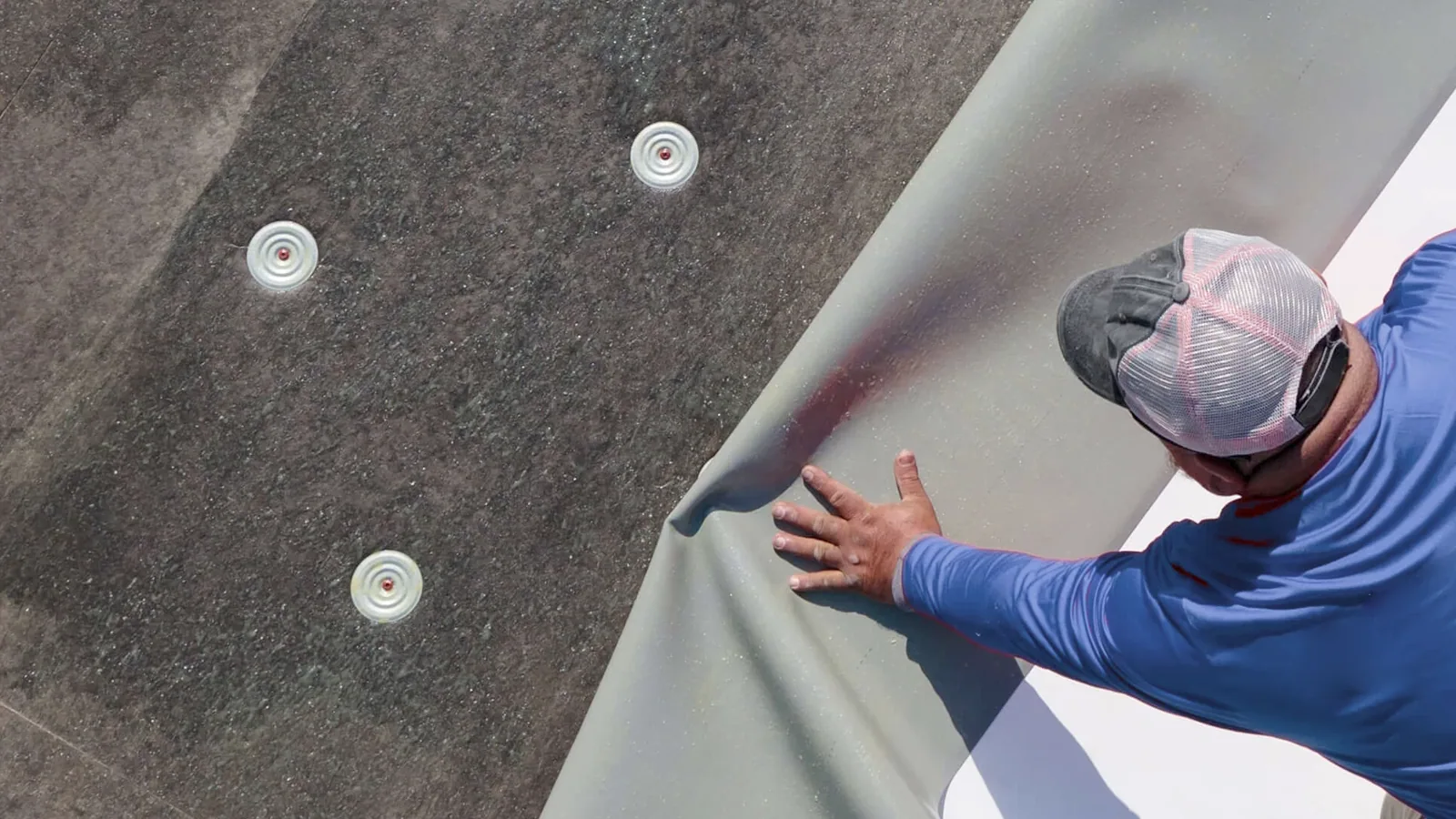
A PVC repair begins with identification of the installed membrane and detail materials. We remove loose or contaminated material, prepare the surface as required, and test the weld before extending the method across a larger area. A prior coating or incompatible repair can change how the sheet accepts heat. We note those conditions rather than assume a new patch will bond simply because it is PVC.
Attachment, cover board, and edge metal work together with the field sheet. We inspect plates, adhesive where present, perimeter fastening, and terminations at parapets. Drain and curb heights matter if a new layer is considered. A PVC membrane review identifies these assembly details, while comparison with Carlisle SynTec systems or Versico membranes can help evaluate an alternate system using the same roof evidence. Product selection does not replace review of the deck and drainage.
Separate a local weld from a system decision
A localized weld repair may fit when the sheet is flexible, dry, and intact beside the opening. We mark the seam, prepare a firm repair boundary, and check the completed weld. If several separated laps, cracked flashings, or wet insulation show up in different roof areas, we map the conditions before treating each as an isolated defect. A seam review can show where the failure repeats and where the surrounding membrane remains serviceable.
Replacement or recover is considered when the condition extends beyond a few details. A recover requires a stable, dry assembly, adequate attachment, clear drainage, and enough height at edges and curbs. We compare that work with tear-off and new insulation when moisture or weak substrate is present. The scope separates removal, deck work, edge metal, and material movement so the property owner can see what drives the broader option. If the roof remains serviceable, planned maintenance can return attention to seams and transitions.
Emergency response is available around the clock, including holidays and weekends, for active water entry. We protect the opening and document the temporary work, then schedule the permanent weld when conditions suit the membrane. The follow-up record names the protected location and the repair still required.
Keep the work zone clear for building use
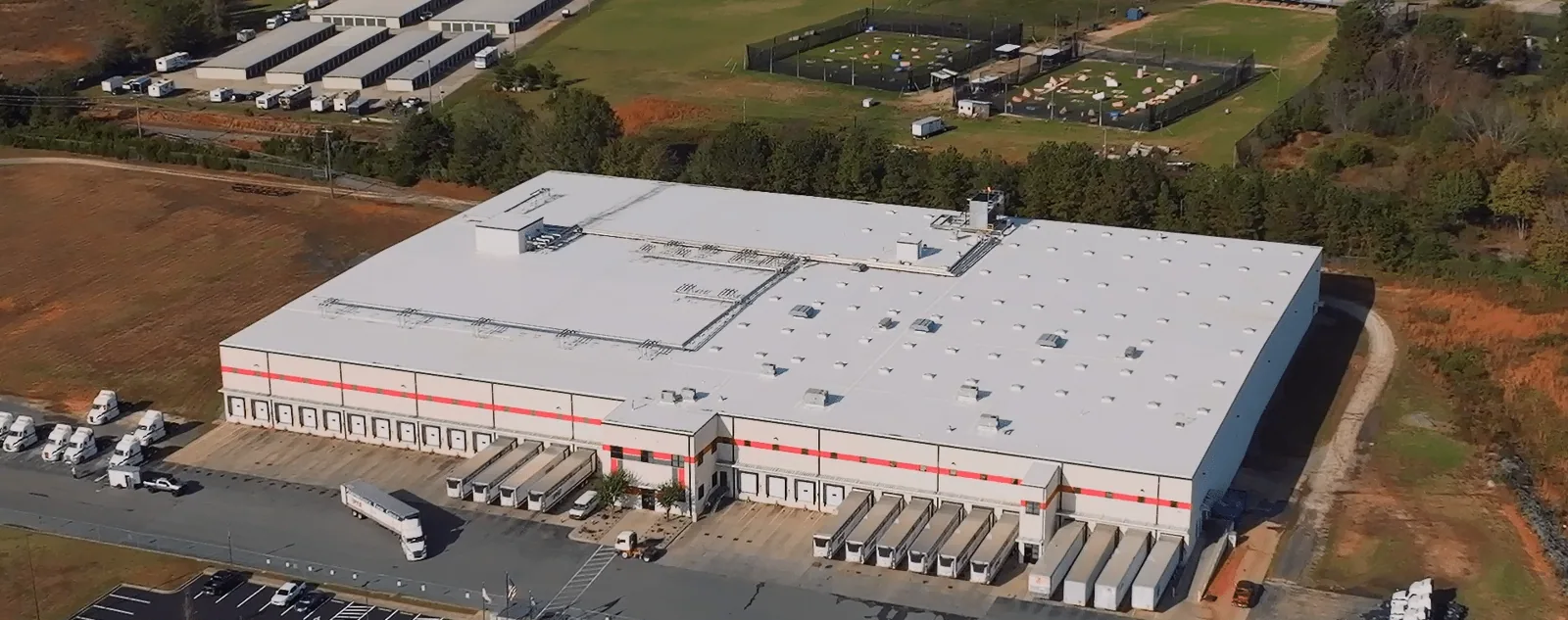
Before moving equipment or membrane rolls, we confirm roof access, staging, air intakes, and service routes with the building contact. A curb repair may require a clear area around operating equipment; a broad reroof may need a phased route to keep tenant entrances available. We identify the daily closeout point and how an opened area will be protected if weather interrupts. The people-and-goods corridor along 185th Avenue is part of Washington County’s regional network. We confirm the building’s final delivery approach and the permitted material route before scheduling membrane rolls or lifting equipment. That context can frame nearby employment properties, but actual delivery access comes from the site's gate and loading area. We confirm those details directly. For a building near Tanasbourne and AmberGlen, a marked roof plan can connect the repair boundary with access and staging notes. A phased roofing scope keeps the repair sequence tied to the building's use.
Preserve weld and repair records
After work, we record the PVC system identified, seam or flashing repaired, photos, and the boundary checked at closeout. If a wet area or inaccessible curb was not opened, the file states that limit. Facilities staff can then distinguish a finished weld from a nearby detail that remains untested. A marked roof report keeps those observations with the building's maintenance record.
We can return to inspect drains, terminations, and repair edges before the next wet season. Managers who oversee several properties can compare conditions without assuming every system is alike. Arrange a Hillsboro roof walk to review the Sika Sarnafil assembly. We will mark the visible findings, state what testing would change the boundary, and price the correction or replacement option supported by the inspection.
Questions About Sika Sarnafil Roofing
How do you test a Sarnafil PVC seam?
We inspect the weld visually and with a probe, then check the sheet beside it for contamination, brittleness, or a prior repair. A small test can show whether the seam can be rewelded. The completed repair is checked again after preparation and welding.
Can a Sarnafil roof be coated?
That depends on the existing surface and the coating system's compatibility, adhesion, and detail requirements. We inspect seams, flashings, moisture, and drainage before including a coating option. A coating is not a substitute for wet-insulation removal or a failed termination.
What causes a PVC repair boundary to expand?
A seam may lead to a second defect, or moisture testing may show wet insulation beyond the visible opening. We mark each confirmed area and identify what remains concealed. The owner sees the additional work separately before the scope grows.
Does the membrane name settle whether a recover will work?
No. We check attachment, existing layers, moisture, deck, drain height, and perimeter details. Those conditions determine whether added material can be installed without burying a problem. If the assembly is not stable, the removal scope is priced separately.
How are Sarnafil repairs handled during building operations?
We confirm curbs, air intakes, service paths, access rules, and work hours before setting the repair area. The plan names where material can be staged and how an opening will be protected at closeout. Any restricted zone is coordinated with the site contact.
Review a Sika Sarnafil roof in place
Arrange a Hillsboro roof walk. We will test the PVC seams, inspect drainage and flashing, and return a marked repair boundary with options tied to the actual assembly.