
Fitness Center Roofing in Hillsboro, OR
Fitness center roofing in Hillsboro, OR, with inspections and repairs planned around classes, locker rooms, rooftop equipment, and member access.
Fitness Center Roofing
A stain over a training floor can close more than the space directly beneath it. In Hillsboro, OR, I follow the roof path from the room report to seams, curbs, drains, and the nearest wall transition. Water can travel along the deck before it becomes visible indoors. We mark the suspected zone, check the insulation, and define the repair boundary on sound material. A commercial roof inspection records the condition before the operator chooses a repair or wider project.
Fitness properties may include studios, locker rooms, offices, and equipment areas with different hours. We confirm class schedules, member routes, deliveries, and access to rooftop units before setting a work sequence. Downtown Hillsboro pairs commerce with local-government activity as Metro's western-county regional center. At a fitness property there, we confirm how class schedules and member routes affect roof access before setting repair phases. For work near Orenco Station, management decides where the lift and staging go. Around Orenco Station, shops and services share a district planned around high-capacity transit. We map each fitness property's roof access and ground protection before setting a work area.
Related Roofing Pages
More pages on commercial roofing in Hillsboro:
Trace water above active rooms
We compare the interior mark with roof slope, drains, seams, penetrations, and mechanical curbs. Water may travel beneath the membrane before appearing over a studio, locker area, or office. We photograph the likely path and inspect whether the surrounding sheet is attached and dry. The Hillsboro annual precipitation normal is 35.93 inches and peaks between October and January. Before wet-season work over an active fitness room, we inspect outlet restrictions and mark the exposed boundary that needs daily protection. A moisture survey can map wet insulation above the room before any ceiling work. Above a training room, we check the drain bowl and seam to see whether water clears before it reaches the interior. We note whether water remains after nearby surfaces drain and whether ponding reaches a seam or penetration. A drain inspection separates an outlet blockage from a low field or compressed insulation.
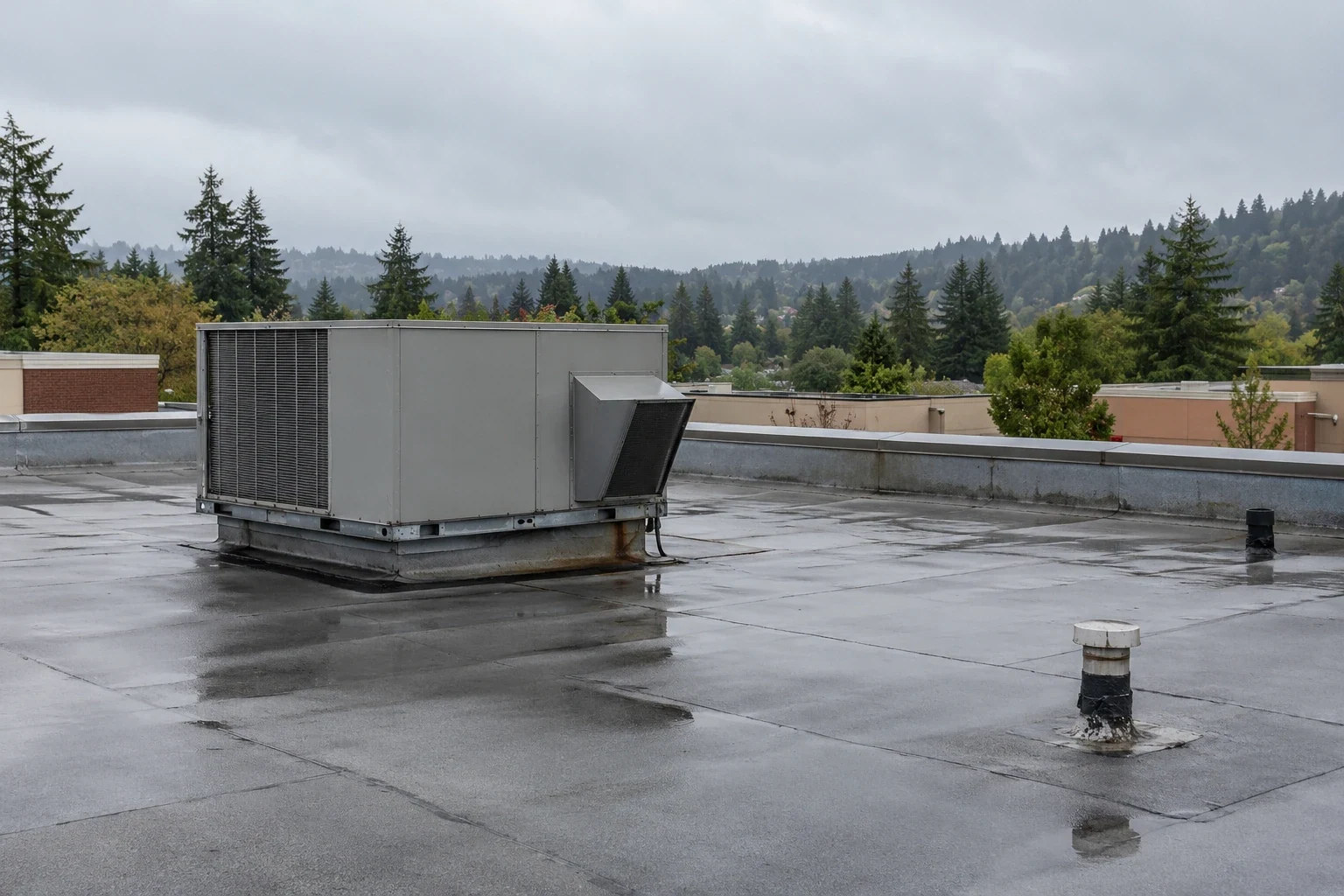
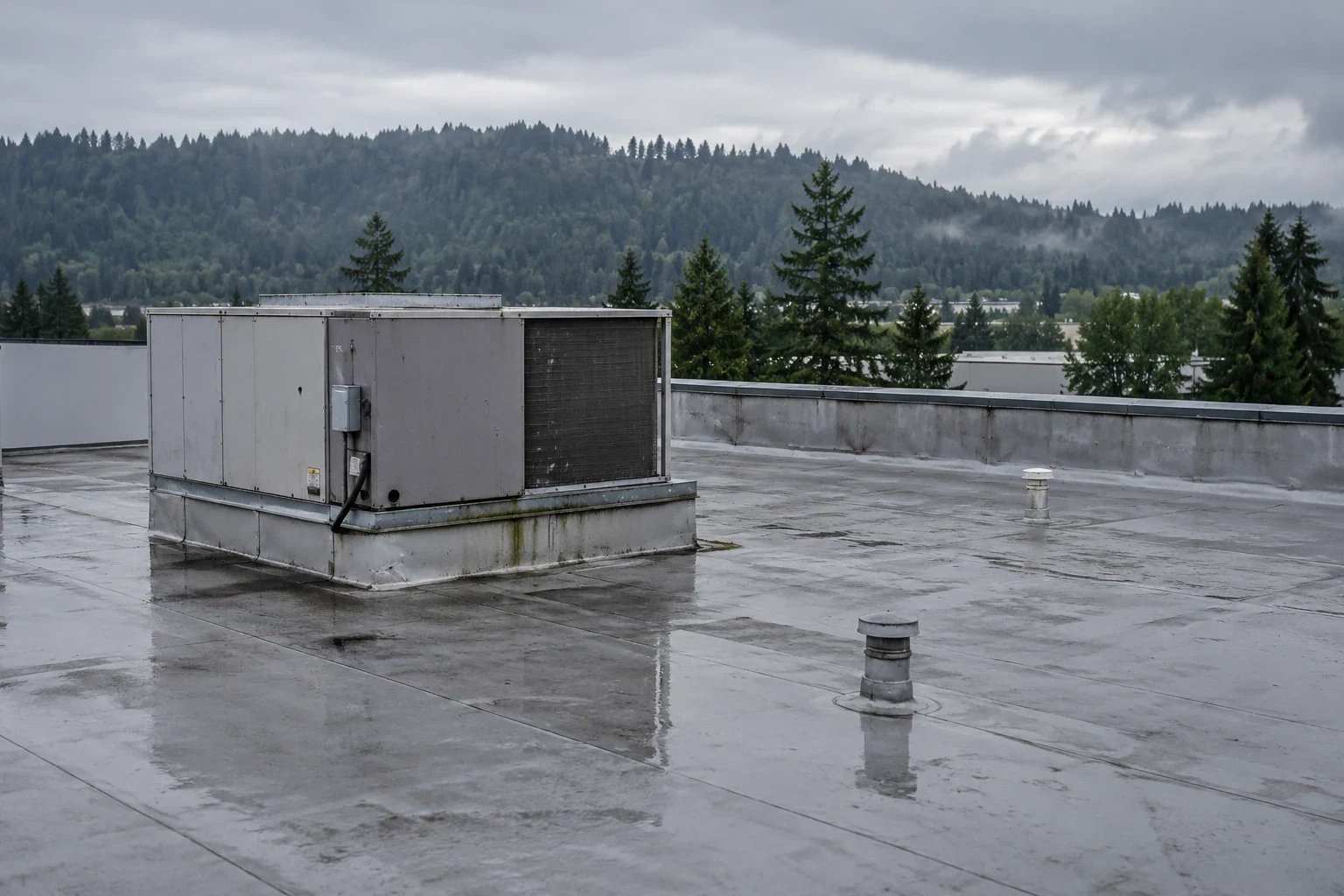
At rooftop HVAC curbs and exhausts, we check flashing height, sealant, fasteners, and the membrane termination. A service path that crosses the roof may affect access and foot traffic, so we mark it before repair. Where a curb is loose or a flange is wet, we check the substrate rather than covering the detail with surface sealant. Photos show the repair boundary and any adjacent condition that needs separate work.
Schedule around classes and equipment service
Before mobilization, we confirm roof access, lift position, staging, class hours, and the routes members use to enter the building. The contact identifies quiet periods and spaces that cannot be blocked. We use barriers around the work zone and keep materials clear of drains and mechanical service paths. If a delivery or lift requires a temporary change, the operator can plan that window with members and staff.
A small flashing repair may be isolated over one room. A replacement across several bays needs phases that restore each section before the next opens. We limit tear-off to the area that can be made watertight in the planned conditions, then check each temporary edge before leaving. If wet insulation extends beyond the marked zone, we photograph the exposed layers and price the added scope for review. The occupied-building sequence records those phases and daily access changes.
Near Orenco Station, we confirm class hours, delivery timing, and roof access with management, then place lift and staging routes around those operating needs. A hotel roof schedule follows guest access; classes and equipment service create distinct windows.

Repair the detail, not just the stain
A split lap, puncture, failed curb, and wet insulation are different findings. We remove loose material to a firm edge, prepare the substrate, and install a compatible patch. If moisture is confirmed below the membrane, we mark removal and restoration instead of closing wet layers beneath a surface repair. The owner sees the repair limit and any testing still needed to define a concealed condition.
The existing roof may be TPO, PVC, EPDM, modified bitumen, built-up, or metal. We verify the assembly before selecting repair material. Recover can be compared when the layers are dry, stable, and suitable for additional weight and fastening. If failures repeat across connected areas, a replacement scope separates removal, insulation, edge, and drainage work.
Curbs and skylights need a compatible tie-in, and a metal edge needs sound attachment before membrane work closes against it. We record equipment clearances so the service technician can reach the unit after repairs. For a different occupied property type, school roofing also plans around people below, while its calendar and protection needs are set by school operations.
Keep runoff off the walk path
We inspect each bowl, strainer, overflow, clamping area, and surrounding membrane. Leaves and loose material can slow runoff, but a clear outlet does not fix a depressed field. We compare water depth with slope, deck, and insulation condition, then mark where it drains and where it remains. Hillsboro records roughly 64 days annually with lows of 32°F or colder. We inspect exposed drain flashings and patch edges, then compare any movement with the earlier roof photographs before choosing a repair. The maintenance record marks any separated edge for comparison at the next visit. Water at a weak termination or drain can freeze and thaw, stressing a detail that already needs attention. For a follow-up, we compare each drain and curb with the marked repair record, noting where movement or retained water calls for another opening or a revised boundary. We verify the roof slope, service entrance, and lift route with staff before scheduling work above an active facility, then keep the same locations on the repair plan.
Price repair zones and schedule limits
Cost follows the roof area, membrane type, penetrations, curb count, insulation removal, edge metal, and drainage correction. Access requirements can add staging, lift protection, smaller phases, or coordination with equipment service. We show those factors by zone so the operator can compare a local repair with recover or replacement. If a test opening is needed, the proposal states its location and which decision the result will settle.
Schedule depends on surface moisture, forecast, temperature, cure conditions, deliveries, and class hours. Hillsboro's wet season can shorten an opening window. We confirm conditions before applying materials and secure the stopping point at the end of each shift. If the facility schedule changes, the contact receives an updated work area and access time before the crew moves.
If a roof opening keeps feeding water indoors, a call can be made overnight, on a weekend, or on a holiday. Our all-hours emergency crew reduces exposure, records its temporary protection, and returns to define permanent work after a safe inspection. Closeout photos show completed zones, materials, and any detail that needs a later check.
Questions About Fitness Center Roofing
Can roofing work happen while classes are running?
We map the work area, member routes, lift position, and class calendar with management. A limited repair may be isolated; noisy work or a lift can need a short scheduled window. The plan identifies any entrance or room that will be affected.
How do you handle a leak above locker rooms?
We protect the interior, note the affected room, and trace the roof path through drains, seams, curbs, and wall details. If insulation is wet, a survey or test opening helps set the boundary. The repair restores confirmed layers, not only the ceiling finish.
Can HVAC equipment stay in service during roof work?
We record equipment locations and service clearances, then coordinate any temporary restriction with the operator. Some details can be repaired without moving a unit. If equipment has to be isolated or lifted, the scope identifies that coordination before work begins.
How do you decide between repair and replacement?
We compare the area and recurrence of failures, moisture extent, attachment, deck, and remaining sound sheet. Local damage may support a patch; connected failures or broad wet insulation may require a larger scope. The report marks which condition drives that comparison.
What roof details appear in the closeout?
The record includes marked locations, photos, materials, completed laps and flashings, and any access limit. We list deferred conditions and the next check. Management can match later leak reports to the same roof zone.
Arrange a fitness center roof walk
Share the leak location, class schedule, and rooftop equipment access needs. We will walk the assembly, mark the repair boundary, and price work around the facility's operating hours.