
Hotel Roofing in Hillsboro, OR
Hotel roof inspections, leak repairs, and replacement in Hillsboro, OR. We check guest-area leak paths, equipment curbs, and phased access needs.
Hotel Roofing
A ceiling mark in a guest corridor can be fed by water that crossed a roof seam or equipment curb. I compare the interior report with the roof plan, inspect the connected details, and check whether insulation is wet. In Hillsboro, OR, hotel roofing also means setting a work zone that accounts for guests, service staff, and mechanical access. We mark what is confirmed before pricing a repair. A commercial roof inspection makes the leak path and repair boundary visible.
Downtown Hillsboro functions as a regional center, and Orenco Station is a mixed-use community along the MAX Blue Line. Each setting changes who is at the door and when. Before planning occupied work, we confirm the roof access point, service hours, guest circulation, and spaces that hotel staff want kept clear.
Related Roofing Pages
More pages on commercial roofing in Hillsboro:
Plan access around guest areas
Before mobilization, we confirm the roof hatch, lift location, staging footprint, material route, and spaces that must remain available. The manager identifies housekeeping, event, loading, and mechanical-service windows that affect the work area. Hillsboro’s normal yearly precipitation is 35.93 inches, with monthly totals highest during October through January. We coordinate exposed roof sections with the hotel’s service windows and the actual forecast before starting removal. We use that seasonal context to schedule exposed areas against the forecast, but close each shift based on the conditions actually on the roof. If weather changes, the crew secures the boundary and agrees on the next safe opening with hotel operations.
Guest access remains a property-specific requirement. We confirm where lifts, materials, and noise may affect entrances, then identify a route for roof work that does not conflict with normal operations. Occupied-building reroofing can be phased by roof zone, with closeout notes that show which areas are complete and which remain scheduled.
Inspect mechanical curbs and transitions
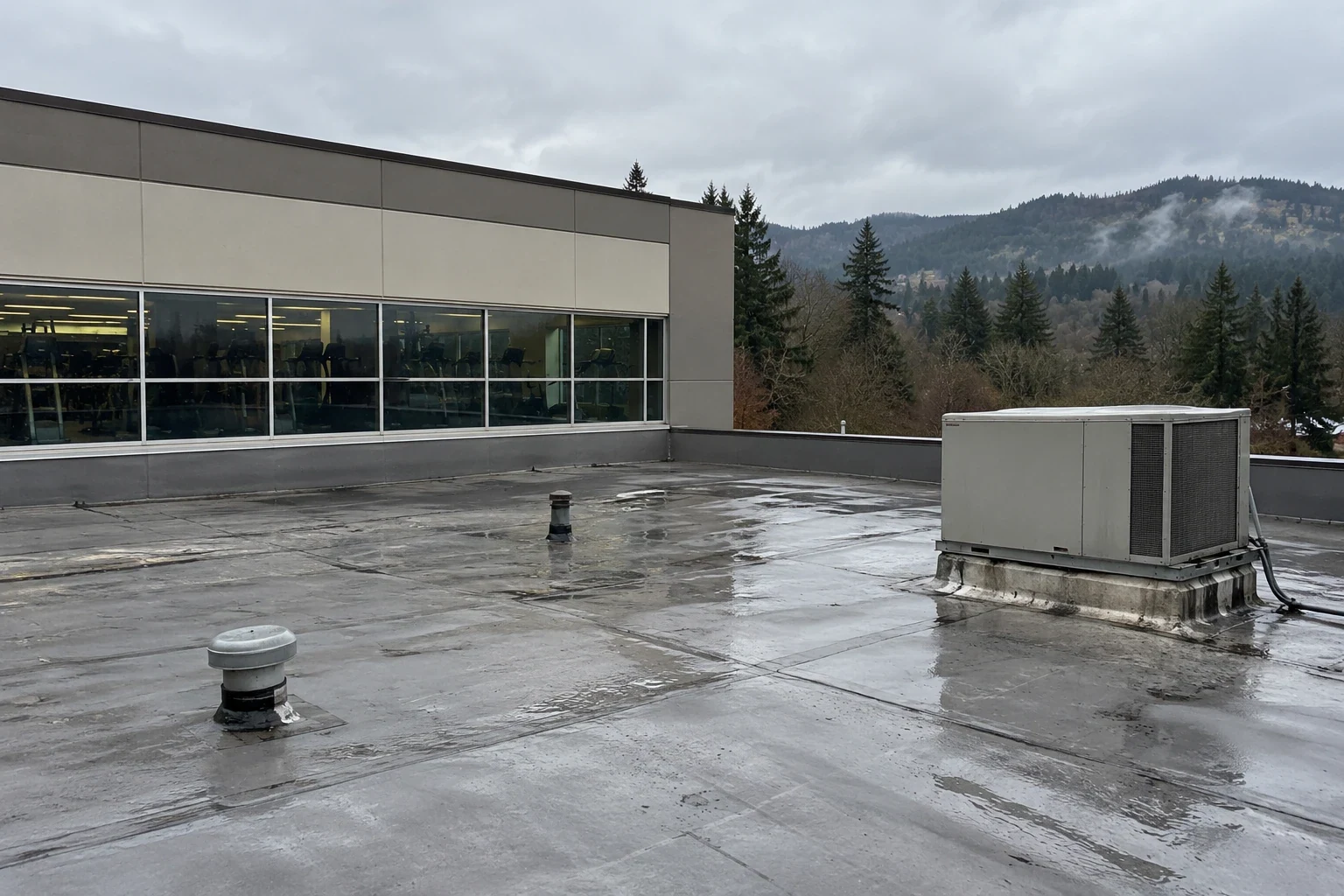
Air handlers, exhausts, pipes, and skylights interrupt the field sheet and add flashing edges to inspect. We check curb corners, laps, terminations, counterflashing, and nearby drains as connected details. Equipment vibration or service traffic can affect the repair boundary, so we note clearances and ask which units need uninterrupted access. A curb and support inspection can be included when those transitions are part of the leak path.
We identify the assembly from records and field evidence such as reinforcement, seam construction, and edge details. Metal, TPO, PVC, EPDM, modified bitumen, and built-up roofing do not share a repair method. EPDM roof work needs the appropriate seam and flashing preparation, while a heat-welded membrane requires its own compatibility check before material is ordered.
A hotel may have roof sections installed at different times. We photograph each zone and separate confirmed wet areas from places that need a reading or test opening. The report identifies what can be repaired, what may need removal, and any area that could not be inspected. It gives the owner a useful basis for comparing immediate leak control with a planned roof project.
Price by assembly and occupied zone
Cost follows the repair boundary, membrane type, number of penetrations, moisture extent, access, and protection needed for occupied areas. A short curb repair is different from replacing a full roof zone with wet insulation. We measure confirmed quantities and list test openings separately if concealed conditions remain unresolved. Phasing and lift placement can also change labor.
Timing depends on weather, surface moisture, material preparation, and access windows. We check the actual roof surface before opening a section. If the substrate is damp or conditions prevent a sound tie-in, we protect the roof and reset the sequence with the property contact. A schedule that names open and complete zones helps staff direct service requests during the work.
When water is actively entering an occupied area, the first task is to limit exposure and identify the roof detail that can be reached safely. We photograph temporary measures and define what remains for permanent repair. Later replacement planning stays separate, allowing hotel staff to review the immediate leak response alongside the capital scope.
Check drains before water reaches interiors
We inspect drain bowls, strainers, overflow routes, and the membrane around each outlet. A blocked strainer can slow runoff, while a depressed area may keep water after the drain clears. We photograph the low point and compare it with the roof slope and insulation condition. If readings or a selective opening show moisture, removal limits follow the confirmed area.
Freezing-day normals are a useful seasonal reminder, not a prediction for an individual roof. After cold or wet weather, we inspect seams, curb corners, metal edges, and sealant joints that show movement. If a material is brittle or a lap has separated, we prepare back to a sound area and choose a compatible repair based on surface temperature and moisture at the time of work.
Orenco Station’s transit-oriented plan includes shops and services near a high-capacity stop. That context can help frame nearby access planning, but the hotel’s delivery and guest routes must be confirmed directly. On the roof, we trace the drainage plane and identify curbs or paths that need protection. Drain and scupper work can be priced with membrane repairs when the outlet contributes to the condition.
Compare a local fix with broader work
A localized puncture can be patched when surrounding membrane is clean, dry, attached, and wide enough for a reliable bond. We remove only failed material and test the finished tie-in. Repeated seam failures or moisture that crosses several bays may justify a broader scope; the report marks those findings independently so a small repair is not presented as a cure for a larger assembly problem.
A recover may work when the existing layers are dry, secure, and suitable for added load and attachment. We check deck condition, edge height, drains, and curbs before pricing it beside tear-off. Replacement can be phased around occupied zones. Replacement planning shows where temporary tie-ins and protected areas are needed before the manager approves the sequence.
Hotels and multifamily buildings can both have occupied interiors, but guest turnover and service access create different scheduling needs. A hotel dining area may also need its own curb and exhaust inspection, as in restaurant roof work. We build the work plan around the actual operating windows and roof findings. Tell us where the leak appeared, which spaces need protection, and when roof access is available. We will price the repair or replacement phase supported by the assembly.
Questions About Hotel Roofing
Can roofing work continue while guest rooms are occupied?
We confirm room areas, access routes, lift placement, and hours with the property contact. A localized repair may be isolated, while tear-off can need phasing and notices. The sequence shows which roof zones are open and how each is protected at the end of the shift.
How do you investigate a leak that appears far from a roof drain?
We trace the drainage plane from the interior mark and inspect seams, curbs, walls, and prior patches along the path. Water may travel before reaching a ceiling. Readings or a selective opening help establish whether insulation is wet beyond the visible stain.
What details around rooftop units should be included?
Curb corners, flashing, nearby seams, service paths, and drains all affect the repair. We photograph the transitions and note the access needed for equipment service. The scope separates roof work from tasks that belong to the mechanical trade.
What makes a hotel roof replacement a phased project?
Different roof sections can have separate conditions, access needs, or occupied areas below them. We map phases, tie-ins, lift access, and daily closure limits. Concealed moisture found during tear-off can change the measured boundary and is priced for review.
What records do you leave after a hotel roof repair?
Photos, marked locations, materials installed, finished edges, and access limits give the next inspection a clear comparison. We identify details that need a later check and any area not reached. That record helps property staff connect future reports to the completed work.
Arrange a hotel roof walk in Hillsboro
Tell us where water appeared and what guest, service, or equipment access must remain clear. We will mark the findings and price a scope tied to the actual roof.