
Roof Insurance Claim Assistance in Hillsboro, OR
Prepare a Hillsboro commercial roof claim with dated photographs, marked damage, moisture findings, emergency records, and a repair scope tied to the assembly.
Roof Insurance Claim Assistance
A roof claim starts with a condition that can be located, photographed, and tied to a specific part of the assembly. In Hillsboro, OR, we document the opening, water path, interior report, and temporary measures, then prepare a repair scope that separates observed damage from items that need testing. The carrier decides coverage and payment. Our work gives the owner a clear record of what is on the roof and what it takes to restore it, with storm damage response available whenever water is entering the building.
Related Roofing Pages
More pages on commercial roofing in Hillsboro:
Build the record from the roof outward
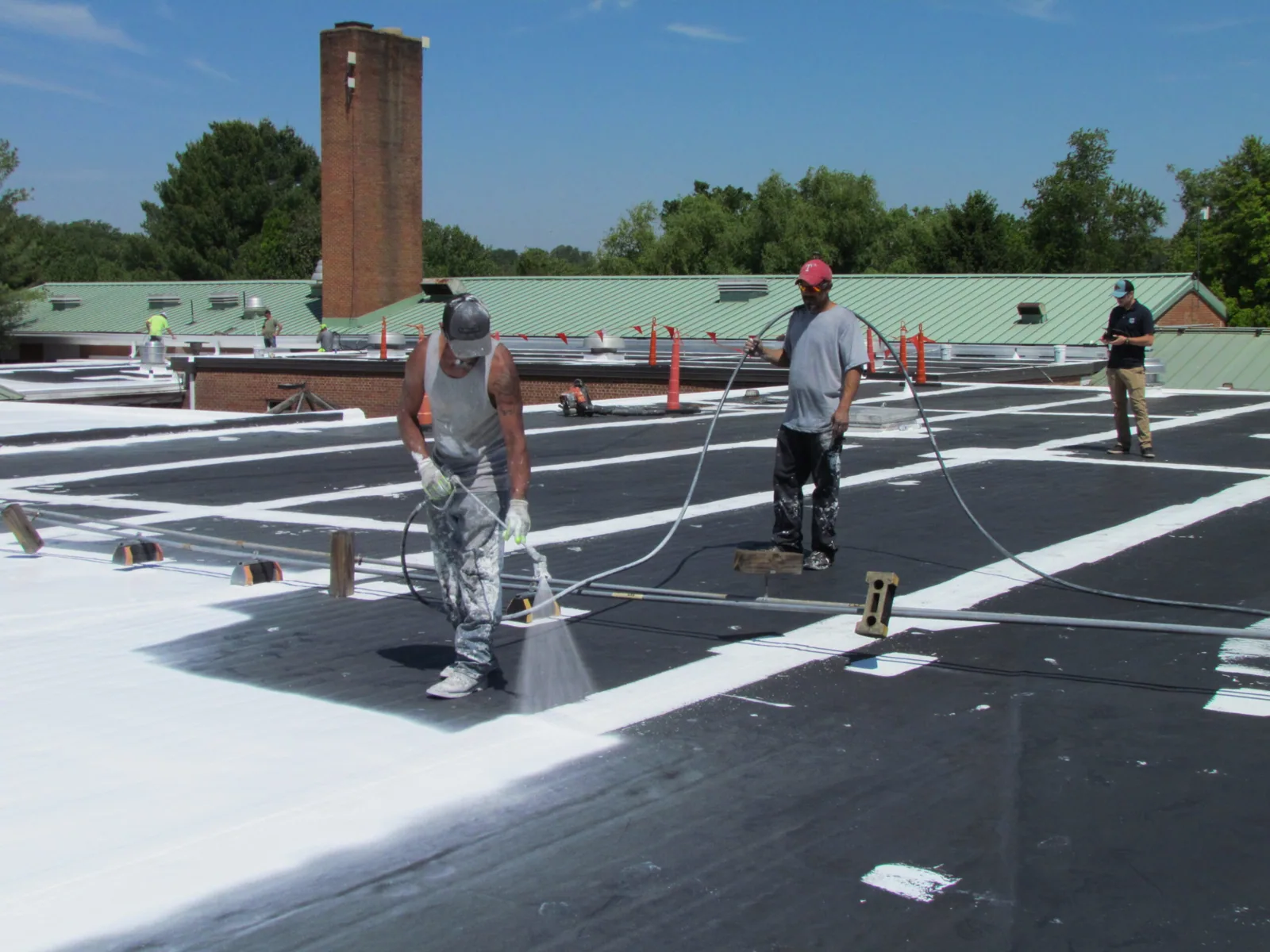
We begin with a roof walk and a map. Each photograph gets a location and direction, and each finding describes the material, detail, or opening visible in the image. If a ceiling stain is reported, we compare its room location with drains, seams, curbs, and wall transitions above it. Water can travel beneath a membrane, so the interior mark is one clue in the record rather than the repair boundary.
Our notes distinguish fresh displacement, open laps, punctures, failed flashings, and prior repairs. We record areas that were not safely accessible and identify what would resolve the question, such as a test cut or additional access. A commercial roof inspection can establish the assembly and current condition before repair is priced. Normal annual precipitation at Hillsboro measures 35.93 inches, with the highest monthly totals in October through January. Claim documentation records whether a detail was wet, protected, or already repaired when each photograph was taken. An infrared survey can mark where a test opening would settle the wet boundary. We date roof and interior observations so a reviewer can compare the initial report with the condition found. That recurring rain can make a small break consequential, so we document temporary covers, drain conditions, and any interior protection. A dated image set lets the manager compare the initial condition with the permanent repair and understand what changed between visits.
Coordinate urgent protection and permanent work
When water is active, we first limit damage to the occupied space and secure the roof opening where conditions permit. The service note identifies the time of arrival, reported areas, materials exposed, and temporary measures. Once the roof is safe to inspect, we return to trace the water path and confirm the repair method. Our emergency crews can be called at any hour throughout the week, holidays included, when a roof opening needs immediate protection.
Permanent repairs need a dry surface, compatible materials, and a stopping point that can be secured if rain returns. We identify the damaged section, the tie-in to sound material, and any insulation or deck work supported by inspection. The proposal shows confirmed work separately from options that depend on concealed conditions. A repair scope can then be reviewed against the photos and the roof map instead of relying on a general description of “storm damage.”
Occupied properties need a workable route for crew, materials, and equipment. Hillsboro includes semiconductor manufacturing and medicine packaging and distribution uses, where rooftop equipment and operating schedules can matter to access. We confirm the building's specific restrictions with its contact. Tanasbourne and AmberGlen have a western Washington County regional-center designation. At a claim inspection there, we record any door, lift, or rooftop equipment restriction that affects access to the reported damage. The property's manager supplies the actual loading and roof-entry rules for a claim inspection.
Separate storm damage from older conditions
A claim file is easier to review when new damage is not mixed with unrelated wear. We mark each condition and describe whether it affects water entry, attachment, drainage, or surface protection. An old patch, worn coating, or long-term ponding may need maintenance even if it is not part of the reported event. We list those items separately so the owner can address them without overstating the cause.
Hillsboro sees recurring rain and winter freezing. Freezing or colder lows show up on about 64 days in a typical Hillsboro year. We document the condition of exposed flashing and any retained water, keeping those observations separate from an unsupported event-cause conclusion. When a seam opens after a storm, we photograph its edges and nearby details, then determine whether the assembly is dry and stable enough for a patch. A seam repair assessment follows the defect to sound material rather than covering a weak boundary. Orenco Station is a station community on the MAX Blue Line within Hillsboro. In mixed-use settings, we coordinate work with the property manager so access and ground protection fit active building use. The claim record can include the roof areas inspected, the limits of access, and the repair plan for each affected section without implying that every condition has the same cause.
Explain what testing can settle
Surface photographs cannot show every hidden layer. A soft area or repeat leak may call for moisture mapping, a core, or a test cut to confirm whether insulation is wet and how far the condition extends. We mark the proposed opening and state which decision depends on the result. If the material is dry, the repair can remain local; if it is wet, removal and replacement may be needed before the membrane is closed.
We also inspect terminations, coping, edge metal, drain bowls, and penetrations around the damage. Wind movement at a perimeter can loosen a termination, while blocked drainage can push water toward a vulnerable lap. A perimeter detail review or drainage review may identify work that belongs in the same repair sequence. Each added item is tied to a location and visible condition.
The resulting report explains the observed condition, recommended action, and any unresolved question. It does not decide policy coverage. Owners can send the same dated record to their adjuster, engineer, or property team, then compare the carrier's request with the evidence that can be gathered safely.
Price the work the evidence supports
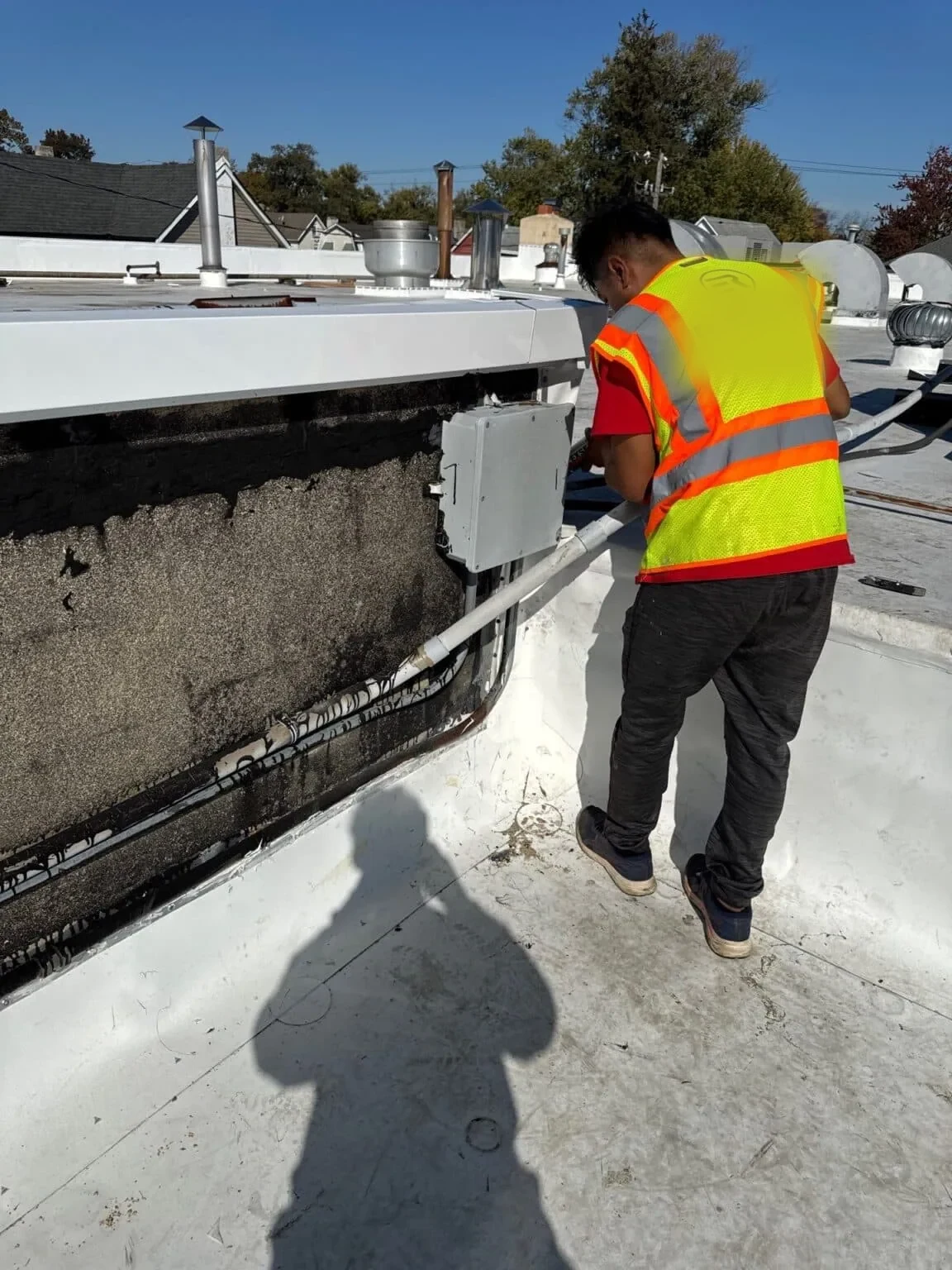
Repair scope and cost vary with the affected area, roof height, access, material type, protection needs, wet insulation, deck condition, and detail count. Emergency covering and permanent repair are separate steps, and testing may add a decision point before final quantity is known. We list these elements clearly so the owner can see which work is confirmed and which depends on an opening.
Regional access can influence delivery timing. Washington County’s 185th Avenue is a regional people-and-goods corridor. For a claim visit, the access record marks the final approach and the area available for inspection equipment. The manager identifies the insured building's gate, staging space, service entrance, and lift area. We mark those locations against the roof zones so a return inspection or repair crew can reach the affected detail under the agreed access rules. Those details help set a safe work sequence without changing what the roof inspection finds.
For a multi-building owner, we keep a separate record for each roof and identify repeated conditions only where the evidence supports them. A marked condition report preserves the repair map and closeout photographs for later maintenance. It can also help the next budget distinguish a claim repair from routine work already scheduled for the building.
Questions About Roof Insurance Claim Assistance
What can you provide for a commercial roof insurance claim?
We can prepare dated photographs, a marked roof plan, observed conditions, moisture findings, temporary protection notes, and a repair scope. The record identifies what we saw and what remains open for testing.
Do your findings determine whether the carrier covers the work?
No. Coverage is decided by the insurer and policy. Our documentation describes the roof condition, repair boundary, and work supported by the inspection.
Can you document an emergency visit before the permanent repair?
Yes. We record the reported leak, arrival findings, temporary protection, and areas requiring a return inspection. Emergency response is available around the clock, including holidays.
What if moisture testing finds wet insulation?
We photograph and map the opening, then define the removal area and tie-in to dry, sound material. Added quantities are presented for review before the roof is closed.
Can you coordinate with an adjuster or engineer?
The owner's designated claim contacts can receive roof findings and repair documentation from us. If another inspection is needed, we coordinate access and identify which details should remain available for review.
Organize a Hillsboro roof claim record
Share the reported damage, interior locations, and access rules. We will document the roof condition, protect active openings, and prepare findings and a repair scope for your claim file.