
Built-Up Roofing in Hillsboro, OR
Built-up roofing in Hillsboro, OR needs sound plies, working drains, and secure flashing. We inspect the assembly and price repair or replacement by roof zone.
Built-Up Roofing
An open lap in a built-up roof can let water travel between plies before it appears inside. In Hillsboro, OR, we inspect the surfacing, seams, flashings, and drains, then trace the likely path to a stable repair boundary. Downtown Hillsboro is a regional commerce and local-government center for western Washington County. On an occupied building there, we record the roof entrance and material-handling area before opening the surfacing or removing failed plies. A commercial roof inspection marks the ply condition, drain layout, and removal boundary before repair quantities are set. Tanasbourne and AmberGlen have that same regional-center role. Compact employment areas and transit access make the roof route and staging plan relevant to occupied buildings. At Hillsboro, the annual precipitation normal is 35.93 inches, highest in the October-to-January period. We inspect where surfacing or earlier patches interrupt runoff, then mark any drainage correction separately from rebuilding damaged plies. A multi-ply roof still depends on a clear route to the drains. We look at low areas, scuppers, and places where water remains after nearby surfaces dry, then separate drainage work from any membrane repair supported by the findings.
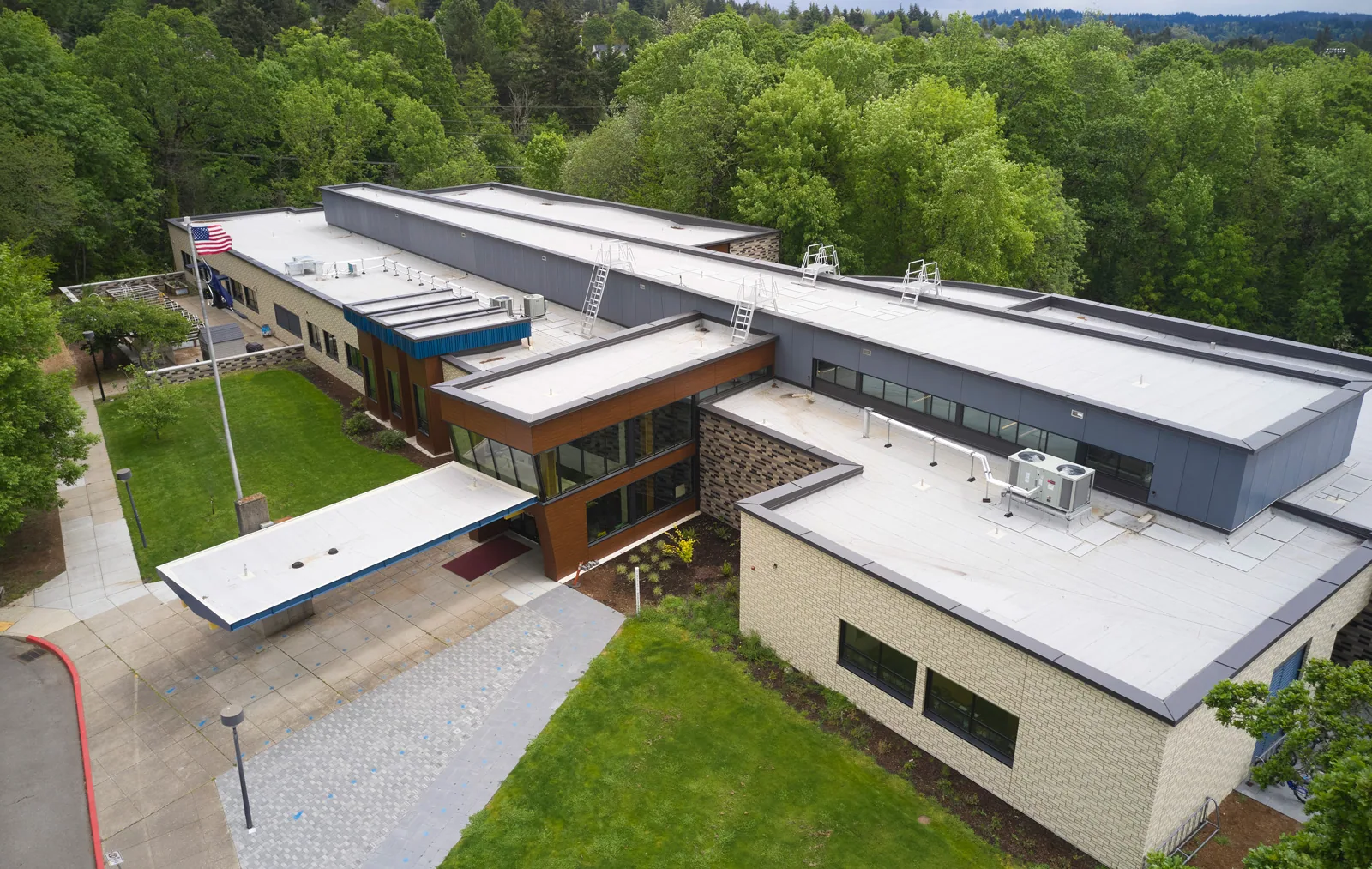
Related Roofing Pages
More pages on commercial roofing in Hillsboro:
Inspect the surface and the layers below
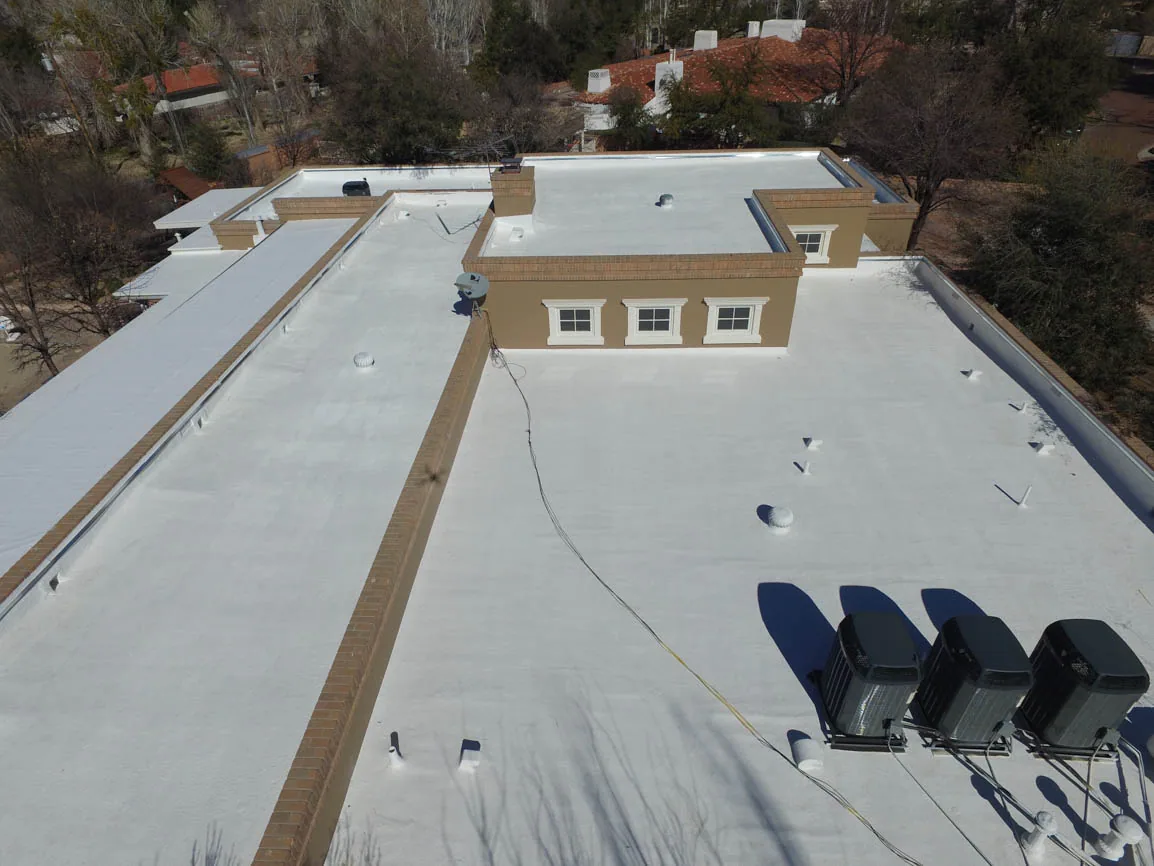
Built-up roofing is made of alternating bitumen and reinforcing plies, often finished with gravel or a coating. The top surface can hide a split or blister, so we clear a small inspection area and check the material beneath it. We note exposed reinforcement, loose surfacing, cracks, ridges, and prior patches. The observation helps decide whether to reseal a detail, rebuild a section, or test the insulation below.
At a seam or end lap, water can follow the interface under the top ply. We inspect the transition to drains, curbs, and parapets, where separate layers meet and movement concentrates. A flashing repair may be required even when the central roof field is in serviceable condition. The report places each finding on the roof plan so the repair does not stop at the first visible surface change.
Wet insulation can hold water after the leak has stopped. We look for soft areas and use a moisture survey or selective opening when the result would change the scope. A moisture survey can identify candidate areas, while a core or opening confirms the layers. We identify confirmed material for removal separately from the surrounding roof that may remain in service.
Rebuild only to a firm boundary
A local repair begins by removing loose surfacing and failed plies until the remaining material can support a tie-in. We clean the area, install compatible sheets, close the laps, and restore the surface protection. Heat, adhesive, or another application method depends on the selected materials and site conditions. The scope includes safe preparation and a watertight closeout, not just a patch placed over the visible split.
If the roof has several blisters or open seams, we compare their location and extent before treating each separately. Repeated isolated patches can leave a larger moisture or movement pattern unaddressed. We map the repairs, check nearby insulation, and explain which zones can be maintained and which merit a broader replacement price.
For a building in Downtown Hillsboro’s civic and commercial setting, the owner identifies which entrances and operating areas must remain available during the roof work. We agree on material staging, ground protection, and access windows before the crew opens a section. Occupied-building sequencing keeps the work area defined and lets the property team coordinate people and equipment below.
Keep the drainage plane continuous
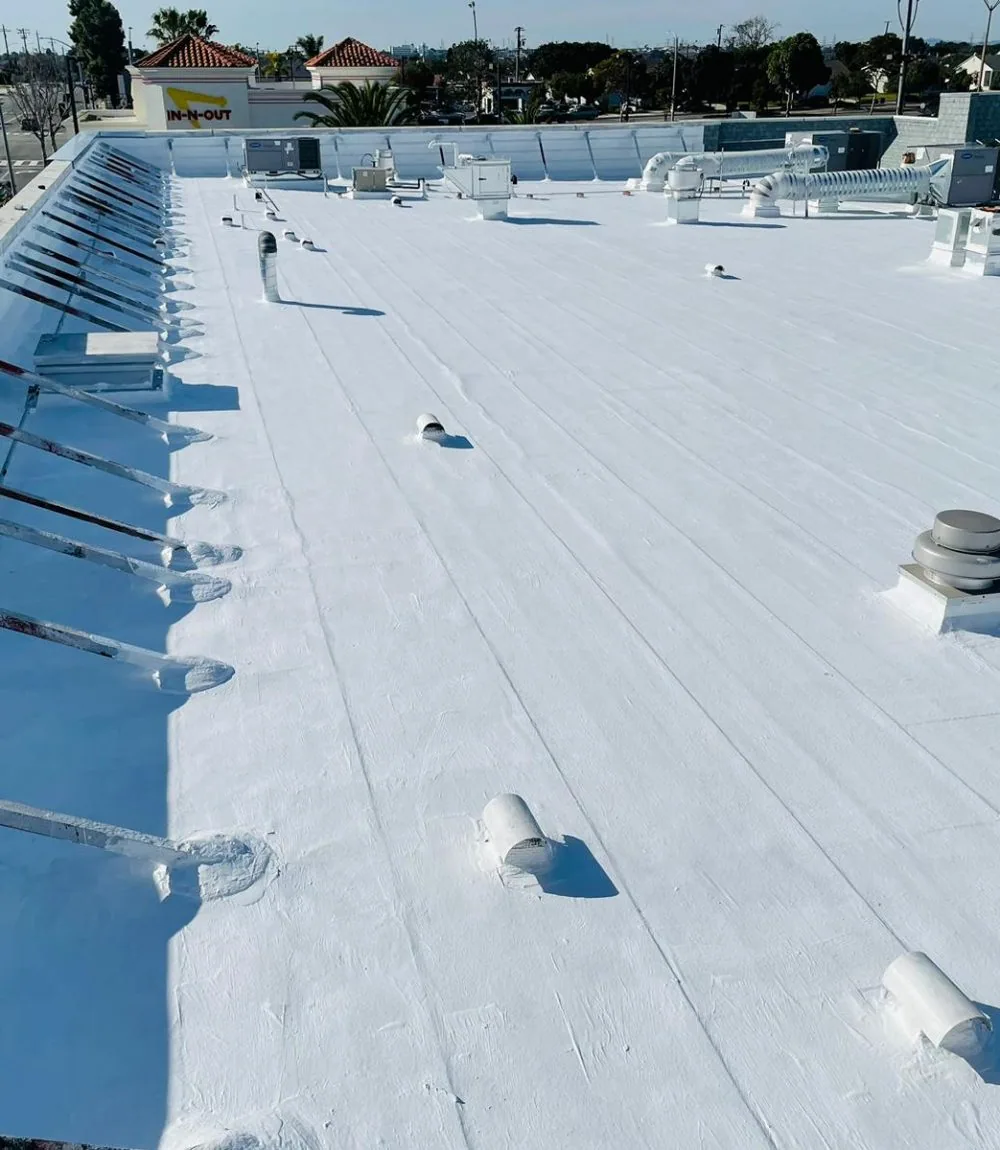
Drains and scuppers collect water from the roof and carry it away from the building. We check strainers, bowls, clamping details, and overflow routes, then note ponding that may point to a low area or a blocked outlet. A drain and scupper service addresses conveyance while any membrane defect receives its own repair boundary. Keeping those scopes distinct helps avoid sealing over a water path.
At roof edges, the built-up plies should turn into a secure termination beneath coping or edge metal. We examine corners, cleats, fasteners, and membrane attachment for movement. New layers can change the height at a parapet, curb, or drain, so an overlay needs a detail plan before installation. Edge-metal work may be included where the existing termination cannot accept the finished assembly.
Hillsboro experiences regular rain through the cool season, and the wettest normal months include October through January. We schedule surface preparation around actual dryness, protect open areas, and verify temporary tie-ins at the end of a shift. If moisture or rain changes the work window, the sequence should leave a closed roof and a clear drainage path.
Weigh another ply against a new assembly
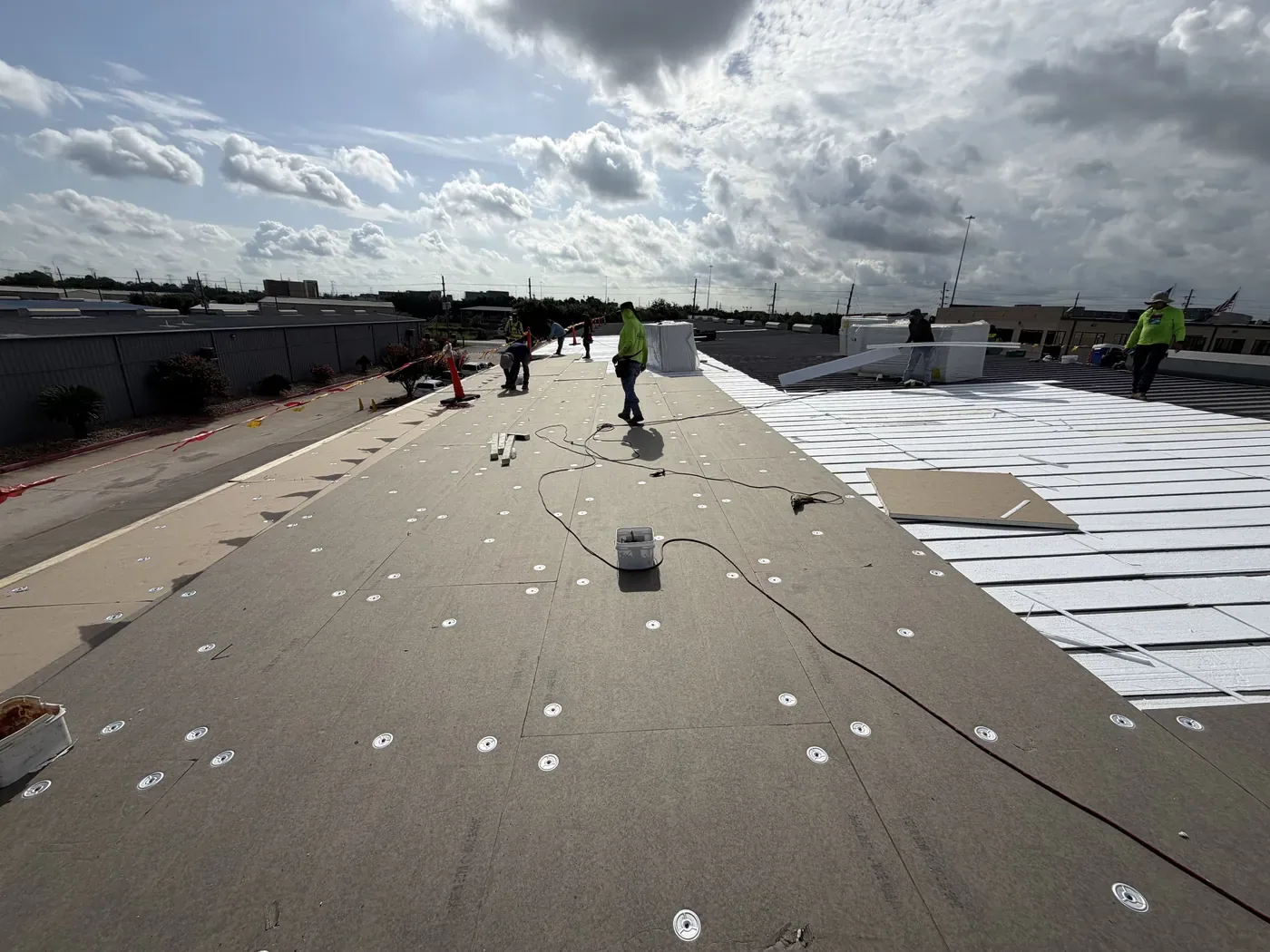
A repair suits a limited defect where the surrounding plies and substrate remain sound. A recover may be possible when the deck is stable, trapped moisture is controlled, and added material can meet existing details. Tear-off is considered when the layers are saturated, detached across a broad zone, or too uneven to support a new system. We inspect before pricing so the recommendation follows the assembly instead of the roof’s appearance alone.
When replacement is under review, owners may compare modified bitumen with TPO or EPDM. Each choice changes the seams, surfacing, attachment, drainage transitions, and maintenance approach. We explain the scope for the building’s use, including equipment curbs and areas that need continued access, then show separate cost drivers for removal and installation.
The price depends on roof area, number of plies, wet insulation, edge conditions, penetrations, disposal, and the access required to move materials. If concealed layers need confirmation, we identify the opening and return a revised scope after inspection. The owner can then compare a repair, recover, and replacement on the same roof sections.
Record conditions for the next inspection
A maintenance record should note the repaired zone, drain condition, exposed plies, and any area that still needs monitoring. On a preventive maintenance visit, we clear outlets, inspect accessible laps, and revisit prior repairs. That sequence can catch a lifted edge before water follows it across the assembly.
We also record roof access restrictions and equipment routes that can affect future work. The region’s center plan describes transit and highway improvements around Downtown Hillsboro and Tanasbourne/AmberGlen, but the building’s rules determine how a crew reaches the roof. A condition report keeps those site notes with the roof findings and the next recommended action.
Arrange an inspection when the surface blisters, a leak returns, or water remains at the same low point. We will identify the affected plies, test moisture where needed, and show what can be repaired without covering an unresolved condition.
Questions About Built-Up Roofing
Can you repair built-up roofing without replacing all plies?
Yes, where the surrounding layers are dry and stable enough to accept a new tie-in. We remove failed material to a firm edge, rebuild compatible plies, and restore the surface. If moisture reaches the insulation or several layers have separated, the scope includes that wider condition.
What does gravel on a built-up roof tell you?
It identifies a protective surfacing, not the condition of every ply below it. We clear a small area, examine the bitumen and reinforcement, and check nearby drains and seams. A surface appearance alone does not establish whether the roof is dry or ready for another layer.
How do you find a leak between roof plies?
We start at the interior sign, then follow drains, laps, curbs, and changes in plane toward a likely entry. If the layers hide the path, a moisture survey or opening can answer a specific question. The repair boundary follows confirmed conditions rather than the stain location alone.
Can another roof layer go over built-up roofing?
A recover depends on deck condition, existing layers, moisture, and whether drains and edges can handle the added height. We inspect those points before recommending an overlay. If removal is necessary, the proposal states the tear-off and substrate work required.
How does Hillsboro rain change built-up roof maintenance?
Regular wet-season rain makes clear outlets and closed laps practical priorities. We check drains, scuppers, flashing, and prior patches before the wettest months. If a repair is needed, the surface must be dry enough for the chosen material and application method.
Check the built-up roof by layer
Arrange a Hillsboro roof walk for marked findings on plies, drains, flashing, and insulation, with repair and replacement options priced separately.