
Commercial Roofing for Insurance Restoration in Hillsboro, OR
Document commercial roof damage and repair options in Hillsboro, OR, with marked photographs, moisture findings, and scopes tied to the assembly.
Insurance Restoration
A roof claim needs a boundary that can be inspected after the weather clears. In Hillsboro, OR, recurring rain and winter freezes can test seams, drains, and exposed flashing, but an interior stain alone does not identify the roof opening. We photograph the surface, trace the water path, and mark the affected assembly. Downtown Hillsboro has a western Washington County regional-center role that includes commerce and local government. A restoration inspection there records the affected roof zone, the operating area beneath it, and the route needed for testing or repair. For restoration work in Downtown Hillsboro, we mark the roof area, access route, and protection boundary before pricing a repair. Oregon Highway 8 links Forest Grove, Cornelius, Hillsboro, Aloha, and Beaverton; we confirm entry and loading at each property. A storm-damage roof inspection records visible damage, temporary protection, and the boundary of proposed work. We separate observed conditions from cause or coverage determinations, which belong to the insurer and the policy process.
Related Roofing Pages
More pages on commercial roofing in Hillsboro:
Separate the visible damage from the water path
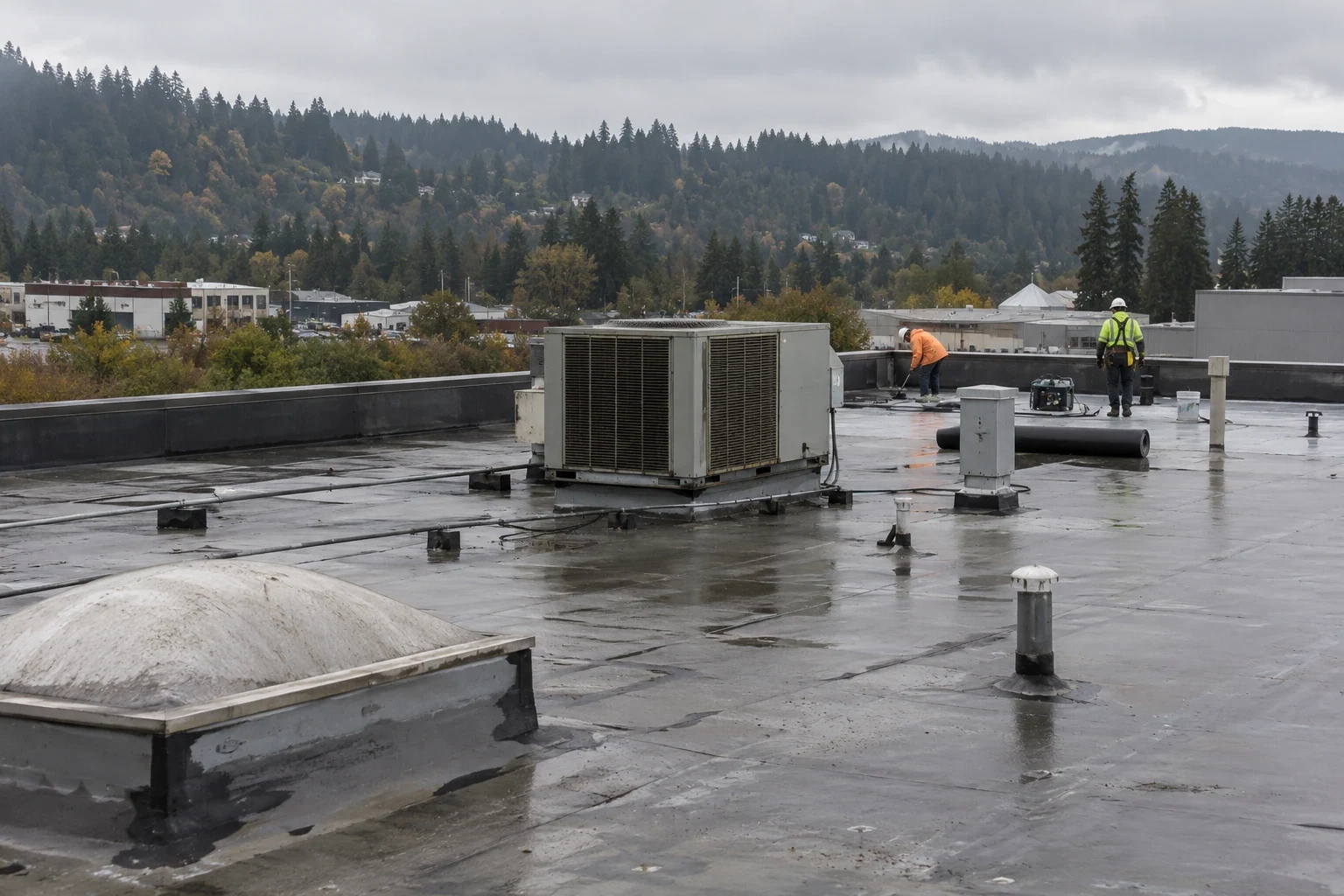
Water can move along insulation joints, deck flutes, conduit, or a low slope before it appears inside. We compare the reported room with seams, drains, penetrations, parapets, and equipment curbs above it. The report marks the likely opening separately from the interior path and includes photographs with locations. Hillsboro’s normal precipitation is highest in the October-through-January interval. We photograph the drain and seam condition during the damage inspection, then mark any temporary protection that remains exposed to further rain. We check drain bowls, overflow routes, low areas, and prior patches to see whether water is being held or entering at a seam. Winter normals also include freezing days, making exposed sealant and terminations worth reviewing after cold periods. We distinguish storm-related physical damage observed at the roof from maintenance items or older conditions that need separate review.
For suspected moisture beyond the visible opening, we can identify whether an infrared moisture survey or test opening would help define the repair boundary. A marked condition report can include the observed assembly, photographs, access limits, and areas needing another test. The record supports a repair decision without extending a finding beyond what was inspected.
Protect the roof before permanent work is ready
When a roof is open or water is entering, immediate protection and permanent repair are separate steps. We identify the affected area, protect the opening where conditions allow, and note the temporary measure and follow-up needed. The property contact confirms roof access, tenant hours, loading, equipment, and any area that cannot be interrupted. If concealed damage appears after the assembly is opened, we mark the new boundary and review the added work before proceeding.
For restoration work, the mobilization plan is built from the property's confirmed access details. Before mobilizing, we confirm the loading point, roof entry, lift position, tenant hours, and any security limits with the property contact. Those details set how much roof can be opened and secured during each shift.
Emergency response is available any hour, holidays included, when an active opening requires attention. We can document temporary protection and return for a permanent scope after access and materials are ready. The closeout shows which detail was repaired and whether water or insulation findings remain beyond it.
Match restoration work to the existing system
A claim file may include roof drawings, invoices, and earlier photographs. We compare those records with the membrane, attachment, insulation, flashing, and drainage we can see. TPO, PVC, EPDM, modified bitumen, built-up roofing, and metal each require compatible preparation. A patch at a field seam is different from curb flashing or a drain repair. We mark the actual detail and use materials suited to the assembly rather than assume every damaged area needs the same repair.
We map the damp boundary with test cuts or other agreed checks, then identify where sound material begins. An overlay is only comparable when the existing assembly is dry enough, securely attached, within added-load limits, and compatible with drainage and code. If any condition fails, the estimate lists removal, replacement insulation, and perimeter work as distinct items rather than burying them in a coating allowance.
Cold-season inspections can reveal separated laps, brittle exposed sealant, or a shifted metal edge. The repair method depends on the assembly and the defect we can verify. For modified-bitumen repair, we document the membrane layers and transition, prepare the bond area, and carry the repair to material that can accept a lasting tie-in.
Make the repair record clear for review
A useful restoration file contains dated photographs, marked roof locations, observed materials, and the work performed. We identify what was open, which temporary measures were used, what was permanently repaired, and any area that could not be accessed. If moisture testing or a test cut was completed, the report states where it occurred and what it found. That detail lets the owner and restoration team compare the scope with the physical condition.
Repair pricing follows the measured boundary, assembly, access, protection, and material needed to tie into sound roof. Tear-off, insulation replacement, edge metal, drain work, lift setup, and disposal can change the scope. We separate confirmed quantities from concealed conditions that require an opening. The owner can then decide whether to authorize the additional investigation or keep it outside the current repair.
A condition report can track repaired and remaining areas. Our public-building scopes and construction handoffs also rely on marked boundaries and photo records. Those records support review, while coverage and claim decisions remain with the parties responsible for them.

Check the repaired boundary after the next rain
After permanent work, we photograph the finished patch, curb, drain, or edge and note the adjacent details checked. A later roof walk can compare that boundary with any new interior report. We can return for preventive maintenance to clear drainage and inspect terminations before the next wet season. The updated record distinguishes a repeat condition from a separate opening elsewhere on the roof.
For owners managing several locations, our managed-property roof records organize findings by address and assembly. For each property, the report keeps roof zones, prior repairs, and operating constraints together so the next inspection can return to the same detail. Each inspection records the actual membrane, access, and repair history so the next decision stays tied to the property.
We can help prepare a repair scope, replacement estimate, or follow-up inspection from the roof evidence. The report states what was found and what was corrected, then identifies any test or concealed area that remains open. That gives the owner a practical next step without turning an observed roof condition into a claim outcome.
Questions About Insurance Restoration
Can you document roof damage for an insurance review?
We provide photographs, marked locations, observed assembly, and a scope tied to the damaged area. The record can distinguish visible damage from maintenance or conditions needing another test. Coverage decisions remain with the owner and insurer, while our repair recommendation follows the roof findings.
How do you tell storm damage from an older roof condition?
We document what is visible, compare it with available repair records, and mark where the assembly needs further testing. A roof walk may identify a puncture, opened seam, or displaced flashing, but the cause is stated only when the evidence supports it. Other conditions stay separate in the report.
What should the first roof inspection include?
We check seams, edges, curbs, drains, penetrations, interior reports, and access limits. Photographs and a marked plan show the likely opening and repair boundary. If moisture may continue below the surface, we identify a survey or test opening that can clarify the extent.
Can temporary protection be installed before a full scope is approved?
We can assess the active opening, coordinate access, and install appropriate temporary protection where conditions permit. The report identifies that measure and any follow-up needed for a permanent repair. The temporary work does not replace an inspection of concealed moisture or adjacent details.
When does a damaged roof need replacement instead of repair?
Widespread deterioration, wet insulation, deck concerns, or too little sound material to tie into can support a replacement scope. We mark the affected areas, test where needed, and compare replacement with a recover only when attachment, moisture, loading, drainage, and code conditions are suitable.
Request a Hillsboro roof damage review
Share the property location, interior report, and any roof records or photographs. We will inspect the assembly, mark the damage boundary, and prepare repair or replacement options tied to the findings.